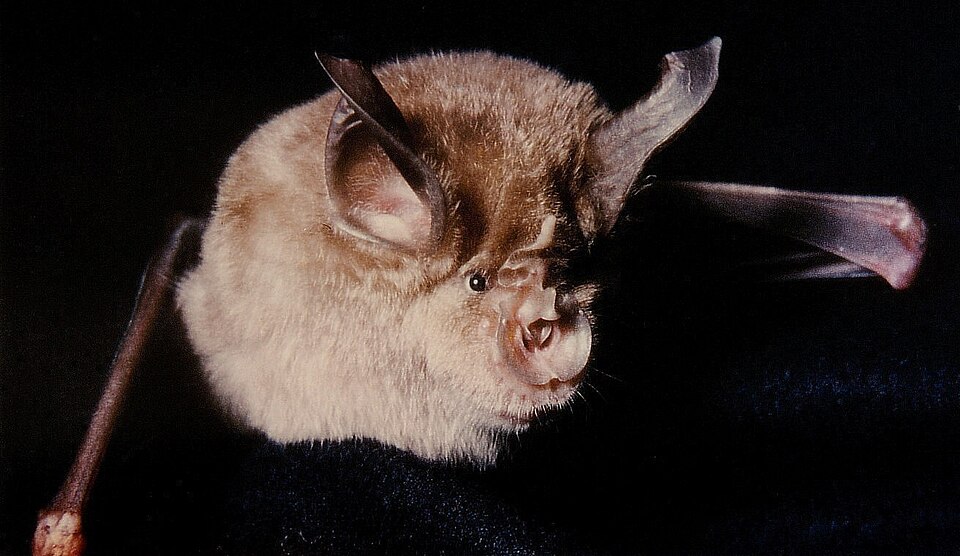
Greater horseshoe bat — Are bats blind
Myths & misconceptions Forest Mountain Africa Europe Asia

Are bats blind?

50 views · 2 weeks ago

No, bats are not blind: all species have functional eyes, including the Greater Horseshoe Bat whose eyesight remains useful for locating roost entrances and assessing ambient light. Some fruit-eating species, like fruit bats, even have excellent vision, sometimes adapted for night vision.

A modest but real sight in the horseshoe bat

In the Greater Horseshoe Bat, the eyes are small and partially hidden by the coat and the large nasal leaves which are used to emit ultrasound. This morphology has long suggested an absence of vision, when it is simply a vision adapted to a twilight and underground life, with little discrimination on details but sensitive to contrasts of light. In the caves and galleries where the species takes refuge in colonies sometimes of several hundred individuals, sight alone would be insufficient in total darkness: this is where echolocation takes over, without one of the two modalities excluding the other.

Ethology studies show that European insectivorous bats use their eyes particularly when leaving the roost at dusk, a period when residual light still allows visual orientation before darkness becomes total.

Publicité
Publicité

Where does the expression “blind as a bat” come from?

The English expression “blind as a bat”, popularized in the 16th century, comes from the observation of the erratic and rapid flight of these animals in nocturnal flight, often wrongly interpreted as a sign of blindness. The scientific discovery of echolocation in the 20th century made it possible to understand that this behavior was the result of an ultra-efficient sound navigation system complementing an already functional view, and not replacing it. The received idea, however, persists in everyday language, long after its biological basis has been invalidated.

For any observation of a weakened or disoriented bat colony in Tunisia, you should contact a veterinarian or the competent services rather than handling the animals.

Published on · Updated on

Did this fact teach you something? Share it.

Share
Publicité

Comments (0)

No comments yet.

Top
News
Follow TunisieVet on Facebook
Tips, adoptions and veterinary news
Follow