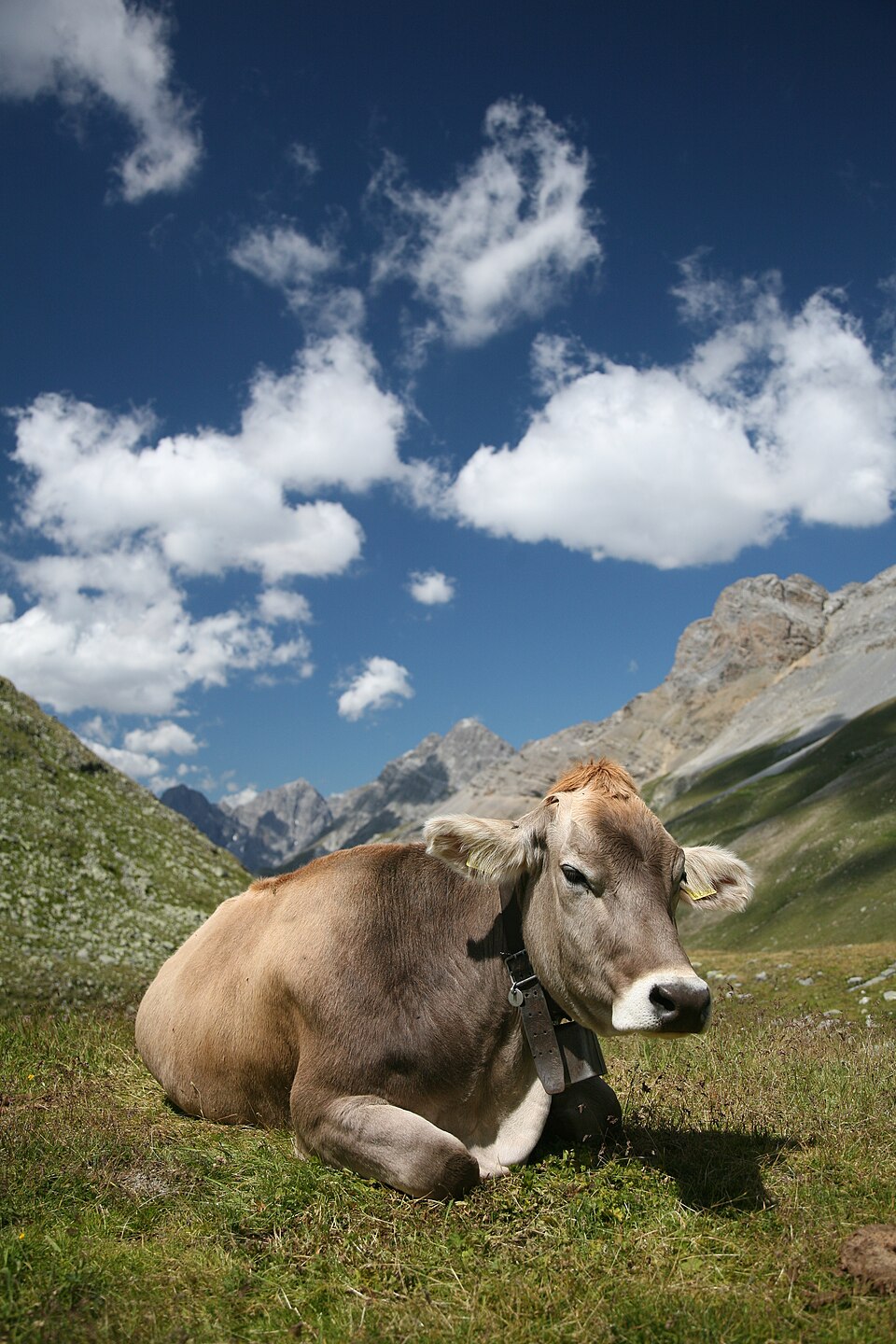
No, bulls do not hate red: they are dichromatic and very poorly perceive this color, which appears rather dull to them, close to gray or yellow-brown. What really triggers the charge in bullfighting is the movement of the cape waved by the bullfighter, not its color.
Dichromatic vision, insensitive to red
Like most cattle, cows and bulls have only two types of retinal cones (dichromate vision), sensitive to blue and yellow-green, compared to three types in humans. Red and green are therefore difficult for them to distinguish: they are seen in shades of gray or beige, with a contrast in brightness rather than a bright color. This characteristic, common to many herbivorous ungulates, is explained by the evolution of vision optimized to spot predators in vegetation rather than to discriminate between warm hues.
Tests carried out with capes of different colors (red, blue, white) but waved in the same way show that the bull charges indifferently, whatever the color of the fabric. On the other hand, a still cloth, even a scarlet one, provokes almost no reaction. It is the sudden movement of the fabric, associated with the noise and the posture of the toreador, which triggers charging behavior, a defensive or territorial reflex well documented in cattle when faced with a moving visual stimulus perceived as a threat.
A color chosen for humans, not for animals
The red of the muleta is a cultural and aesthetic convention, chosen to hide bloodstains from the public eye and for its strong visual contrast in the arena — a choice that speaks to the trichromatic human eye, not that of the bull. The received idea probably comes from this symbolism of red associated with anger or danger in popular culture, wrongly projected onto animal perception.