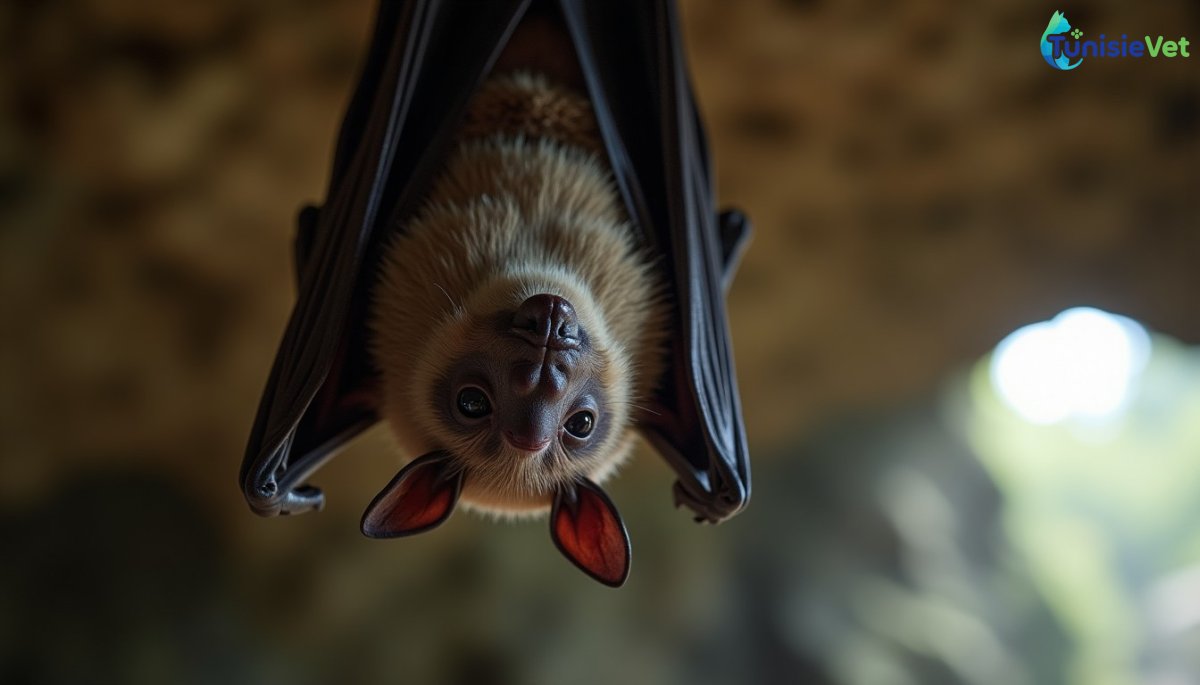
In complete darkness, some bats do not rely on their sonar alone. They sometimes locate their prey by a far softer sound: the footsteps of an insect walking on the ground or through leaf litter.
Publicité
Publicité
Sonar, or echolocation, works by emitting calls and analysing their echoes. On the ground or in vegetation, however, echoes from the floor and plants mix with those of the insect and hide them. These so-called gleaning bats therefore often listen passively to the sounds their prey makes itself.
In the greater mouse-eared bat, researchers have shown that ground beetles are located by listening to the noise of their steps. In Antrozous pallidus, an American species, the sonar is switched down during the capture, probably so as not to alert insects equipped with hearing organs.
In Tunisia, at least 19 bat species have been reported. Yet no local study on prey selection has been found, so this behaviour still needs to be checked in the country's species.