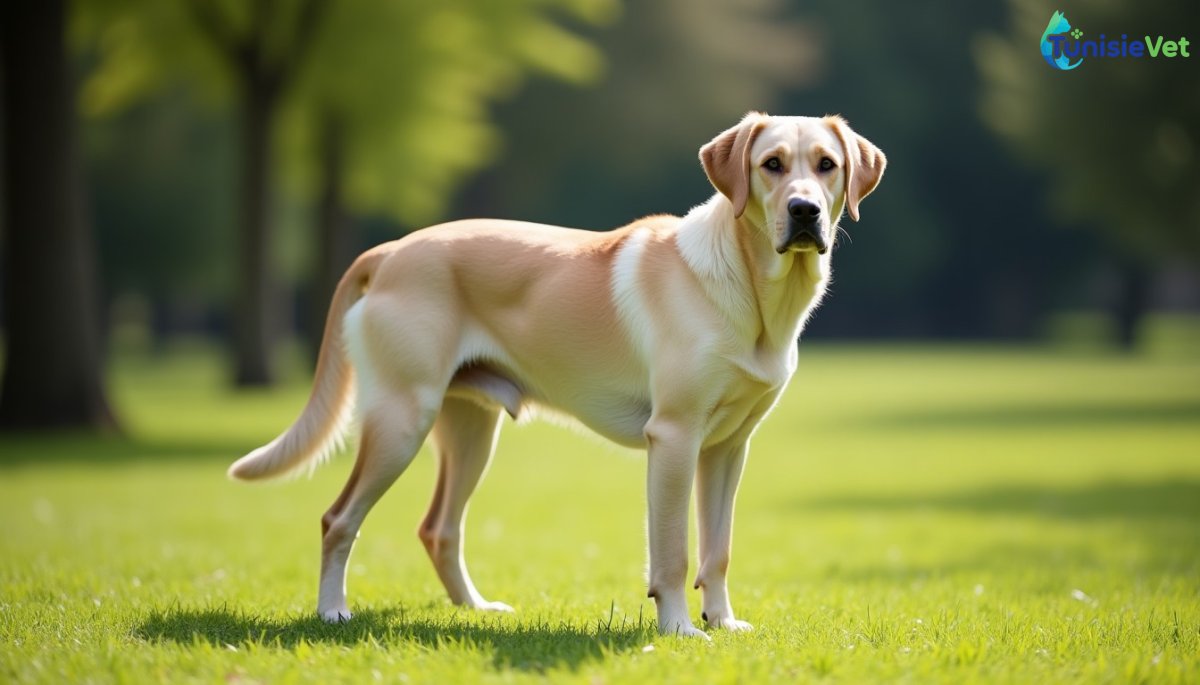
Dogs have a sense of smell hundreds of times more sensitive than ours thanks to a much greater number of olfactory receptors: around 200 to 300 million in dogs, compared to only around 5 to 6 million in humans. This anatomical difference explains most of its scent performance.
A disproportionate nasal architecture
The olfactory epithelium, the mucosa lined with receptors inside the nose, occupies a much larger surface area in dogs than in humans: it can reach several tens of square centimeters depending on the breed, folded into horns to maximize contact with the inspired air. In humans, this surface area remains of the order of only a few square centimeters. The larger the surface area, the greater the number of odorant molecules captured simultaneously.
This olfactory information is then processed by a portion of the brain that is proportionally much more developed than in us: the olfactory bulb and associated regions occupy a significant part of the canine cortex, while they remain modest in humans, more focused on vision. Dogs “think” largely through smells, a bit like humans think through images.
Publicité
Publicité
To this is added an accessory organ, the vomeronasal organ (or Jacobson's organ), located above the palate. It does not detect common odors but specific chemical molecules, notably pheromones, involved in social and sexual communication between dogs. It is partly thanks to him that the dog can gather precise information about a fellow dog simply by sniffing its urine markings.
An architecture specific to dogs, not universal among mammals
This combination (extended epithelial surface, very large number of receptors, dedicated brain part and functional vomeronasal organ) is not systematic in all domestic mammals: it varies greatly depending on the species and, in dogs, according to the morphology of the snout. Breeds with long, broad snouts, such as hunting dogs, generally have a more developed olfactory surface than brachycephalic breeds with shortened snouts.