
Guinea Pig Bathing: How Often and How to Do It Safely

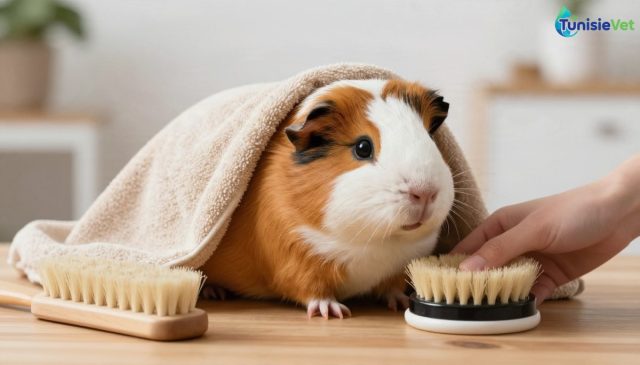
Bathing a guinea pig is almost never necessary: a healthy cavy grooms itself and tolerates water poorly. A bath should stay exceptional, reserved for stubborn dirt or a skin problem flagged by your vet. This article explains the right steps, a sensible frequency, the water temperature, drying, and the mistakes to avoid, including in hot weather.
The TunisieVet app to care for your pet
Vets, adoption and products




1. Do you really need to wash a guinea pig?
Guinea pigs spend a lot of time licking and smoothing their coat. They don't have the strong odour of other pets. A strong smell usually points to a poorly maintained cage, not a dirty animal.
Why bathing is risky
- Water stress can panic the animal, or even make it ill.
- Shampoo dries out the skin and can cause itching and flaking.
- An animal that isn't dried properly catches cold easily, and chills can develop into a respiratory infection.
2. How often should you bathe a guinea pig?
The simple rule: as little as possible. For most guinea pigs, regular bathing is not useful at all. The table below helps you choose the right option.
| Situation | Recommended solution |
|---|---|
| Short coat, clean animal | Dry brushing, no bath |
| Long coat (Peruvian, for example) | Frequent brushing, trimming soiled locks, very rare baths |
| Dirty rear end | Localised cleaning |
| Parasites or skin disease | Treatment prescribed by the vet |
| Extensive soiling (urine, product) | Quick bath in lukewarm water, exceptionally |
3. Alternatives to bathing: brushing and localised cleaning
Dry brushing
Use a soft brush suited to small animals. Brush gently, in the direction of the fur. Long-haired guinea pigs need brushing almost every day to prevent tangles. This is also an opportunity to spot wounds, scabs or parasites.
Cleaning the rear end
- Sit on a towel, with the animal held securely against you.
- Wipe the soiled area with a compress or soft cloth dampened with lukewarm water.
- Dry immediately with a clean towel, then keep it warm.
A rear end that is often dirty can signal a problem: unsuitable diet, diarrhoea or pain. In that case, it's best to see a vet.
4. Good practice for an exceptional bath
- Prepare everything in advance: two towels, a shallow basin, a mild shampoo for small rodents, or plain water if the dirt is light.
- Lukewarm water: pleasant on the inside of your wrist, never hot or cold, only a few centimetres deep so the feet can touch the bottom.
- Wet the body by hand or with a cup, avoiding the head, eyes, ears and nose.
- Rinse thoroughly: soap residue irritates the skin.
- Wrap the animal straight away in a warm towel and pat dry without rubbing.
Drying
Dry the animal completely. A hairdryer can only be used if it is lukewarm, gentle and held at a distance, as the noise frightens the animal. Afterwards, keep it in a temperate room, away from draughts, until the fur is perfectly dry.
5. Guinea pig care in Tunisia: managing the heat
In summer, it is tempting to cool your guinea pig down in water. This is a mistake: a wet, stressed animal copes poorly with such a shock. For guinea pig care in Tunisia, prefer instead:
- a cool, shaded room, never in full sun or on an exposed balcony;
- fresh water, changed often;
- good ventilation without direct draughts;
- regular cage cleaning, as heat speeds up odours and attracts flies.
If the animal is panting, lethargic or refuses to move, it is an emergency: contact a vet quickly. You can find a guinea pig vet in the directory.
6. Mistakes to avoid for guinea pig hygiene
- Using shampoo meant for dogs, cats or humans.
- Submerging the animal entirely or wetting its head.
- Bathing a sick, very young, elderly or exhausted guinea pig without veterinary advice.
- Leaving it damp in the cage or near a fan.
- Replacing cage maintenance with repeated baths.
- Ignoring scabs, hair loss or persistent itching.
Good guinea pig hygiene starts with clean bedding, changed regularly, and a dry living space.
In short
- Don't bathe your guinea pig routinely: dry brushing and localised cleaning are enough.
- For an exceptional bath, use lukewarm, shallow water and a gentle product.
- Dry the animal completely and keep it warm.
- In hot weather, cool the environment, not the animal with a bath.
- See a vet if the skin is damaged, if it itches, or if the rear end is repeatedly dirty.
Frequently asked questions
Can you wash a guinea pig with shampoo?
Yes, but rarely, and only with a mild product designed for small rodents. Shampoos for dogs, cats or humans should be avoided. Rinse thoroughly.
How often should a guinea pig be bathed?
There is no fixed frequency: most guinea pigs never need one. A bath is only given in cases of heavy soiling or on veterinary advice.
How do you cool down a guinea pig in extreme heat?
Place it in a cool, well-ventilated room, with fresh water available. Avoid baths and ice packs in contact with the animal. If it seems unwell, call a vet without delay.
Conclusion
Bathing a guinea pig remains the exception: brushing, a clean cage and targeted cleaning protect its health far better. If you have any doubt about its skin or coat, a vet can guide you.
Need a professional opinion? If in doubt or in an emergency, find a veterinarian near you on TunisieVet.
Leave a comment
Be the first to comment on this article.