Pet Health Check-Ups: Your Complete Beginner's Guide

A health check-up is a comprehensive veterinary examination that verifies your animal's overall condition before any problems become apparent. This practical guide explains when to schedule one, how to prepare, and which mistakes to avoid, so that every new pet owner or farmer adopts the right habits from the start.
1. Why regular health check-ups are essential
Animals instinctively hide pain and fatigue—a survival instinct inherited from their wild ancestors to avoid appearing vulnerable. Regular health check-ups allow detection of invisible anomalies: weight variations, heart murmurs, internal parasites, or early dental problems. The earlier a problem is identified, the simpler and more affordable it becomes to treat.
This monitoring applies to both pets and livestock, as a healthy flock is more productive and more resistant to seasonal illnesses.
2. How often should you schedule a health check-up
The ideal frequency depends on the animal's species, age, and lifestyle. Young, growing animals or seniors require more frequent monitoring than a healthy adult in their prime.
| Animal Profile | Recommended Frequency | Key Points to Watch |
|---|---|---|
| Young animal (growing) | Every one to two months | Vaccination, deworming, weight curve |
| Healthy adult | Once per year | Teeth, weight, skin and coat condition |
| Senior or elderly animal | Twice per year | Joints, heart, kidneys, eyesight |
| Livestock (herd) | According to health schedule | Parasitism, reproduction, nutrition |
3. What happens during a health check-up
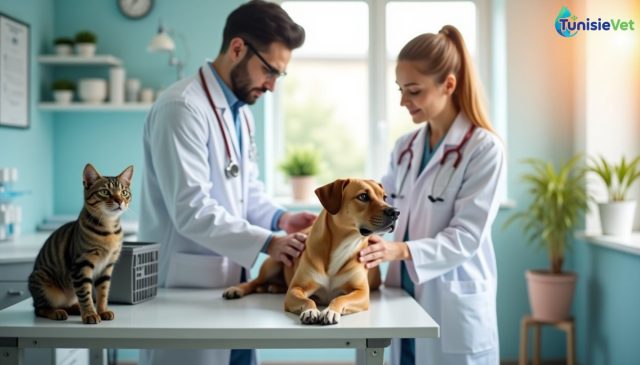
A complete health check-up typically follows a precise protocol, whether for pets or livestock:
- General observation: the animal's attitude, gait, breathing, and behavior in the examination room.
- Vital signs check: temperature, heart rate, and respiratory rate.
- Palpation and auscultation: abdomen, lymph nodes, heart, and lungs.
- Targeted examination: eyes, ears, mouth and teeth, skin, coat, or feathers.
- Weighing and comparison with the animal's reference weight.
- Discussion with the owner about diet, behavior, and recent changes.
If needed, the veterinarian may recommend further tests or follow-up care.
4. How to prepare for your animal's health check-up
Before the appointment
- Note any changes you've observed: appetite, thirst, behavior, stools.
- Gather your animal's health records or vaccination booklet.
- Avoid a large meal just before travel, especially for stress-sensitive animals.
- Transport your animal in a safe, species-appropriate carrier.
During the appointment
- Stay calm to reassure your animal, as they sense their owner's stress.
- Ask all relevant questions, even those that seem minor.
- Request clear explanations for each recommendation given.
5. Common mistakes to avoid
Many beginner pet owners make mistakes that delay the detection of health problems:
- Waiting for visible symptoms before consulting, when a check-up is designed to prevent issues in the first place.
- Skipping check-ups once vaccinations are complete, assuming your animal no longer needs monitoring.
- Hiding information out of fear of judgment, for instance about your animal's actual diet.
- Comparing your animal to others instead of tracking their individual progress.
- Neglecting weight monitoring, which is a simple yet highly revealing indicator.
Avoiding these pitfalls ensures you get real preventative value from each check-up.
6. Veterinary tips for effective home monitoring
Between scheduled check-ups, you remain your animal's primary observer. A few simple habits strengthen this monitoring:
- Weigh your animal regularly, at the same time and under similar conditions.
- Observe stool texture and frequency.
- Check the condition of gums, eyes, and ears.
- Keep a log of any behavioral or appetite changes.
These simple veterinary tips complement professional examinations and make your next appointment conversation more productive.
Summary
- Regular health check-ups allow early detection of problems before they worsen.
- Frequency should adapt to your animal's age, species, and lifestyle.
- Proper preparation makes the examination easier and improves communication with your vet.
- Daily home monitoring effectively complements professional check-ups.
- Consulting your vet without waiting for symptoms prevents many complications.
To organize this monitoring with a qualified professional, consult the veterinarian directory to find a practitioner near you.
Frequently asked questions
How often should my pet have a health check-up?
A healthy adult typically benefits from an annual check-up, while young animals or seniors require more frequent monitoring. The exact schedule should be adjusted with your vet based on species and observed health status.
Is a health check-up necessary if my animal seems fine?
Yes, because many conditions show no visible signs until an advanced stage. A check-up specifically aims to detect these silent problems before they become serious.
What should I bring to a health check-up?
It's helpful to bring your animal's health or vaccination booklet along with a list of any recent changes you've noticed. This information helps the vet tailor the examination more precisely.
Establishing regular health check-ups remains the best way to ensure a long and comfortable life for your animal. By following these simple veterinary tips, every new pet owner or farmer can turn this appointment into a genuinely beneficial habit.
Leave a comment
Be the first to comment on this article.