
Vaccination Schedule: The Complete Guide to Getting Started

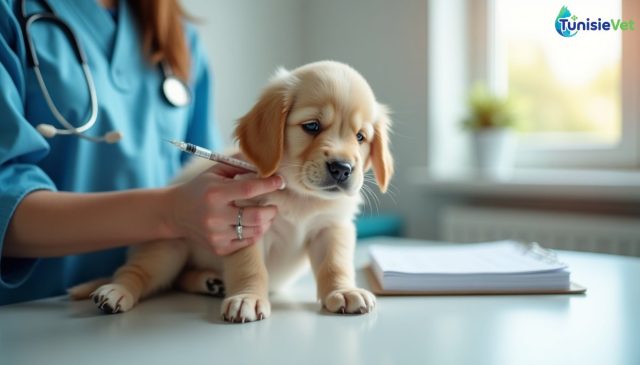
When should a young animal be vaccinated and how can you ensure no booster shots are missed? The vaccination schedule is the reference document that plans each injection according to age and species. This practical guide explains how to build one, what mistakes to avoid, and the best practices for lasting protection of your animal.
The TunisieVet app to care for your pet
Vets, adoption and products

1. Why a vaccination schedule is essential
A newborn animal receives temporary protection through antibodies passed on by its mother. This natural immunity gradually decreases over the first weeks of life, creating a window of vulnerability to infectious diseases. The vaccination schedule allows you to cover this critical period at the right time—neither too early nor too late.
Without precise planning, two risks exist: vaccinating too early when maternal antibodies still neutralize the vaccine, or vaccinating too late while leaving the animal exposed. A personalized veterinary consultation remains the best way to adjust this schedule according to your animal's actual situation.
2. Key stages common to all schedules
Regardless of species, a vaccination schedule follows a similar logic: an initial series of injections in a young animal, followed by regular boosters throughout life.
- Primary vaccination: a series of injections spaced a few weeks apart in the young animal to build solid immunity.
- First booster: generally given within a year of the primary vaccination to strengthen protection.
- Maintenance boosters: repeated thereafter at regular intervals depending on the vaccine and species.
- Targeted vaccines: some vaccines are added based on lifestyle, travel, or exposure to particular risks.
The role of the health record
The health record, or vaccination card, is the document that tracks each injection given. It should always accompany the animal during veterinary visits and also serves as proof during transport, boarding, or relocation.
3. Indicative schedule by animal type
Protocols vary depending on species, environment, and the animal's lifestyle. The table below provides general guidelines, which must be refined with a professional.
| Animal Type | Primary Vaccination Period | First Booster | Subsequent Boosters |
|---|---|---|---|
| Puppy | From the first weeks, multiple injections | Within the year | Annual, depending on vaccine |
| Kitten | From the first weeks, multiple injections | Within the year | Annual, depending on vaccine |
| Foal | After weaning, per veterinary advice | Within the year | Annual or based on exposure |
| Calf | From the first months | Within the year | Annual, depending on herd |
| Young poultry | From the first days, per farm protocol | Per health program | Variable based on local risk |
This table is indicative only: only a veterinarian can establish a precise vaccination schedule tailored to the animal's actual age, breed, and health context.
4. Common mistakes to avoid
Certain errors are common among new owners and breeders and can compromise vaccination effectiveness.
- Postponing appointments: delaying a booster by several weeks weakens the protection built up from previous injections.
- Vaccinating a sick animal: a weakened or feverish animal should be examined before any injection, as the vaccine may be less effective or poorly tolerated.
- Skipping maintenance boosters: a complete primary vaccination without regular boosters loses its effectiveness over time.
- Improvising without professional oversight: every schedule must be personalized; a protocol found online is no substitute for veterinary advice.
- Neglecting deworming: a heavily parasitized animal often responds poorly to vaccination; parasite control is recommended beforehand.
5. Good practices for flawless monitoring
A few simple habits ensure you never lose track of the vaccination schedule.
- Note each booster date directly in a calendar or dedicated app as you leave the veterinary clinic.
- Keep the health record in a fixed, easily accessible location.
- Plan an annual health check-up—the ideal opportunity to verify vaccination status.
- Inform your veterinarian of any lifestyle changes (moving, new animal at home, travel), as these can affect vaccination needs.
- Observe the animal in the hours following injection to detect any unusual reactions.
To build or adjust this schedule, it is always best to rely on a professional. You can consult the veterinarian directory to find a practitioner near you and schedule an initial appointment.
Summary
- The vaccination schedule protects the animal during the period when maternal immunity declines.
- It is based on primary vaccination with multiple injections, followed by regular boosters.
- The health record should always accompany the animal during consultations.
- Delaying a booster or vaccinating a sick animal reduces protocol effectiveness.
- Personalized veterinary advice remains essential for adapting the schedule to each situation.
Frequently Asked Questions
At what age should I start a vaccination schedule?
Primary vaccination generally begins in the first weeks of life, when the protection passed from the mother starts to decline. The exact age varies by species and should be confirmed by a veterinarian.
What should I do if I miss a booster shot?
Don't wait until the next annual cycle—contact a veterinarian quickly to assess whether part of the protocol needs to be restarted. The longer the delay, the greater the risk that immunity will be weakened.
Is the vaccination schedule the same for all animals of the same species?
No, it varies based on age, health status, lifestyle, and exposure to local risks. Two animals of the same species may therefore follow slightly different schedules, tailored case by case.
Implementing a rigorous vaccination schedule is one of the simplest ways to preserve an animal's health long-term. Don't hesitate to consult a professional for personalized veterinary advice and make this follow-up a true routine reflex.
Leave a comment
Be the first to comment on this article.
