Insecticides for Pets: Questions Every Owner Should Ask

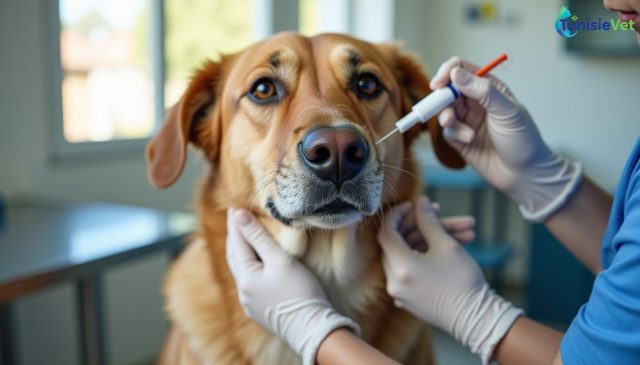
An incorrectly chosen insecticide can irritate your pet's skin, cause vomiting, or even endanger their life. This practical guide answers the most frequently asked questions about insecticides used against fleas, ticks, and mosquitoes, with concrete veterinary advice to protect your companion without unnecessary risk.
1. Why Use an Insecticide for Your Pet?
Insecticides are designed to eliminate or repel external parasites such as fleas, ticks, lice, or certain mosquitoes. These parasites do more than cause itching: they transmit potentially serious diseases and trigger allergic reactions in sensitive animals. An appropriate insecticide treatment remains one of the cornerstones of animal health prevention, just as important as deworming.
In both cats and dogs, an untreated flea infestation can quickly spread throughout your home, as eggs and larvae survive for extended periods in textiles and carpets. This is why it's important to act early, regularly, and strategically.
2. What Types of Insecticides Are Available for Pets?
The market offers several product families, each with different modes of action and protection durations. The choice depends on the animal's species, age, weight, and lifestyle.
- Spot-on pipettes: Applied directly to the skin between the shoulder blades, they release the active ingredient over several weeks.
- Antiparasitic collars: Extended protection with convenient application, but monitor to prevent accidental ingestion by other household pets.
- Oral tablets: Rapid and effective action with no risk of transfer through contact.
- Sprays and shampoos: Useful for one-time treatments or as complementary products, though their action is often shorter-lasting.
Comparison Table of Main Insecticide Forms
| Form | Duration of Protection | Main Advantage | Safety Consideration |
|---|---|---|---|
| Spot-on pipette | Several weeks | Easy to apply | Avoid contact before complete drying |
| Collar | Several months | Continuous protection | Remove if neck irritation occurs |
| Tablet | Approximately one month | No residue on fur | Requires normal appetite |
| Spray | A few days to weeks | Targeted application | Avoid eyes and mucous membranes |
3. Are Dog Insecticides Dangerous for Cats?
Yes, and this is one of the most common and dangerous mistakes. Some insecticides formulated for dogs contain substances toxic to cats, even in very small amounts. Simple contact through mutual licking or cuddling can cause serious poisoning in a cat.
It is therefore essential to always verify that the product is explicitly indicated for your pet's species, and to temporarily separate household animals after applying a spot-on treatment.
4. How to Apply an Insecticide Safely?
- Carefully read the product information leaflet before any application, including warnings related to age or pregnancy.
- Weigh your pet or estimate their weight accurately, as dosage varies by weight range.
- Part the fur at the back of the neck to apply a pipette directly onto the skin.
- Avoid bathing or swimming for several days following application, as indicated on the product label.
- Monitor your pet for hours after application: excessive salivation, tremors, or lethargy should raise concern.
5. What Mistakes Should You Avoid With Insecticides?
- Using an expired product or one stored at improper temperature, which reduces effectiveness.
- Double-treating by combining a collar, pipette, and spray without professional advice, risking overdose.
- Treating a kitten or young puppy with a product intended for adults.
- Neglecting your environment: Treating only the animal is insufficient if your home remains infested.
- Ignoring signs of intolerance such as redness, itching, or localized hair loss.
6. When Should You Consult a Veterinarian About Insecticides?
Consultation is necessary as soon as abnormal symptoms appear after application: vomiting, tremors, difficulty breathing, or marked lethargy. It is also recommended before treating a pregnant female, an elderly animal, a sick pet, or a very young individual.
If you have any doubts about the most suitable product for your pet, or to establish a coherent antiparasitic treatment schedule for the year, it is best to seek advice from qualified professionals. You can consult the directory of veterinarians for dogs or that of veterinarians for cats depending on your pet, or browse the general veterinarian directory to find a professional near you.
In Summary
- Always choose an insecticide specific to your pet's species, never one intended for another.
- Strictly follow the dosage according to your pet's weight and age.
- Monitor your pet after each application, especially when using a product for the first time.
- Treat your home environment to prevent rapid reinfestation.
- Consult a veterinarian if you have any doubts or notice unusual reactions.
Frequently Asked Questions
Can I use dog insecticide on a cat?
No, this is strongly discouraged and can be dangerous, even fatal. Each product is formulated according to the physiology specific to each species. Always use an insecticide specifically designed and approved for your pet's species.
How often should I treat my pet for fleas?
The frequency depends on the product used and your pet's lifestyle, especially if they spend regular time outdoors. The manufacturer's instructions typically indicate the recommended interval between applications.
Can an insecticide cause an allergic reaction?
Yes, some animals may develop sensitivity to an active ingredient, resulting in redness, itching, or localized hair loss. If a reaction appears, rinse the area if possible and consult a veterinarian promptly.
When used correctly, insecticides remain an effective and safe tool to durably protect your pet from external parasites. If you have any doubts about choosing or applying an insecticide, professional advice is your best guarantee of safety for your companion.
Leave a comment
Be the first to comment on this article.