
Chemical Safety for Pets and Livestock: Complete Guide

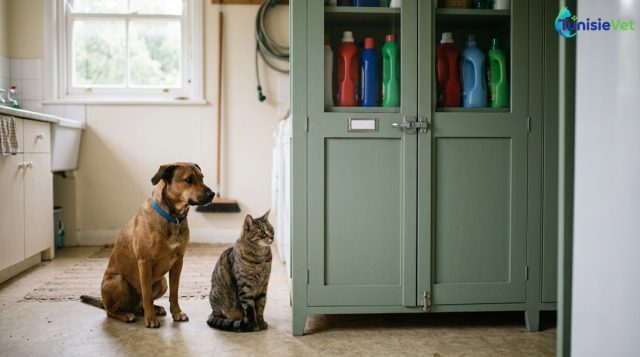
Everyday chemicals—detergents, disinfectants, pesticides, antiparasitic products, and gardening supplies—pose a genuine threat to pets and livestock. This practical guide explains how to identify chemical hazards, store products safely, and respond to exposure incidents, helping you protect your animals with sound veterinary advice.
1. Why Are Chemical Products Dangerous for Animals?
Animals explore their surroundings using their nose, mouth, and paws, exposing them directly to toxic substances. A dog may lick a puddle of household cleaner, a cat might walk through herbicide spray and then groom its paws, and a chicken could peck at rodent pellets. Their lower body weight relative to humans also amplifies the effect of the same amount of chemical exposure.
Some substances act through ingestion, others through skin contact or inhalation of fumes. This is why proper ventilation and hermetically sealed storage are two essential precautions to implement from the moment you bring a new animal home, whether in a house or on a farm.
2. Chemical Product Families to Watch Carefully
Household and Hygiene Products
Bleach, descaling agents, laundry detergents, and disinfectants contain corrosive or irritant substances. Prolonged contact with skin or mucous membranes can cause burns, even at low concentrations.
Garden and Outdoor Products
Herbicides, chemical fertilizers, slug pellets, and anti-moss products are often attractive to animals because of their smell or granulated texture. They remain active on soil or foliage for several days after application.
Antiparasitic and External Medicines
An incorrectly dosed antiparasitic, expired product, or one intended for a different species can cause serious poisoning. Products formulated for dogs, for example, may be dangerous for cats due to metabolic differences.
Products Used in Livestock Operations
Building disinfectants, teat cleaning products, rodenticides, and agricultural insecticides must be handled with appropriate protective equipment and kept out of reach of both livestock and any companion animals on the property.
3. Common Mistakes Made by Beginners
- Leaving a product open or improperly sealed within reach of a curious animal.
- Using an antiparasitic or medicine intended for a different species without professional advice.
- Applying garden treatments without respecting the waiting period before allowing animals access to the treated area.
- Storing chemical products in food containers, creating confusion.
- Underestimating fumes from a freshly applied product in a poorly ventilated space.
- Neglecting to read the label before each use, even for a familiar product.
4. Best Practices for Preventing Poisonings
- Store all chemical products in a locked cabinet, at height, completely out of reach of animals.
- Keep products in their original packaging with a readable label.
- Strictly follow dosages and timeframes, especially for antiparasitic treatments.
- Ventilate rooms thoroughly after any cleaning or disinfection before allowing animals to return.
- Fence off or monitor access to garden areas or farm zones immediately after treatment.
- Seek professional advice before combining multiple products or treatments.
5. Recognizing Signs of Exposure and Acting Quickly
Symptoms vary depending on the product involved, the amount absorbed, and the route of exposure. Quick action always improves the outcome.
| Type of Exposure | Possible Signs | Urgency Level |
|---|---|---|
| Ingestion of household or garden product | Vomiting, excessive salivation, loss of appetite | High |
| Skin contact with corrosive product | Redness, irritation, persistent licking of an area | High |
| Inhalation of fumes | Coughing, difficulty breathing, watery eyes | High to moderate depending on duration |
| Overdose of antiparasitic | Tremors, agitation or lethargy, digestive upset | High |
If any of these signs appear, do not wait for the condition to worsen. Remove the animal from the product source, keep the packaging to identify the substance, and contact a professional promptly—this is the best approach when poisoning is suspected.
6. What to Do While Waiting for Veterinary Care
- Immediately move the animal away from the chemical product source.
- Rinse skin or eyes thoroughly with clean water if exposed to an irritant product.
- Never induce vomiting without professional guidance; certain corrosive products cause additional damage if brought back up.
- Keep the product packaging or label to help identify the substance involved.
- Note the approximate time of exposure and estimated quantity involved.
These actions never replace professional advice. If you suspect poisoning, it is essential to consult experienced qualified veterinarians who can assess the severity and provide appropriate treatment.
Key Takeaways
- Store all chemical products out of reach, in their original packaging.
- Follow recommended dosages and timeframes, particularly for antiparasitic treatments.
- Ensure proper ventilation after use and secure treated areas before allowing animals access.
- Learn to recognize exposure signs so you can respond without delay.
- When in doubt, always contact a professional rather than attempting improvised treatment.
Frequently Asked Questions
Which chemical products pose the greatest risk to pets and livestock?
Corrosive products like bleach, antifreeze, rodenticides, and poorly dosed antiparasitic treatments are among the highest risks. Their danger also depends on the quantity involved and each species' individual sensitivity.
Is it safe to use standard household cleaners around animals?
Yes, provided you ventilate the space well and store the product immediately after use. It is preferable to move the animal away during application and allow it to return only once surfaces have dried.
What should I do if my pet licks a chemical product?
Move the animal away from the product, keep the packaging to identify the substance, and contact a professional immediately without waiting for symptoms to develop. Never induce vomiting without specialist advice, as some products cause greater harm if brought back up.
Developing good habits regarding chemical products protects your animals' health over the long term, whether they live at home or on a farm. Whenever you are unsure about a product or symptom, always seek veterinary advice before taking action.
Leave a comment
Be the first to comment on this article.
