Household Cleaners and Pets: Complete Safety Guide

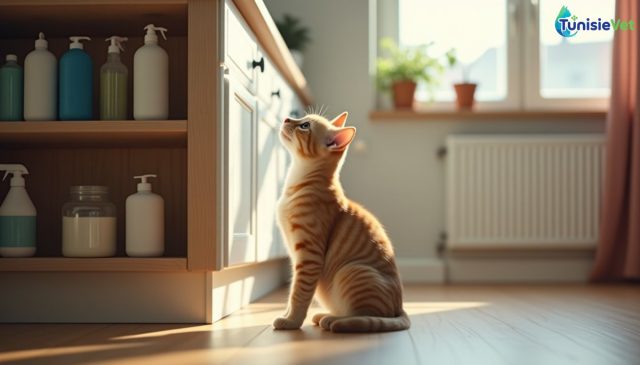
Many pet owners don't realize that everyday household cleaners rank among the leading causes of poisoning in companion animals. This practical guide explains how to identify hazards, adopt proper storage habits, and respond appropriately to accidental exposure—protecting cats, dogs, and other pets for the long term.
1. Why household cleaners pose a real danger to pets
Domestic animals explore their environment using their nose and mouth, exposing them directly to residues from cleaning products, disinfectants, and laundry detergents. Their smaller bodies—and sometimes more sensitive systems than humans—often react more strongly to the same amount of product. Certain chemicals cause skin, eye, or respiratory irritation, while others can lead to serious digestive problems after ingestion.
Cats are particularly vulnerable because they groom themselves with their tongue, inadvertently ingesting any residue on their paws or coat. Dogs, being more curious and sometimes more voracious, run greater risk of directly swallowing from a poorly sealed bottle or a soaked sponge.
The most common exposure routes
- Licking paws after contact with a freshly cleaned floor
- Direct ingestion of a product left within reach
- Inhaling fumes in a poorly ventilated room
- Skin or eye contact from accidental splashing
2. Categories of household cleaners to monitor closely
Not all household products carry the same level of risk. Some are relatively well tolerated after brief contact, while others are dangerous even in small amounts. The table below summarizes the main product families and their associated precautions.
| Product Type | Main Risk | Recommended Precaution |
|---|---|---|
| Bleach and chlorinated disinfectants | Chemical burns, respiratory irritation | Rinse surfaces thoroughly, ventilate well, store out of reach |
| Concentrated detergents and laundry products | Skin irritation, digestive upset | Seal tightly, store at height |
| Drain cleaners and highly corrosive products | Severe burns to mouth and esophagus | Never leave bottles open, store in locked cabinet |
| Air fresheners and diffusers | Respiratory irritation, reactions in birds | Avoid continuous diffusion in a closed room |
| Dishwasher products and anti-foam agents | Vomiting, mouth irritation | Store at height, keep tablets out in the open |
3. Common mistakes made by new pet owners
Most domestic accidents happen because of seemingly harmless habits. Identifying these common errors makes them easy to correct.
- Leaving a bucket of soapy or bleach-containing water accessible during cleaning
- Cleaning floors without allowing dry time before letting the pet back in
- Storing products under the sink at nose height for a dog
- Reusing food bottles to store household cleaners
- Neglecting to ventilate after using a strong disinfectant
Establishing good storage habits from the start significantly reduces accident risk, especially in a household with a very curious kitten or puppy.
4. Best practices for safe daily use
Before cleaning
- Isolate the pet in another room during product application
- Check that ventilation is adequate
- Choose low-toxicity products when a substitute is available
During and after cleaning
- Follow the contact time and rinsing instructions on the label
- Allow floors to dry completely before giving the pet access again
- Close each bottle securely after use
- Store products at height, in a closed cabinet if possible
Long-term storage organization
A dedicated, locked, or elevated space reserved only for household products prevents any mix-ups. It's also wise to keep original packaging with legible labels—useful for quick product identification if needed.
5. What to do if accidental exposure occurs
When faced with suspected contact or ingestion, quick reaction matters as much as staying calm. Here's what to do:
- Move the pet away from the product source without putting yourself at risk
- Watch for symptoms: excessive drooling, vomiting, difficulty breathing, lethargy
- Rinse the contact area (skin, eyes, muzzle) thoroughly with lukewarm water for skin or eye contact
- Never induce vomiting without professional advice—some corrosive products cause worse injury if brought back up
- Contact a veterinarian promptly, describing the product involved precisely
Keeping the product container handy greatly aids diagnosis and treatment. When in doubt, seek consultation without delay rather than monitoring at home alone: veterinarians listed in our directory can quickly guide you toward the right course of action for your pet's species and situation.
6. Alternatives and safer household habits
Simple habits can reduce your pet's overall exposure to chemicals without compromising your home's hygiene.
- Prioritize thorough ventilation after each major cleaning session
- Choose products without strong artificial fragrances to limit respiratory irritation
- Clean bowls and toys with plain water, rinsing thoroughly to remove all soap residue
- Label decanted product containers clearly
- Teach every household member, including children, proper storage rules
Summary
- Household cleaners pose a genuine poisoning risk to companion animals
- Storing at height and consistently closing bottles prevents most accidents
- Allowing floors to dry and ventilating after use protects your pet's airways
- In case of exposure, rinse, monitor for symptoms, and consult a veterinarian quickly
- Adopting good habits from day one prevents many avoidable emergencies
Frequently Asked Questions
Can household cleaners be dangerous to cats and dogs?
Yes, most common household cleaners can cause irritation, burns, or digestive upset depending on their composition and the amount involved. Risk depends on the product, the route of exposure, and the species affected.
How often should I ventilate after cleaning with chemical products?
It's recommended to ventilate thoroughly after each use of a disinfectant or heavily scented product, until all fumes have completely cleared. Good ventilation significantly reduces your pet's risk of respiratory irritation.
What should I do if my pet licked a freshly cleaned floor?
Watch for signs of excessive drooling, vomiting, or lethargy in the hours following exposure. If you notice any unusual symptoms, contact a veterinarian promptly and mention the specific product used on the floor.
Adopting the right habits around household cleaners remains one of the simplest and most effective prevention steps to safeguard your pet's health every day. This practical guide provides a solid foundation, but every specific situation benefits from consultation with an animal health professional.
Leave a comment
Be the first to comment on this article.
Be among the first to use our app. Sign up and get early Google Play access.
Discover