
Household Cleaners Toxic to Pets: Secure Your Home Safely

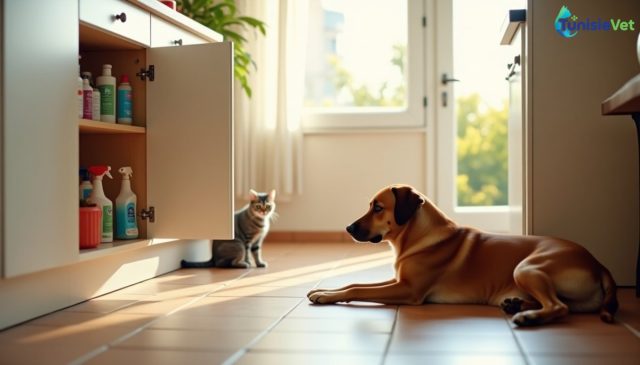
A dog or cat can become poisoned in just minutes from a household cleaning product stored seemingly in a safe place. Toxic household cleaners for pets hide under the sink, in the laundry room, or even in indoor plants. This guide identifies real household dangers and offers practical steps to secure your home without sacrificing cleanliness—essential advice for pet owners and small-scale farmers in Mediterranean climates.
The TunisieVet app to care for your pet
Vets, adoption and products





1. The most dangerous cleaning products found at home
Common household cleaners can cause digestive burns, respiratory problems, or kidney failure in dogs, cats, rabbits, and small ruminants. The danger rarely comes from deliberate ingestion: an animal licks a wet surface, walks through a puddle then grooms itself, or knocks over an improperly sealed bottle.
- Bleach and chlorine-based disinfectants: irritate mucous membranes and are dangerous if ingested or inhaled for extended periods in poorly ventilated rooms.
- Concentrated detergents and dishwasher tablets: highly alkaline, they cause burns to the mouth and esophagus as soon as they are chewed.
- Drain cleaners: among the most corrosive products in the home and must be stored well out of reach.
- Antifreeze and coolant liquids: their sweet taste attracts dogs and cats, yet even a small amount can cause severe kidney damage.
- Domestic insecticides and rodent poisons: designed to kill, they remain toxic to pet mammals and to poultry that peck at ground level.
- External antiparasitic products not suitable for the species: a product formulated for dogs can poison a cat that licks it or sleeps in contact with it.
2. Toxic plants and overlooked household products
Beyond cleaning bottles, other sources of toxicity slip into daily life without drawing the attention of pet owners.
Indoor and garden plants
Lilies are highly toxic to cats, even in small amounts of pollen. Oleander, common in Mediterranean gardens, is toxic to dogs, cats, and small ruminants like goats or sheep that might browse its leaves. Ficus, dieffenbachia, and certain garden bulbs (daffodil, hyacinth) complete the list of plants to watch around enclosures and patios.
Everyday products not classified as "household cleaners"
- Toilet bowl tablets or air freshening beads: attractive for their scent, they are ingested out of curiosity.
- Anti-mold products and fresh paint: their vapors irritate the respiratory tract of small animals, which are more sensitive to room volume.
- Sunscreen, creams, and human cosmetics: some ingredients are toxic to dogs and cats if licked off the skin.
- Pool chemicals (shock chlorine, tablets): common in summer in Tunisian gardens, dangerous if ingested directly or through contact with heavily treated water.
3. Recognizing the signs of poisoning
Poisoning from cleaning products often appears very quickly, sometimes within minutes to a few hours after contact or ingestion.
| Sign observed | Product often responsible | Urgency level |
|---|---|---|
| Excessive drooling, vomiting | Detergents, toxic plants | High |
| Visible burns around the mouth | Bleach, drain cleaners, dishwasher tablets | Very high, immediate emergency |
| Lethargy, intense thirst, loss of balance | Antifreeze | Very high, life-threatening emergency |
| Cough, difficulty breathing | Chlorine vapors, paint, aerosols | High |
| Tremors, convulsions | Insecticides, rodent poisons | Very high, life-threatening emergency |
If you notice any of these signs, never induce vomiting without professional advice, as some corrosive products cause worse injuries when brought back up. Contacting a veterinarian immediately is the safest response, and keeping the product packaging if possible will help speed up diagnosis.
4. Securing your home without compromising hygiene
Keeping a clean home and a safe pet is not contradictory—it simply requires adapting storage and daily habits.
- Store products high up or behind a locked door: low cabinets under the sink remain accessible to a curious dog or agile cat.
- Seal bottles immediately after use, even for just a few minutes while you answer the phone.
- Never transfer a household product into a water bottle or food container: your pet cannot tell the difference by smell alone.
- Rinse thoroughly floors, food bowls, and surfaces after cleaning, especially if using diluted bleach.
- Ventilate the room during and after using any product with strong vapors before allowing pets back in.
- Secure garden areas and enclosures for small ruminants: check for the absence of oleander, paint residue, or agricultural treatment drums near fences.
- Store agricultural products and antiparasitic treatments in a closed space, separate from livestock or poultry feed storage areas.
5. Safe and natural alternatives for daily cleaning
Several solutions allow you to reduce your pets' exposure to harsh chemicals while keeping your home clean.
- Diluted white vinegar: degreases and deodorizes many surfaces, though use with caution on marble or lime-based floors.
- Baking soda: effective against odors and light stains, safe if accidentally contacted in small amounts.
- Black soap or Marseille soap: mild cleaners suitable for floors and surfaces frequently used by pets.
- Essential oils to avoid around pets: contrary to popular belief, many essential oils are toxic to cats in particular and should be excluded from homemade "natural" products.
- Products certified safe for animals: when buying specific cleaners, look for labels explicitly stating safety for pets. A wide range of accessories and items designed for home safety is available on the TunisieVet marketplace.
Summary
- Consistently store cleaning products out of reach with bottles tightly sealed.
- Identify toxic plants in your garden, especially oleander in Mediterranean climates.
- Recognize emergency signs: drooling, burns, tremors, breathing difficulties.
- Favor white vinegar, baking soda, and black soap for safer cleaning.
- Contact a professional immediately if you suspect your pet has ingested something toxic.
Frequently asked questions
What household cleaning products are most toxic to dogs and cats?
Bleach, drain cleaners, dishwasher tablets, and antifreeze are among the most dangerous. Even in small quantities, these products can cause severe internal burns or kidney damage.
What should I do if my pet is poisoned by cleaning products?
Remove your pet from the source, do not induce vomiting without professional advice, and contact a veterinarian immediately. Keeping the product packaging helps speed up diagnosis and treatment.
Are there safe ways to clean my home when I have a pet?
Yes, diluted white vinegar, baking soda, and black soap are effective and lower-risk alternatives. However, avoid essential oils, which are often toxic to cats despite their natural reputation.
Securing your home against toxic household products for pets requires minimal effort once good habits are established. When in doubt about any product your pet has swallowed, licked, or simply inhaled, consult a veterinarian without delay—it remains the best protection for your dog, cat, rabbit, or small ruminants.
Leave a comment
Be the first to comment on this article.
