
X-ray for Animals in Tunisia: Cost and How to Prepare

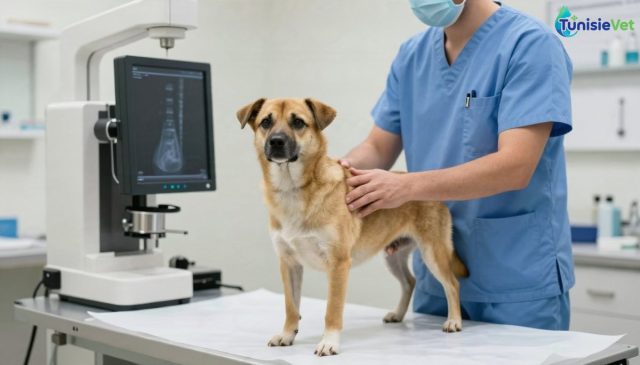
The cost of a veterinary X-ray in Tunisia depends on the examination requested, the animal and the care needed around the images. There is no single price that applies to every situation: the most reliable approach is to ask your veterinarian for an estimate. Here is how to understand the possible fees, compare what a practice and a clinic offer, and prepare your animal without taking risky initiatives before the appointment.
The TunisieVet app to care for your pet
Vets, adoption and products


Veterinary X-rays in Tunisia: what determines the cost
An X-ray allows the veterinarian to obtain images of the inside of the body. It can help guide a diagnosis, but its usefulness depends on the situation and the clinical examination. The cost of an animal X-ray is not necessarily limited to taking an image.
The area examined and the images required
The veterinarian chooses the area to examine based on the medical question: a painful leg, for example, does not require the same investigation as an examination of the chest. Several positions or views may be useful to examine an area properly.
Ask what the estimate includes and whether additional images might be needed. The number cannot always be fixed before the examination: it depends in particular on image quality and on what the veterinarian is looking to observe.
The animal's size and cooperation
A dog, a cat or a farm animal do not necessarily need to be handled in the same way. Size, pain, agitation and the position required all influence how the examination is organised. Restraint assistance or sedation may sometimes be considered to obtain images under good conditions.
Sedation is not systematic. The veterinarian assesses its benefits and risks depending on the animal and the examination. If it is proposed, ask whether its cost and the associated monitoring are included in the estimate.
Consultation and terms of care
The consultation, the interpretation of the images and any additional treatment may be charged separately or included in a single service. Urgent care may also change the amount charged. To avoid surprises, ask for clarification on what is included rather than comparing only the price quoted for one image.
Practice or clinic: how to compare services
Equipment, organisation and services offered vary from one facility to another. Both a practice and a clinic may refer you to a suitable facility if the required examination cannot be carried out on site. The name of the establishment alone therefore does not tell you the price or the care pathway for your animal.
| Point to check | Useful question | Why ask? |
|---|---|---|
| Carrying out the examination | Is an X-ray possible on site for my animal? | To anticipate a possible transfer to another facility. |
| Services included | Are the consultation and interpretation included? | To compare estimates covering the same services. |
| Restraint and sedation | Could these be necessary and charged for? | To plan for possible costs and preparation. |
| Results and follow-up | How will the images and conclusions be shared? | To ensure continuity of care if another veterinarian is involved. |
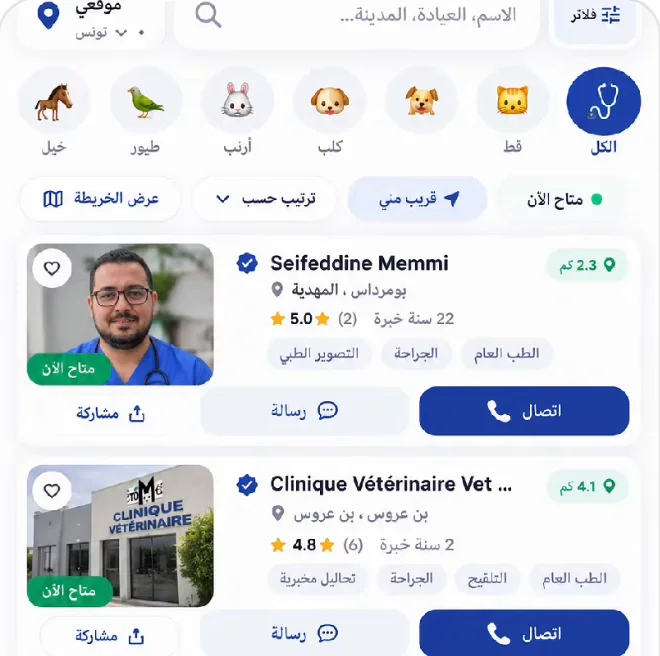
In Tunisia, contact facilities accessible from your home or farm before travelling, where the situation allows. Specify the species and the reason for the request. You can use the directory of veterinarians in Tunisia to find a professional to contact.
Which questions should you ask before requesting an estimate?
A useful estimate describes the services planned and their limits. It may change if the clinical examination reveals a different need. Explain the symptoms, when they started and any treatment already received: this information helps the team direct you appropriately.
- Is an X-ray indicated? Ask what it would help to look for and whether a prior consultation is needed.
- What does the quoted amount cover? Ask for clarification on the consultation, the planned images, their interpretation and whether the images will be handed over.
- What additional costs could arise? Ask the team about sedation, extra images or other care if the veterinarian considers them necessary.
- When will I be told about a change? Ask to be informed before any additional service, provided the animal's condition allows it.
- Is a referral needed? If your regular veterinarian refers you elsewhere, check which documents to send and who will handle follow-up.
For a farmer, also specify whether the animal can be transported safely and ask how its care will be organised. Do not try to move a heavy or painful animal on your own if this risks worsening its condition or injuring you.
How to prepare an animal X-ray without adding stress
Checking feeding instructions and treatments
Fasting may be requested when sedation or anaesthesia is planned, or depending on the examination. Do not withhold food or water without instructions suited to the species and the animal. Ask precisely what to do and for how long.
Report any treatments in progress and ask whether they should be given as usual. Do not change a prescription on your own initiative. Also mention known health problems, previous reactions to medication and possible pregnancy.
Preparing transport and documents
For a cat or a small animal, use a suitable, stable carrier. For a dog, bring a lead and well-fitted equipment. Handle a painful animal gently and ask the facility for advice if getting it into the vehicle is difficult.
Bring prescriptions, reports, any previous images available and the contact details of your regular veterinarian. These items help place the examination in context and can help avoid unnecessary repetition. The veterinarian nevertheless decides whether new images are still needed.
Note useful circumstances before leaving: painful area, change in behaviour, any accident or difficulty moving. An accurate description helps the consultation, without replacing the examination of the animal.
On the day of the examination and after the images
On arrival, tell the team if the animal seems particularly anxious or is in pain when touched. Follow handling instructions: appropriate restraint protects the animal and the people present. Do not try to hold a painful area yourself unless you have been asked to.
The owner's presence during imaging is not always possible. The team's instructions take safety and protection from radiation into account. Ask your questions before the examination if you want to know how your animal will be cared for.
After the X-ray, ask the veterinarian what the images show, what they do not allow them to conclude and what the next step is. A further examination may sometimes be proposed depending on the results and the animal's condition: ask its purpose before making your decision.
If sedation was given, ask for an explanation of the instructions for returning home, particularly regarding food, water and monitoring. Also ask whom to call if its behaviour worries you. In case of distress or severe pain before the appointment, contact a veterinarian promptly rather than waiting to compare prices.
In summary
- Ask for an estimate that separates the images, the consultation and any possible additional services.
- Check that the facility can examine your species and compare equivalent services.
- Follow only the fasting and treatment instructions given for your animal.
- Bring previous documents and images, then ask for the conclusions and follow-up instructions.
Frequently asked questions
How much does an X-ray for a dog or cat cost in Tunisia?
The price of a dog or cat X-ray varies depending on the examination, the number of images and the services included. Ask the facility that will care for your animal for a detailed estimate.
Can I feed my animal before an X-ray?
This depends on the species, the examination and any possible sedation. Contact the veterinarian before the appointment and do not fast your animal without instructions.
Does an X-ray always require anaesthesia?
No, sedation or anaesthesia is not systematic. For a veterinary X-ray in Tunisia, the practitioner chooses the approach suited to the animal and explains the precautions required.
Leave a comment
Be the first to comment on this article.
