
Vaccinating a New Dog or Cat: How to Prepare the First Visit


When vaccinating a newly adopted dog or cat, gather everything that proves its past before the first consultation: vaccination record, microchip, dates and names of the vaccines. Without documents, the vet starts from scratch and has to adapt the protocol. Here are the documents to collect, the information to note, the questions to ask and the mistakes to avoid.
The TunisieVet app to care for your pet
Vets, adoption and products



1. The Documents to Gather Before the First Visit
A newly adopted animal rarely comes with a complete file. Collect whatever exists, from the shelter, the rescue association or the former owner.
- The vaccination record (or health booklet), with stamps, vial labels and the vet's signature.
- The identification document: microchip or tattoo number, if one exists.
- The transfer or adoption certificate, which states where the animal came from.
- Prescriptions and reports: sterilization, deworming, antiparasitic treatment, ongoing care.
Also bring photos of the record's pages: they are less likely to get lost than paper.
2. Noting the Vaccination History: What Matters
Even a handwritten record can be valuable. Note what can be read, and point out what is missing.
What the Vet Looks For
- The diseases covered by each injection, and the date of each one.
- The approximate age of the animal at the first injection.
- Whether boosters were given, and when.
- Any reaction after a vaccine: lethargy, swelling, vomiting.
When the History Is Unknown
This is common for an animal found on the street or given between private individuals, a situation frequently encountered in Tunisia. Be honest about it: without proof, the vet often considers the animal unvaccinated and proposes a schedule suited to its age and condition.
3. Questions to Ask the Vet
- Which vaccines are essential for my animal, and which depend on its lifestyle?
- Does it need a health check first, or can it be vaccinated today?
- When should boosters be scheduled, and how should they be recorded in the booklet?
- Should it be dewormed and treated for fleas and ticks before or at the same time?
- When can my animal go outside or meet other animals?
- Which signs after the injection mean I should call you back?
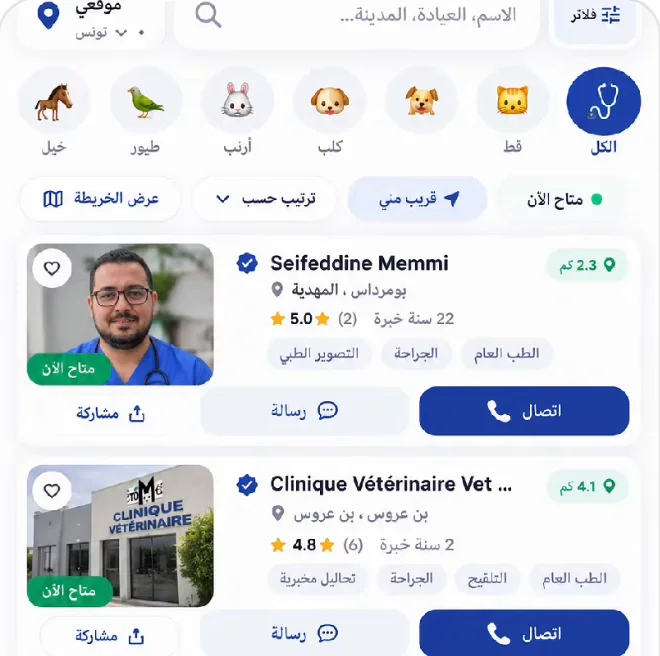
To find a professional near you, check the directory of veterinarians for dogs or the one for veterinarians for cats. If you have just adopted, the adoption page may also help.
4. Adapting Your Preparation to Your Situation
| Situation | What to Prepare | What to Ask |
|---|---|---|
| Shelter adoption | Vaccination record, microchip, reports | Vaccines already given, booster dates |
| Private donation | Any documents from the former owner | A new schedule if proof is missing |
| Found animal | Photos, place and date of discovery | Microchip check, full protocol |
| Puppy or kitten | Estimated age, dewormer received | Schedule of successive injections |
5. Common Mistakes When Bringing the Animal Home
- Taking an "oral" vaccine on trust: without a written record, it does not count.
- Going out too early: a puppy or kitten still building protection should not visit parks, beaches or stray cats before the vet gives the go-ahead.
- Vaccinating a sick animal: fever, diarrhea or coughing must be reported before any injection.
- Forgetting parasites: in hot climates, fleas and ticks are active much of the year; discuss them at the visit.
- Mixing animals on day one: keep the newcomer isolated for a few days, away from your other pets.
- Losing the record: keep it with your papers and have it updated at every visit.
6. Heat and Travel: The Tunisian Context
In summer, avoid waiting in a hot car or overheated waiting room: bring a ventilated carrier for the cat, fresh water, and book an appointment during cooler hours. A stressed or dehydrated animal copes less well with a consultation. After the injection, let it rest quietly in the shade.
In Short
- Gather the vaccination record, microchip, certificate and reports, and photograph them.
- Note dates, vaccines and reactions; be open about any gaps or unknowns.
- Prepare your questions on boosters, parasites and first outings.
- Isolate the newcomer and avoid contact until the vet gives approval.
Frequently Asked Questions
When should I take an adopted animal to the vet?
In the first few days after arrival, especially if it is young or its history is uncertain. The vet examines the animal and decides on the vaccination schedule.
Can an animal be vaccinated without a record?
Yes. Without written proof, the vet can start a complete schedule. A new record will then be opened, which you should keep safe.
Should a cat that stays indoors be vaccinated?
Often yes, since germs can enter on shoes or during a stay in boarding. The vet will specify which vaccines suit its lifestyle.
Preparing well for the vaccination of your newly arrived dog or cat means giving the vet the reference points they need. An up-to-date record and a few good questions are enough to start life together on the right footing.
Need a professional opinion? If in doubt or in an emergency, find a veterinarian near you on TunisieVet.
🎬 Watch the video
Leave a comment
Be the first to comment on this article.
