
Presentation
The Toad is an anuran amphibian characterized by dry, warty skin and a stocky body, less thin and less bouncy than that of the frog. It brings together numerous species distributed in the Bufonidae family, of which the common Toad (Bufo bufo) is one of the best-known representatives in North Africa and Europe. Active especially at dusk and at night, it moves mostly by walking or by small short jumps. Its skin secretes toxic substances which protect it from many predators. It depends on water for its reproduction but spends most of its adult life in a terrestrial environment. Present on almost all continents, it plays an important role in regulating insect populations.
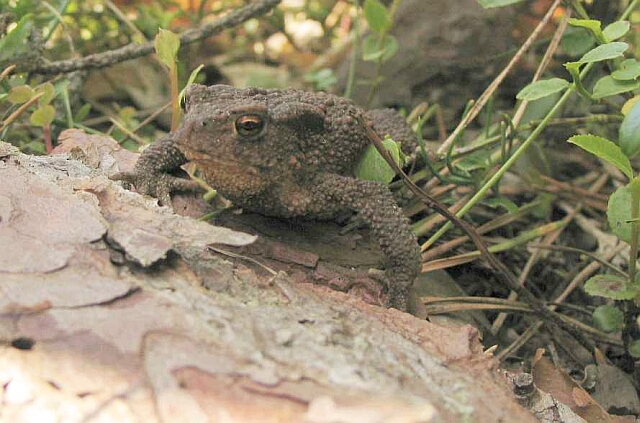
The body is stocky, covered with warts which house skin glands secreting defensive toxins. The hind legs are short and poorly suited to jumping, which distinguishes the Toad from the frog. The eyes, often golden or copper, have a horizontal pupil. Two parotoid glands, located behind the eyes, are particularly visible in many species.
Characteristics
Indicative values: they vary by subspecies, sex and region.
Habitat and distribution
The Toad frequents a variety of environments, including wetlands, forests, meadows and sometimes urban gardens, provided there is a nearby water source for reproduction. It likes cool, humid places offering daytime hiding places. Outside of the breeding season, it can move considerably away from water sources. Some species adapt well to environments modified by humans, such as parks and gardens.
CURRENT RANGE
Toads are found on almost every continent except Antarctica and some isolated islands. In North Africa, including Tunisia, several species are present in wetlands and mountainous regions. The Bufonidae family has several hundred species distributed across the world. The precise distribution varies greatly depending on the species considered.
Behaviour
The Toad is an essentially nocturnal and crepuscular animal, which hides during the day under stones, stumps or in damp burrows. It is generally solitary outside the breeding season. When faced with danger, it can swell its body and secrete skin toxins to deter predators. Some species overwinter by burying their bodies in soil or mud during the cold season.
Reproduction
Reproduction takes place in spring, in calm water sources such as pools or ponds. The male clings to the female's back during amplexus and fertilizes the eggs at the time of laying, which take the form of long gelatinous cords. The eggs hatch into aquatic tadpoles which undergo complete metamorphosis before becoming young terrestrial Toads. This larval phase generally lasts several weeks to a few months depending on water temperature.
Peculiarities
Contrary to popular belief, contact with the skin of an Toad does not cause warts in humans. Its toxic skin secretions can nevertheless irritate the mucous membranes and deter most predators. The Toad sometimes hibernates for several months buried in the ground during harsh winters. It constitutes a natural ally for the gardener by regulating populations of harmful insects.
Threats and conservation
Toads are threatened by the destruction and pollution of wetlands necessary for their reproduction. Road mortality during spring migrations to watering holes is an important cause of decline in some regions. The use of pesticides and the fragmentation of habitats also affect their populations. Certain species are also susceptible to emerging fungal diseases affecting amphibians.
Numbers and trends vary across sources and regions. See the IUCN assessment for the latest reference data.
Gallery
1 documented photographs.
References
Profile updated 31 August 2026 · Reviewed by the TunisieVet editorial team.
Comments (0)
No comments yet.
CONSERVATION STATUS
Least concern (LC)
IUCN source, latest published assessment.
Species health
Documented diseases for this species.
This information is provided for educational purposes only and is not a substitute for a veterinary consultation. If you have any concerns about your animal's health, consult a veterinarian.
To discover around: Toad
Videos, facts, stories and records linked to this species.
Similar animals
Other species documented in Animalpedia.

TunisieVet in your pocket 📱🐾 Access your veterinary services wherever you are. [ Download the app ]
Learn more