
Presentation
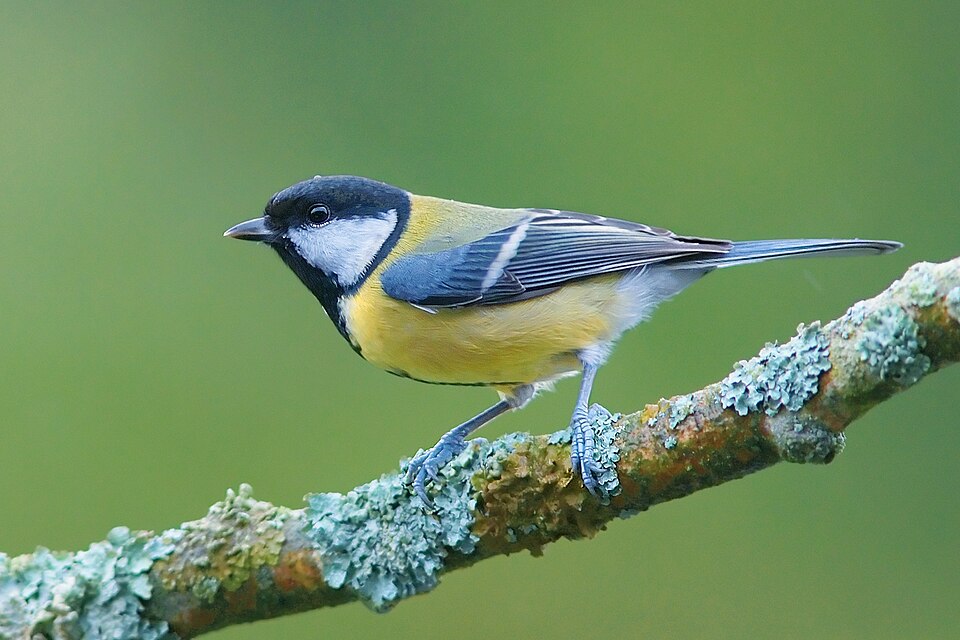
Tits are a group of small songbirds from the genus Parus and related genera, widely found across Europe, North Africa, and Asia. In Tunisia, the great tit (Parus major) and the blue tit (Cyanistes teleovicus, North African subspecies) are the most common. These are lively, inquisitive, and acrobatic birds, often seen in gardens, forests, and urban parks. Their colorful plumage, with striking patterns of black, white, yellow, or blue depending on the species, makes them easy to identify. They play an important ecological role in controlling insect populations.
Tits typically measure 10 to 14 cm in length and weigh 11 to 20 grams. They have a short, conical beak suited to a varied diet, and sturdy feet that allow them to grip branches in any position. Plumage varies by species but often displays bright colors such as yellow, blue, black, and white. Their head is usually marked with distinctive contrasting patterns.
Characteristics
Indicative values: they vary by subspecies, sex and region.
Habitat and distribution
Great tits inhabit a wide range of wooded environments, from deciduous and coniferous forests to urban parks and gardens. They readily adapt to human presence and readily nest in boxes put up by people. In Tunisia, they are found in the forested zones of the north as well as in green spaces of towns.
CURRENT RANGE
Great tits are widespread across Europe, North Africa, and temperate Asia. In North Africa, they occupy Morocco, Algeria, and Tunisia, mainly in the mountainous and wooded regions of the north. Some populations are resident while others make short seasonal movements.
Behaviour
The tit is a diurnal, active, and sociable bird, often seen in small groups or mixed flocks with other songbirds outside the breeding season. It becomes territorial during nesting and actively defends its site against intruders. Highly agile, it explores branches in any position, including upside down, while foraging. Its song is varied and serves both to establish territory and to attract a mate.
Reproduction
Breeding season runs from spring through early summer. The female lays between 6 and 12 eggs in a snug nest built inside a tree cavity or artificial nesting box. Incubation takes around 13 to 15 days, and both parents feed the chicks. Young birds leave the nest roughly three weeks after hatching.
Peculiarities
Great tits can adjust their song in response to urban noise levels, a phenomenon studied as an example of behavioural adaptation. Some individuals can remember the location of hundreds of food caches hidden for winter. Their ability to cling upside down to branches gives them an advantage in accessing food sources unreachable to other birds.
Threats and conservation
Loss of forest habitat and reduction in natural nesting cavities pose localized threats. Pesticide use reduces insect populations on which they rely to feed their young. Overall, great tit populations remain stable and the species is not considered threatened.
Numbers and trends vary across sources and regions. See the IUCN assessment for the latest reference data.
Gallery
1 documented photographs.
References
Profile updated 05 September 2026 · Reviewed by the TunisieVet editorial team.
Comments (0)
No comments yet.
CONSERVATION STATUS
Least concern (LC)
IUCN source, latest published assessment.
Species health
Documented diseases for this species.
See the 4 diseases of this species Find a veterinarianThis information is provided for educational purposes only and is not a substitute for a veterinary consultation. If you have any concerns about your animal's health, consult a veterinarian.
Similar animals
Other species documented in Animalpedia.

TunisieVet in your pocket 📱🐾 Access your veterinary services wherever you are. [ Download the app ]
Learn more