
Presentation
The aphid is a tiny piercing-sucking insect that feeds on plant sap. Found on nearly every continent, it colonizes a vast range of cultivated and wild plants. Its extremely rapid reproduction, often asexual, makes it one of the most feared agricultural pests. Despite its small size, it plays an important ecological role as prey for many beneficial insects such as ladybugs. It is also known for its symbiotic relationship with ants. In Tunisia as elsewhere, it remains a recurring problem for vegetable and fruit crops.
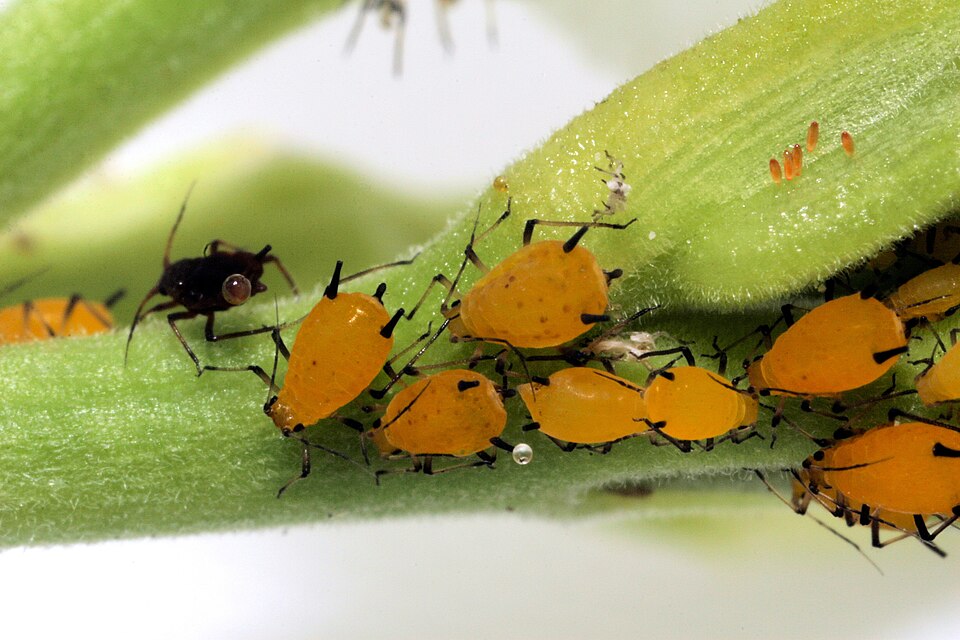
The aphid is a small insect with a soft, pear-shaped body measuring only a few millimeters. Its color ranges from green to black, passing through yellow or pink depending on the species. It has two cornicles on its abdomen that secrete defensive substances, and some forms develop wings for dispersal. Its mouthparts form a fine stylet capable of piercing plant tissues.
Characteristics
Indicative values: they vary by subspecies, sex and region.
Habitat and distribution
The aphid lives on plants themselves, whether in agricultural crops, gardens, or wild vegetation. It is found in both rural areas and urban green spaces. It particularly favors cultivated areas where host plants are abundant.
CURRENT RANGE
The aphid is found almost everywhere in the world, on all continents except Antarctica. It adapts to a variety of climates, from temperate to Mediterranean or tropical. In Tunisia, it is very common in agricultural areas and gardens.
Behaviour
The aphid lives in often-large colonies on the stems, leaves, and buds of host plants. It moves little, remaining fixed by its piercing-sucking apparatus to draw sap continuously. Some species maintain a mutualistic relationship with ants, which protect them from predators in exchange for the sweet honeydew they secrete. When threatened, certain winged individuals can fly off to colonize new plants.
Reproduction
Aphid reproduction combines asexual and sexual cycles depending on environmental conditions. During favorable periods, females reproduce through parthenogenesis and give birth directly to live larvae without passing through an egg stage. As winter approaches, a sexual generation appears and produces cold-resistant eggs that will hatch in the following spring.
Peculiarities
The aphid can reproduce through parthenogenesis, with females giving birth to live larvae without fertilization. This asexual reproduction allows for extremely rapid population growth. Some species alternate between sexual and asexual generations depending on the season.
Threats and conservation
The aphid is not a threatened species; on the contrary, it is considered an important agricultural pest. Farmers and gardeners generally seek to control it through chemical or biological methods, particularly by promoting its natural predators such as ladybugs.
Numbers and trends vary across sources and regions. See the IUCN assessment for the latest reference data.
Gallery
1 documented photographs.
References
Profile updated 26 August 2026 · Reviewed by the TunisieVet editorial team.
Comments (0)
No comments yet.
CONSERVATION STATUS
Least concern (LC)
IUCN source, latest published assessment.
Species health
Documented diseases for this species.
Find a veterinarianThis information is provided for educational purposes only and is not a substitute for a veterinary consultation. If you have any concerns about your animal's health, consult a veterinarian.
Similar animals
Other species documented in Animalpedia.
