
Presentation
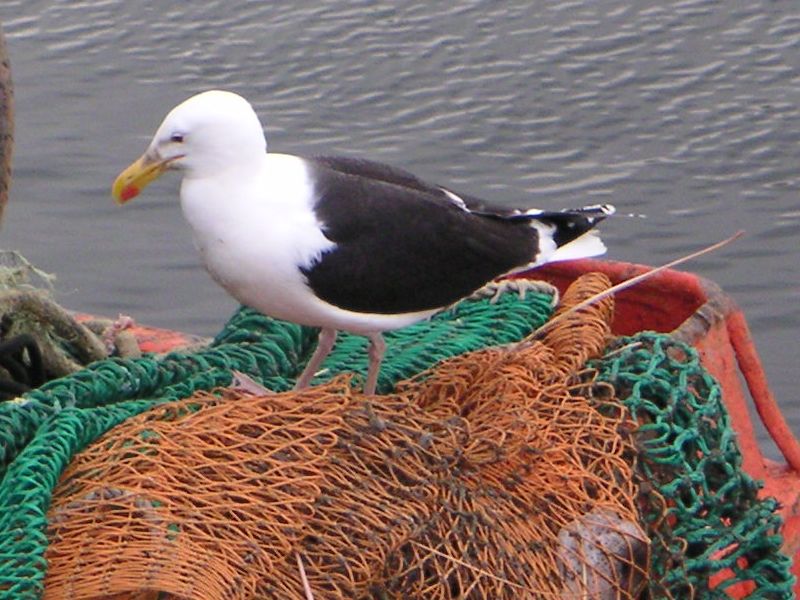
The gull is a seabird belonging to the family Laridae, often confused with larger gull species due to a similar silhouette. It stands out for its smaller size and great adaptability to both coastal and urban environments. Opportunistic, it frequents beaches, ports, and landfills in search of food. Several gull species visit Tunisia's coastline, particularly during winter migration. Gregarious and vocal, it typically lives in large colonies. Its distinctive call and agile flight make it a familiar sight along Mediterranean coastal areas.
The gull has plumage that is generally white and grey, with sometimes a dark or marked head depending on species and season. Its bill is slender to moderately sturdy, suited to a varied diet. Its long, pointed wings allow efficient gliding over water. Webbed feet aid swimming, though it spends much of its time on the ground or in flight.
Characteristics
Indicative values: they vary by subspecies, sex and region.
Habitat and distribution
Gulls frequent marine coasts primarily, but are also found on lakes, rivers, and inland wetlands. They have adapted well to urban environments, where they roost on buildings and feed in areas of high human activity. This ecological flexibility accounts for their wide geographic distribution.
CURRENT RANGE
Different gull species are widely distributed across Europe, Africa, Asia, and North America. In Tunisia, they are observed along the entire coastline, notably in winter during migration periods. Some populations are resident, while others are migratory depending on the region and season.
Behaviour
A gregarious species, the gull lives in colonies that can be quite large, particularly during breeding season. It communicates through repeated and varied calls, used to defend territory or signal danger. Curious and opportunistic, it adapts easily to human presence and readily approaches populated areas to feed.
Reproduction
Gulls typically nest in colonies on cliffs, small islands, or rooftops in urban areas. The female lays an average of two to three eggs per clutch, incubated by both parents for approximately three to four weeks. Young birds become airborne after several weeks but remain dependent on adults for some time.
Peculiarities
The gull is capable of drinking salt water thanks to specialized glands that eliminate excess salt. Its feeding and behavioral adaptability makes it one of the most widespread seabird species in coastal and urban areas.
Threats and conservation
Marine pollution, particularly plastic, represents a threat to certain populations. Degradation of coastal nesting sites and human disturbance can also affect breeding locally. Overall, most gull species are not threatened at a global level.
Numbers and trends vary across sources and regions. See the IUCN assessment for the latest reference data.
Gallery
1 documented photographs.
References
Profile updated 07 September 2026 · Reviewed by the TunisieVet editorial team.
Comments (0)
No comments yet.
CONSERVATION STATUS
Least concern (LC)
IUCN source, latest published assessment.
Species health
Documented diseases for this species.
See the 4 diseases of this species Find a veterinarianThis information is provided for educational purposes only and is not a substitute for a veterinary consultation. If you have any concerns about your animal's health, consult a veterinarian.
To discover around: Gull
Videos, facts, stories and records linked to this species.
Similar animals
Other species documented in Animalpedia.

TunisieVet in your pocket 📱🐾 Access your veterinary services wherever you are. [ Download the app ]
Learn more