
Presentation
The deep-sea pink shrimp (Parapenaeus longirostris) is a medium-sized marine decapod crustacean commercially exploited in the Mediterranean and eastern Atlantic. Its translucent to pinkish body and long serrated rostrum distinguish it from other penaeid shrimp. It lives on soft substrates of the continental shelf and slope, at varying depths depending on age and season. This species is an important fishery resource for many fishing fleets, including those in Tunisia. It feeds on benthic organisms and plays a role in the food webs of the seafloor.
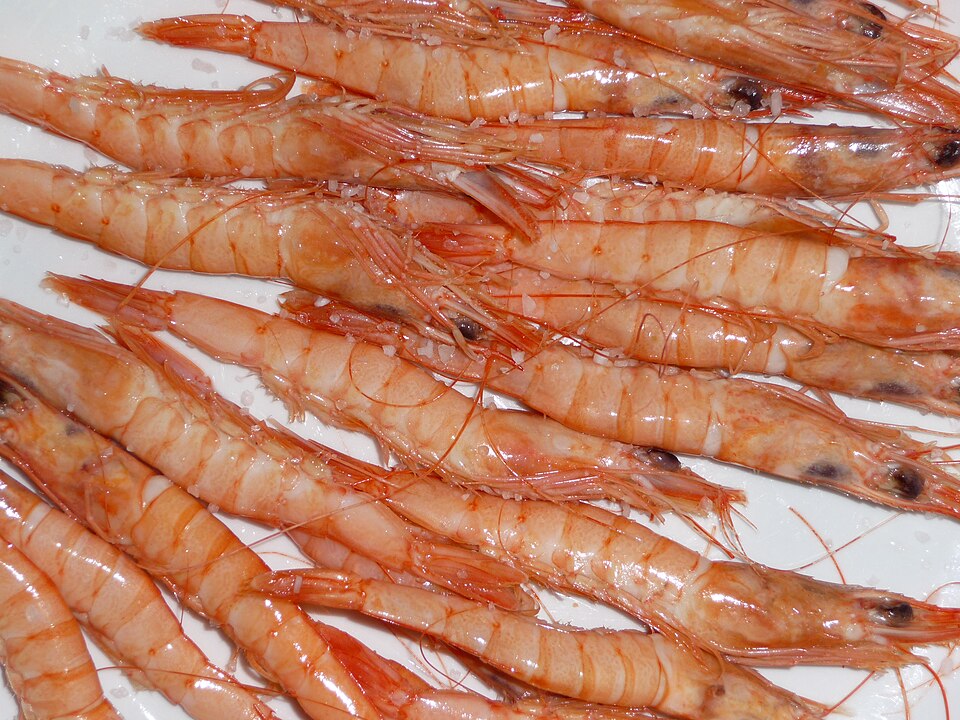
The body is elongated, pale pink to translucent in color, with a long and characteristic serrated rostrum. The carapace is smooth and thin compared to other shrimp. The eyes are well developed and the long antennae allow detection of the surroundings in deep waters.
Characteristics
Indicative values: they vary by subspecies, sex and region.
Habitat and distribution
The species inhabits muddy or sandy-muddy seabeds of the continental shelf and upper slope, at depths between approximately 100 and 700 metres. Juveniles typically occupy shallower waters than adults. It is associated with areas of high organic productivity on the seabed.
CURRENT RANGE
The deep-sea pink shrimp is found in the Mediterranean, including along the Tunisian coast, as well as in the eastern Atlantic, from Portugal to Senegal. It is particularly abundant in fishing grounds in the Strait of Sicily and the Gulf of Gabès. Its distribution is linked to sedimentary characteristics and seabed depth.
Behaviour
This shrimp leads an essentially benthic lifestyle, partially burrowing into the sediment during the day. It undertakes vertical and horizontal migrations related to reproduction and food-seeking. It is more active at night, when it leaves its shelter to feed.
Reproduction
Breeding occurs mainly in late spring and summer, with spawning in the open water. Females release large numbers of eggs that develop into planktonic larvae. These larvae undergo several metamorphosis stages before settling on the seabed as juveniles.
Peculiarities
A particularly long and toothed rostrum is a distinctive feature allowing identification of the species. Its pinkish colouration persists even after cooking, making it a prized product on market stalls. It is often caught alongside other deep-sea shrimp species during trawling.
Threats and conservation
Overfishing from intensive trawling is the main threat to populations of this species. Degradation of the seabed by towed fishing gear also affects its habitat. Quota management and fishing effort controls are necessary to ensure stock sustainability.
Numbers and trends vary across sources and regions. See the IUCN assessment for the latest reference data.
Gallery
1 documented photographs.
References
Profile updated 27 October 2026 · Reviewed by the TunisieVet editorial team.
Comments (0)
No comments yet.
CONSERVATION STATUS
Least concern (LC)
IUCN source, latest published assessment.
Species health
Documented diseases for this species.
This information is provided for educational purposes only and is not a substitute for a veterinary consultation. If you have any concerns about your animal's health, consult a veterinarian.
To discover around: Deep-sea pink shrimp
Videos, facts, stories and records linked to this species.
Similar animals
Other species documented in Animalpedia.
