
Presentation
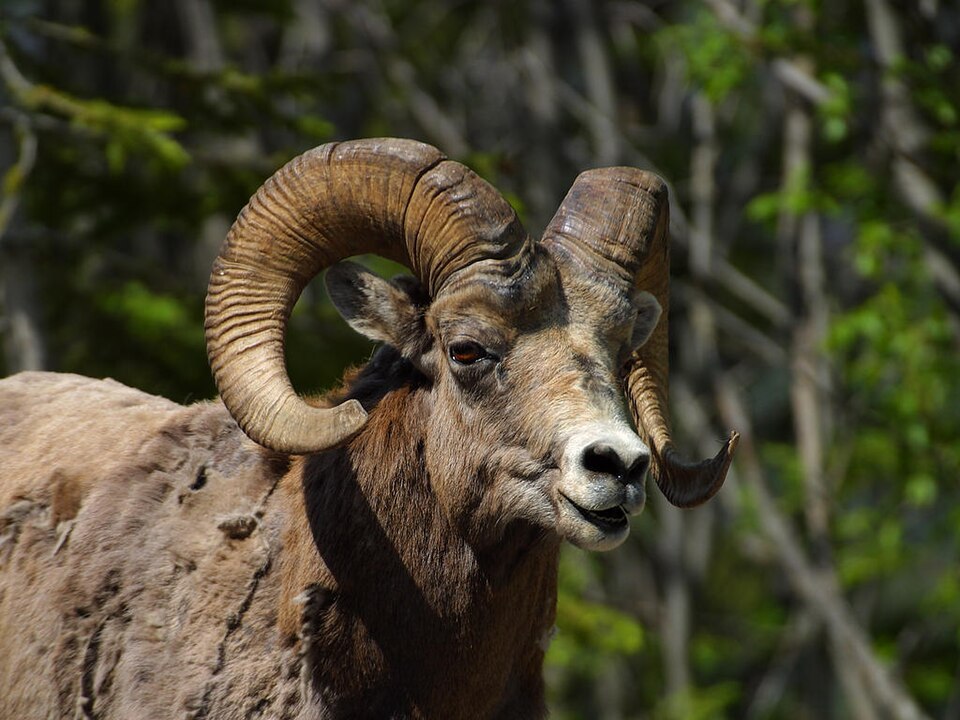
The Bighorn sheep is a large wild sheep native to the mountain ranges of western North America. It is recognized for its massive curved horns, particularly developed in the male. This gregarious animal lives in herds and moves with agility on steep rocky terrain. It has been widely studied for its fighting behaviors between males during the rutting season. The species experienced a sharp decline in the 20th century before benefiting from conservation programs.
The Bighorn sheep has a stocky, muscular body, adapted to life in mountainous terrain. The male bears large, curved horns that can weigh up to 14 kg, while the female has thinner, less curved horns. Its brown-beige coat with white belly and hindquarters provides effective camouflage among the rocks.
Characteristics
Indicative values: they vary by subspecies, sex and region.
Habitat and distribution
The Bighorn sheep inhabits steep mountainous areas, rocky cliffs and high alpine meadows. It seeks rugged terrain offering both pasture and refuge from predators. Some populations also occupy arid desert areas of the American southwest.
CURRENT RANGE
The species is native to the Rockies and mountain ranges of western North America, from Canada to Mexico. Its current distribution is fragmented into isolated populations following past intensive hunting and habitat loss. Reintroduction programs have restored certain populations in several American states.
Behaviour
This animal is diurnal and lives in sex-segregated herds most of the year, except during the rut. The males face each other in spectacular fights where they collide head-on with their horns to establish a hierarchy. The species is very agile on steep rocky slopes, which allows it to escape its natural predators such as cougars and wolves.
Reproduction
The rutting season takes place in the fall, during which males compete for access to females. Gestation lasts about six months, usually resulting in the birth of a single lamb in the spring. The young are able to follow the herd shortly after birth but remain dependent on their mother for several months.
Peculiarities
The male's horns can represent up to 10% of his total body weight. Unlike deer, the horns are never lost and grow throughout the animal's life.
Threats and conservation
Major threats include habitat loss due to human development, population fragmentation, and respiratory diseases transmitted by domestic livestock. Historical hunting greatly reduced numbers in the 19th and 20th centuries. Management and reintroduction programs have enabled partial stabilization of populations.
Numbers and trends vary across sources and regions. See the IUCN assessment for the latest reference data.
Gallery
1 documented photographs.
References
Profile updated 19 August 2026 · Reviewed by the TunisieVet editorial team.
Comments (0)
No comments yet.
CONSERVATION STATUS
Least concern (LC)
IUCN source, latest published assessment.
Species health
Documented diseases for this species.
See the 8 diseases of this species Find a veterinarianThis information is provided for educational purposes only and is not a substitute for a veterinary consultation. If you have any concerns about your animal's health, consult a veterinarian.
Related species
To discover around: Bighorn sheep
Videos, facts, stories and records linked to this species.
Similar animals
Other species documented in Animalpedia.

TunisieVet in your pocket 📱🐾 Access your veterinary services wherever you are. [ Download the app ]
Learn more