
Presentation
The Black bear (Ursus americanus), also called baribal, is a medium to large carnivorous mammal native to North America. It is distinguished by its generally black coat, although brown, cinnamon or even white variants exist depending on the region. A forest species par excellence, it frequents mountains as well as wetlands and certain urban outskirts in search of food. It is the most widespread and numerous species of bear on the North American continent. Opportunistic and adaptable, it has been able to colonize a wide diversity of environments despite human pressure.
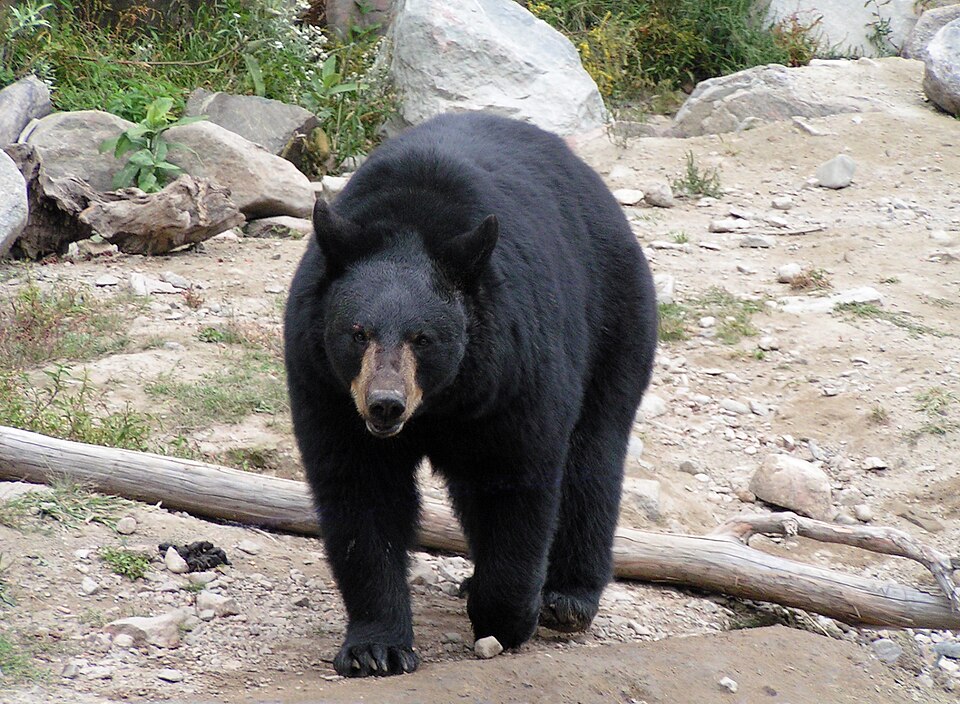
The Black bear has a massive body, short and powerful legs equipped with non-retractable claws suitable for climbing. Its head is relatively small with an elongated muzzle and rounded ears. The coat varies from black to light brown, or even creamy white in certain isolated populations such as the kermode. He walks with plantar support, which gives him a characteristic gait.
Characteristics
Indicative values: they vary by subspecies, sex and region.
Habitat and distribution
Black bear primarily inhabits dense temperate and boreal forests, providing both food and shelter. It also frequents mountainous areas as well as certain wetlands rich in food resources. Its ability to adapt sometimes allows it to approach peri-urban areas in search of easy food.
CURRENT RANGE
The species is present over a large part of North America, from Canada and Alaska to northern Mexico. It occupies both humid coastal forests and mountainous areas in the interior of the continent. Naturally absent from Europe, Asia, Africa and Oceania, it remains strictly North American.
Behaviour
Solitary outside the breeding season, the Black bear is mainly active at dusk and dawn. It excels at climbing trees, an ability it retains even into adulthood unlike other bear species. In winter, it enters a state of winter dormancy (torpor) during which its metabolism slows down without reaching true hibernation. Generally fearful of humans, it avoids direct confrontations unless surprised or protecting the cubs.
Reproduction
Mating takes place in summer, but thanks to the delayed implantation of the embryo, actual gestation does not begin until late autumn. The female gives birth during winter torpor, giving birth to one to three blind and helpless cubs. The young stay with their mother for about a year and a half to two years before becoming independent. Sexual maturity is reached around the age of 3 to 5 years.
Peculiarities
Contrary to its name, the Black bear is not always Black bear: some populations have a brown, cinnamon or creamy-white coat, notably the Kermode subspecies in British Columbia. It climbs trees with remarkable ease, a notable difference from the grizzly bear. Its eyesight is relatively weak but its sense of smell is extremely developed, allowing it to detect food at great distances.
Threats and conservation
Legal and illegal hunting, as well as the fragmentation of its forest habitat due to urbanization, constitute the main threats to the species. Conflicts with humans, particularly related to the search for food near homes, sometimes lead to the euthanasia of individuals deemed problematic. Overall, however, populations remain stable or even expanding in several regions of North America.
Numbers and trends vary across sources and regions. See the IUCN assessment for the latest reference data.
Gallery
1 documented photographs.
References
Profile updated 26 August 2026 · Reviewed by the TunisieVet editorial team.
Comments (0)
No comments yet.
CONSERVATION STATUS
Least concern (LC)
IUCN source, latest published assessment.
Species health
Documented diseases for this species.
This information is provided for educational purposes only and is not a substitute for a veterinary consultation. If you have any concerns about your animal's health, consult a veterinarian.
To discover around: Black bear
Videos, facts, stories and records linked to this species.
Similar animals
Other species documented in Animalpedia.
