
Presentation
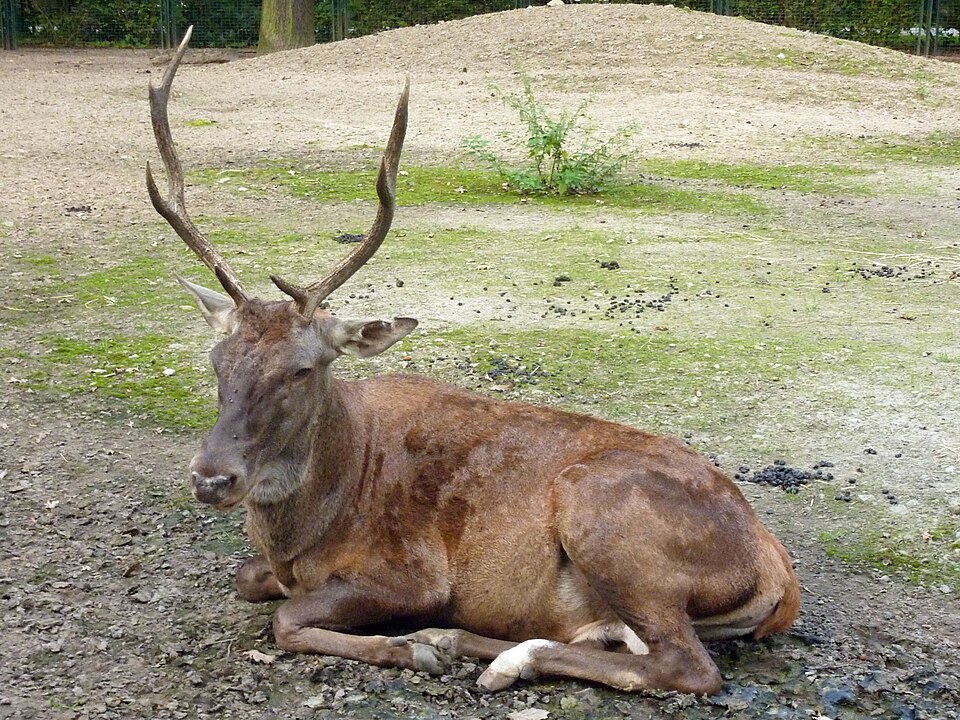
The Barbary stag is a subspecies of the red deer, adapted to the forest environments of the Maghreb. It is a medium-sized deer, recognizable by its reddish-brown coat and the impressive antlers worn by males. This subspecies represents an important natural heritage, heir to a long evolutionary history in North Africa.
The Barbary stag is distinguished by its robust morphology and its reddish-brown color, darker in winter. Males bear complex, branched antlers, a symbol of their maturity and social status. Females, thinner and without antlers, generally have a lighter coat.
Characteristics
Indicative values: they vary by subspecies, sex and region.
Habitat and distribution
The Barbary stag inhabits the cedar, oak and fir forests of the Maghreb mountain ranges. It prefers densely wooded areas offering both dense plant cover and clearings for feeding. These forest habitats are essential to its survival and well-being.
CURRENT RANGE
Barbary stag was once widely distributed in North Africa. Today, its range is considerably reduced and fragmented, confined to the mountains of the Maghreb, particularly in Algeria, Morocco and Tunisia. Remaining populations are isolated and threatened.
Behaviour
The Barbary stag is a crepuscular and nocturnal animal, which rests during the day in densely forested areas. Males are territorial and establish marked social hierarchies. During the rut, males utter loud calls and fight fiercely for access to females.
Reproduction
The Barbary stag breeds in autumn during the rutting period, which generally lasts from September to October. Females give birth to a single fawn after a gestation of approximately 8 months. Weaning occurs between 6 and 8 months after birth.
Peculiarities
The Barbary stag has remarkable adaptations to rugged mountainous terrain, with specialized clogs for climbing. Its antlers, which shed and regenerate annually, constitute a fascinating biological process. It is one of the few populations of deer in Africa, making it a major zoological rarity.
Threats and conservation
The Barbary stag faces significant threats linked to the fragmentation and degradation of its forest habitat, as well as poaching. The loss of forests and the fragmentation of isolated populations are reducing its number and genetic diversity, jeopardizing the long-term viability of the species.
Numbers and trends vary across sources and regions. See the IUCN assessment for the latest reference data.
Gallery
1 documented photographs.
References
UICN — Liste rouge des espèces menacées
Profile updated 02 September 2026 · Reviewed by the TunisieVet editorial team.
Comments (0)
No comments yet.
CONSERVATION STATUS
Least concern (LC)
IUCN source, latest published assessment.
Species health
Documented diseases for this species.
This information is provided for educational purposes only and is not a substitute for a veterinary consultation. If you have any concerns about your animal's health, consult a veterinarian.
Related species
To discover around: Barbary stag
Videos, facts, stories and records linked to this species.
Similar animals
Other species documented in Animalpedia.

TunisieVet in your pocket 📱🐾 Access your veterinary services wherever you are. [ Download the app ]
Learn more