
Presentation
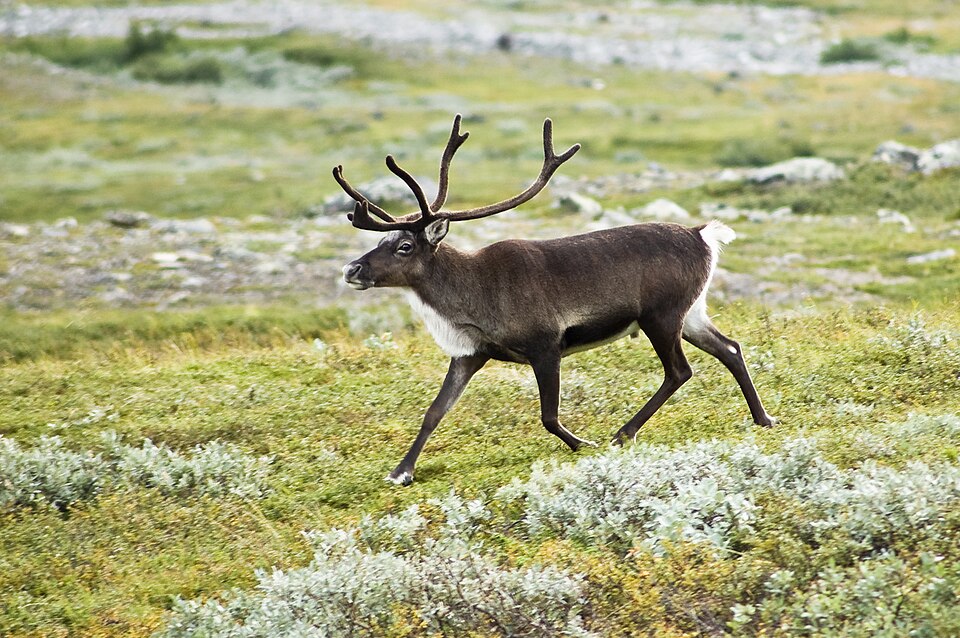
The Reindeer (Rangifer tarandus) is a large herbivore adapted to arctic and subarctic regions of the northern hemisphere. It is distinguished by its antlers present in both sexes, a rare case among deer. This species lives in herds, sometimes very numerous, and carries out long seasonal migrations between tundra and boreal forest. The Reindeer is closely linked to the nomadic peoples of the Far North, who have domesticated it for millennia for its meat, milk, skin and as a draft animal. It is also known as caribou in North America, where populations are wild.
The Reindeer has a dense, double-layered coat, brown to gray depending on the season, which provides excellent insulation against extreme cold. Its wide, concave hooves allow it to move on snow and dig for food beneath it. Males and females have antlers that they lose and regenerate each year, a unique feature among deer. Its nose is covered with hairs which warm the inhaled air before it reaches the lungs.
Characteristics
Indicative values: they vary by subspecies, sex and region.
Habitat and distribution
The Reindeer frequents the Arctic and subarctic tundra as well as boreal coniferous forests, depending on the season. It alternates between these environments throughout its migrations, seeking the tundra for giving birth and the forest for shelter from the harshest winter cold.
CURRENT RANGE
The species is present in the circumpolar regions of the northern hemisphere: Scandinavia, Russia, Alaska, Canada and Greenland. Wild populations, called caribou in North America, coexist with domesticated herds, particularly among the Sámi peoples of Northern Europe.
Behaviour
The Reindeer is a gregarious animal that forms herds that can number several hundred thousand individuals in wild populations. Each year, it carries out some of the longest migrations in the terrestrial animal world, between wintering and giving birth areas. An excellent swimmer, he easily crosses rivers and lakes when traveling. Domesticated Reindeers remain managed in semi-free herds by breeders.
Reproduction
The mating season takes place in the fall, during which males compete for access to females. Gestation lasts approximately seven to eight months and ends with the birth of a single fawn in the spring. The calf is capable of following the herd shortly after birth, a necessary adaptation in the face of predators and migrations.
Peculiarities
Reindeer is the only deer in which females also have antlers, which they keep longer than males, until after giving birth. Its eyes would change color depending on the season, from gold in summer to blue in winter, to better capture the rare light of the Arctic. It is closely associated with Christmas traditions in Western culture.
Threats and conservation
Wild populations are threatened by global warming, which modifies the availability of lichen and disrupts migration cycles. Mining, oil and logging also fragment their natural habitats. Certain subpopulations, such as those of woodland caribou, are in marked decline.
Numbers and trends vary across sources and regions. See the IUCN assessment for the latest reference data.
Gallery
1 documented photographs.
References
Profile updated 20 August 2026 · Reviewed by the TunisieVet editorial team.
Comments (0)
No comments yet.
CONSERVATION STATUS
Vulnerable (VU)
IUCN source, latest published assessment.
Species health
Documented diseases for this species.
This information is provided for educational purposes only and is not a substitute for a veterinary consultation. If you have any concerns about your animal's health, consult a veterinarian.
To discover around: Reindeer
Videos, facts, stories and records linked to this species.
Similar animals
Other species documented in Animalpedia.

TunisieVet in your pocket 📱🐾 Access your veterinary services wherever you are. [ Download the app ]
Learn more