Presentation
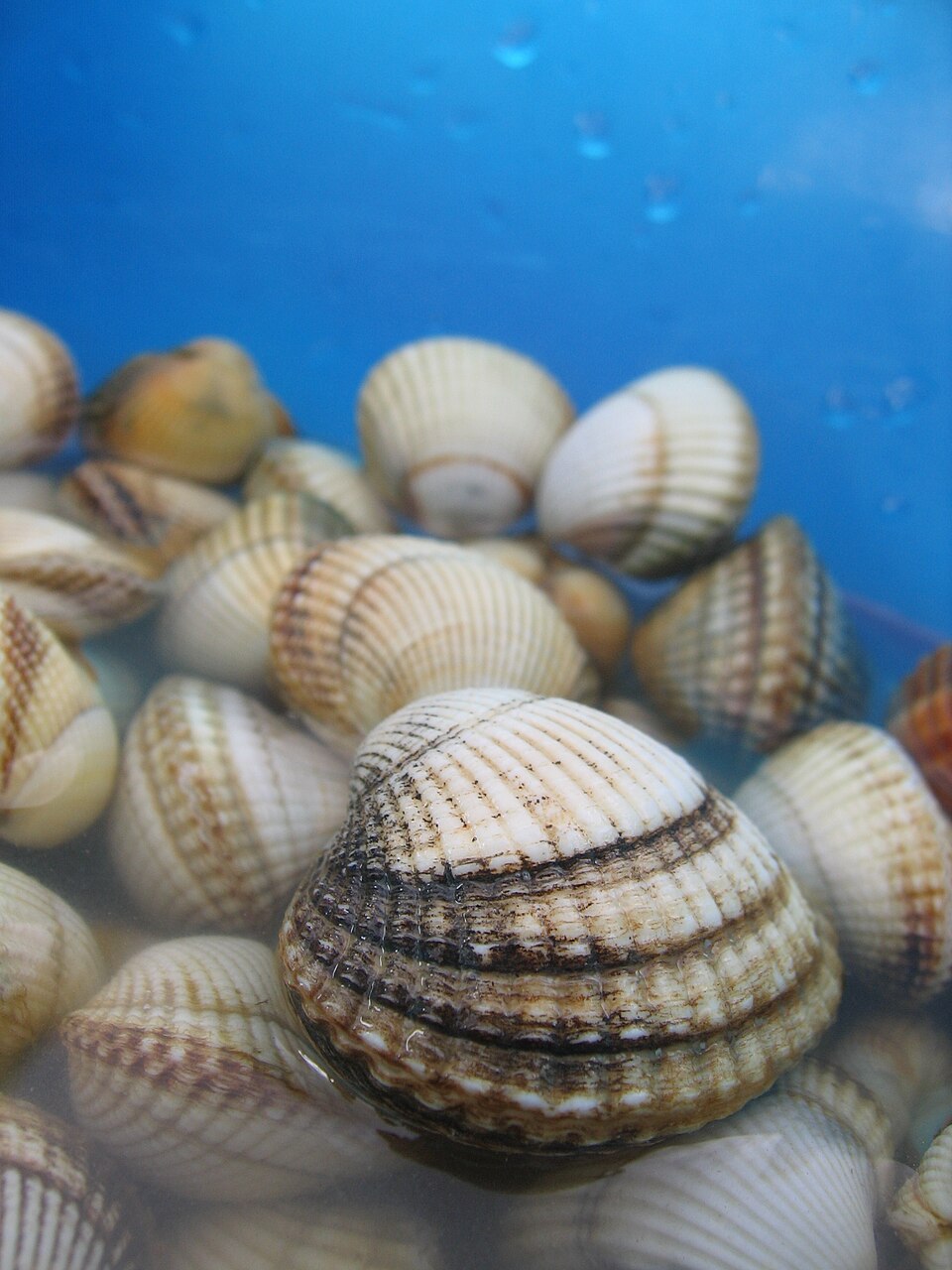
The cockle is a marine bivalve mollusk that lives buried in soft sediments along the shore. Its shell is round and domed, marked by prominent radiating ribs, and ranges in color from whitish to light brown. It feeds by filtering seawater through two short siphons that protrude just above the sand surface. Widespread along Atlantic and Mediterranean coasts, cockles represent an important traditional food resource. This species also plays a notable ecological role by filtering water and serving as prey for many wading birds and fish.
The shell typically measures between 2 and 5 cm across, with an oval to circular shape featuring 22 to 28 prominent radial ribs. The soft body is protected by two symmetrical valves joined by a hinge and elastic ligament. Two short siphons allow water exchange for respiration and feeding. The muscular, hatchet-shaped foot enables rapid burrowing into the substrate.
Characteristics
Indicative values: they vary by subspecies, sex and region.
Habitat and distribution
The cockle prefers soft, sandy, or muddy substrates in intertidal zones and shallow estuaries. It is found on both exposed beaches and sheltered lagoons and calm bays. It tolerates variations in salinity, allowing it to colonize river mouths. This species generally lives between the surface and a few meters deep.
CURRENT RANGE
The cockle is present along the coasts of the northeastern Atlantic, from Norway to North Africa, as well as in the Mediterranean. It is particularly abundant on the coasts of France, Britain, and the Iberian Peninsula. In North Africa, it is found on certain Tunisian and Moroccan coasts. Its distribution follows the availability of sandy or muddy intertidal substrates.
Behaviour
The cockle lives buried several centimeters below the sand or mud surface in intertidal zones. It moves slowly using its muscular foot, particularly to rebury itself after disturbance. Its filtering activity continues as long as it remains submerged by the tide. Under environmental stress, it may partially emerge from the sediment surface.
Reproduction
Cockles reproduce through external fertilization, with individuals releasing their gametes into seawater during the spawning period, typically in spring and summer. Planktonic larvae drift for several weeks before settling on the seabed and metamorphosing into young cockles. Growth is relatively rapid during the first year. Sexual maturity is reached in one to two years depending on environmental conditions.
Peculiarities
The cockle is capable of jumping slightly through sudden movements of its foot, a rare behavior among bivalves. Its pronounced radial ribs distinguish it easily from other edible bivalves such as clams. It has been commercially exploited for centuries for its meat, particularly in Atlantic culinary traditions.
Threats and conservation
Overfishing and overexploitation of natural stocks locally threaten some populations. Pollution of coastal waters and degradation of intertidal habitats also affect its survival. Climate change, through ocean warming and acidification, could disrupt its reproduction and growth. Episodes of mass mortality linked to disease or heat waves have been observed in certain regions.
Numbers and trends vary across sources and regions. See the IUCN assessment for the latest reference data.
Gallery
1 documented photographs.
References
Profile updated 30 August 2026 · Reviewed by the TunisieVet editorial team.
Comments (0)
No comments yet.
CONSERVATION STATUS
Least concern (LC)
IUCN source, latest published assessment.
Species health
Documented diseases for this species.
This information is provided for educational purposes only and is not a substitute for a veterinary consultation. If you have any concerns about your animal's health, consult a veterinarian.
Similar animals
Other species documented in Animalpedia.

Be among the first to use our app. Sign up and get early Google Play access.
Discover