
Presentation
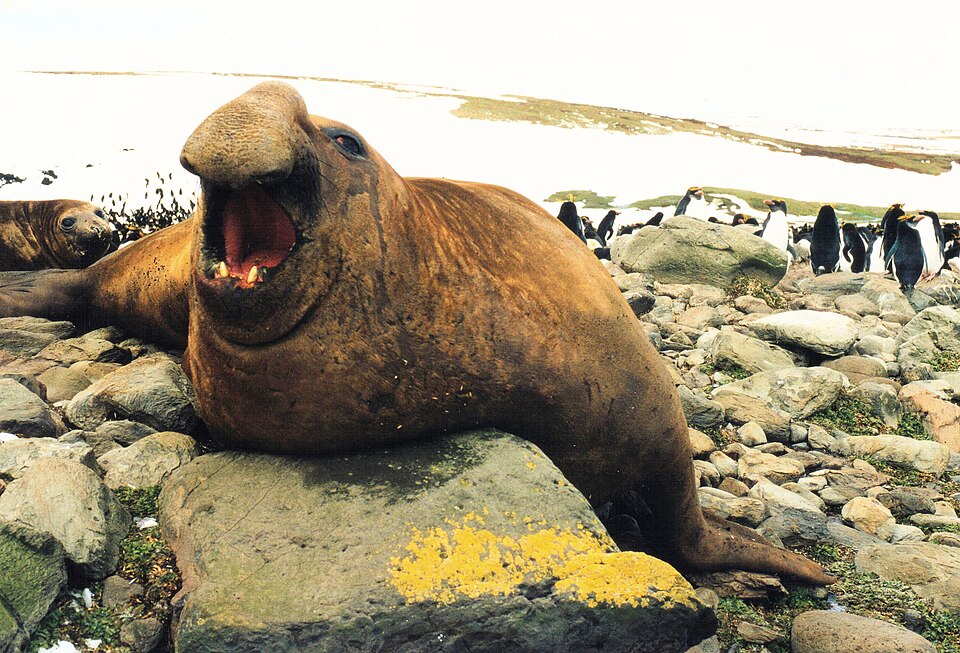
The Elephant seal is a giant pinniped bringing together two closely related species, the Southern Elephant seal and the Northern Elephant seal, distributed respectively in the southern hemisphere and the North Pacific. It owes its name to the fleshy and prominent proboscis that the adult male develops, as well as to its imposing size, the largest among all pinnipeds. It is an excellent diver, capable of descending to more than 1500 meters and remaining submerged for long periods to hunt fish and cephalopods. The species spends most of the year at sea, only coming to shore to breed and molt. Hunted intensely in the 19th and 20th centuries for its fat, it experienced a sharp decline before benefiting from effective protection measures. Today, its populations are generally stable or increasing depending on the subspecies.
Elephant seal is distinguished by extreme sexual dimorphism, with the male being significantly larger and more massive than the female. It has a fleshy proboscis, more developed in adult males, which gives its name to the species and is used during vocal displays. Its body is massive, fusiform, covered with a thick layer of insulating fat and a short gray-brown coat. The eyes are large and adapted for deep vision in marine darkness.
Characteristics
Indicative values: they vary by subspecies, sex and region.
Habitat and distribution
The Elephant seal lives mainly in the open sea and in cold to temperate ocean waters, where it spends the majority of its time hunting at depth. It uses rocky or sandy beaches and shores of isolated islands as breeding and moulting sites. These coastal areas offer direct access to the ocean while limiting the presence of terrestrial predators. The species avoids warm tropical waters, which are poorly suited to its physiology.
CURRENT RANGE
The Southern Elephant seal occurs on the sub-Antarctic islands and the coasts of South America, while the Northern Elephant seal frequents the coasts of Mexico, California and Alaska. The two species occupy ocean areas distant from each other, with no natural overlap. Outside of breeding periods, individuals travel vast distances on the high seas. No populations are present in the Mediterranean or North Africa.
Behaviour
The Elephant seal is a gregarious animal that forms large colonies on beaches during reproduction and moulting. Dominant males defend a harem of females by using powerful vocalizations and sometimes violent fights. Outside of the terrestrial period, the species leads a solitary and pelagic life, diving almost continuously to feed. It is capable of exceptional apneas exceeding one hour, at a depth of more than 1000 meters.
Reproduction
Reproduction takes place on land, on beaches where large seasonal colonies form. A dominant male mates with numerous females in his harem, after having warded off his rivals through fights. The female gives birth to only one young per year, which she nurses intensively for about a month before weaning. Sexual maturity is reached around 4 to 6 years of age, but males do not become dominant until later.
Peculiarities
The male has an erectile proboscis used to amplify his vocalizations during dominance displays. The species can remain in apnea for more than an hour, a remarkable performance among marine mammals. She fasts completely for several weeks during terrestrial periods of reproduction or moulting.
Threats and conservation
Historically, commercial hunting for blubber oil has greatly reduced populations, particularly those in the North which came close to extinction. Today, the main remaining threats are changes to marine ecosystems, pollution and human disturbance on breeding sites. The protective measures put in place since the 20th century have enabled a clear recovery in numbers. Global warming could affect prey availability in the long term.
Numbers and trends vary across sources and regions. See the IUCN assessment for the latest reference data.
Gallery
1 documented photographs.
References
Profile updated 27 August 2026 · Reviewed by the TunisieVet editorial team.
Comments (0)
No comments yet.
CONSERVATION STATUS
Least concern (LC)
IUCN source, latest published assessment.
Species health
Documented diseases for this species.
This information is provided for educational purposes only and is not a substitute for a veterinary consultation. If you have any concerns about your animal's health, consult a veterinarian.
To discover around: Elephant seal
Videos, facts, stories and records linked to this species.
RECORD
up to 4000 kg / 6 m
The largest pinniped
Measurement taken on adult males of southern elephant seals, the largest pinniped species...
Similar animals
Other species documented in Animalpedia.

TunisieVet in your pocket 📱🐾 Access your veterinary services wherever you are. [ Download the app ]
Learn more