
Presentation
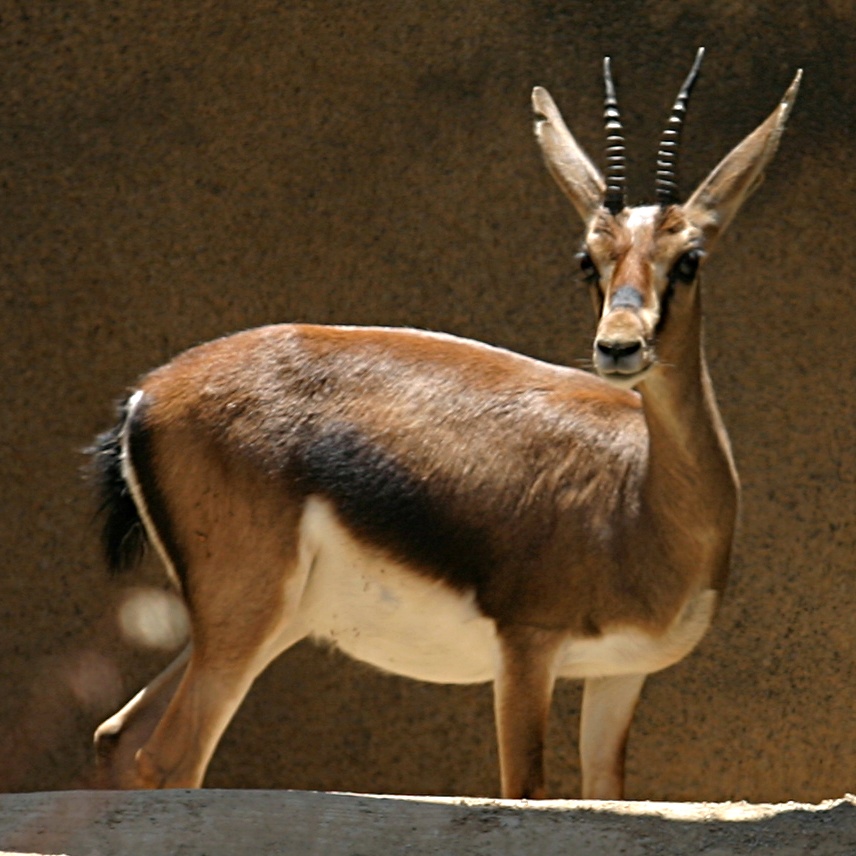
The Cuvier's gazelle is a small, slender antelope from the arid regions of the Maghreb, characterized by its slender silhouette and ringed horns. This endemic ungulate is one of the most threatened species in North Africa, victim of excessive hunting and the degradation of its natural habitat.
Light, slender body, reddish-brown to gray coat depending on the season, white face with a characteristic brown stripe. Both males and females have ringed horns, longer and divergent in males. The long, thin legs allow for rapid running.
Characteristics
Indicative values: they vary by subspecies, sex and region.
Habitat and distribution
Prefers rocky steppes and mountain slopes between 600 and 1500 meters above sea level. It frequents semi-desert plateaus with sparse vegetation, where it finds refuge between rocks.
CURRENT RANGE
Endemic to the Maghreb, it is present mainly in Algeria (Saharan Atlas) and to a lesser extent in Tunisia and Morocco. Its distribution area has been reduced considerably over the last century.
Behaviour
Diurnal and crepuscular, it lives in small flocks of 2 to 6 individuals, sometimes up to 20. Very agile and fast, it can reach 80 km/h on the run. She has excellent eyesight and a keen sense of smell to detect threats.
Reproduction
Rutting period in spring, with a gestation of approximately 5 to 6 months. The female gives birth to one or two fawns after winter. The young follow the mother for a few months before becoming independent.
Peculiarities
Its ability to survive in arid environments with little water is remarkable. Its ringed horns provide excellent grip against the wind in the mountains. It has a preorbital gland which secretes an odorous liquid used to mark its territory.
Threats and conservation
Vulnerable species facing major threats: excessive hunting and poaching, degradation of steppe habitat, overgrazing by domestic livestock, and climate change reducing forage resources. The wild population has dropped drastically, estimated at less than 200 individuals.
Numbers and trends vary across sources and regions. See the IUCN assessment for the latest reference data.
Gallery
1 documented photographs.
References
UICN — Liste rouge des espèces menacées
Profile updated 02 September 2026 · Reviewed by the TunisieVet editorial team.
Comments (0)
No comments yet.
CONSERVATION STATUS
Vulnerable (VU)
IUCN source, latest published assessment.
Species health
Documented diseases for this species.
This information is provided for educational purposes only and is not a substitute for a veterinary consultation. If you have any concerns about your animal's health, consult a veterinarian.
Related species
To discover around: Cuvier's gazelle
Videos, facts, stories and records linked to this species.
Similar animals
Other species documented in Animalpedia.

TunisieVet in your pocket 📱🐾 Access your veterinary services wherever you are. [ Download the app ]
Learn more