
Presentation
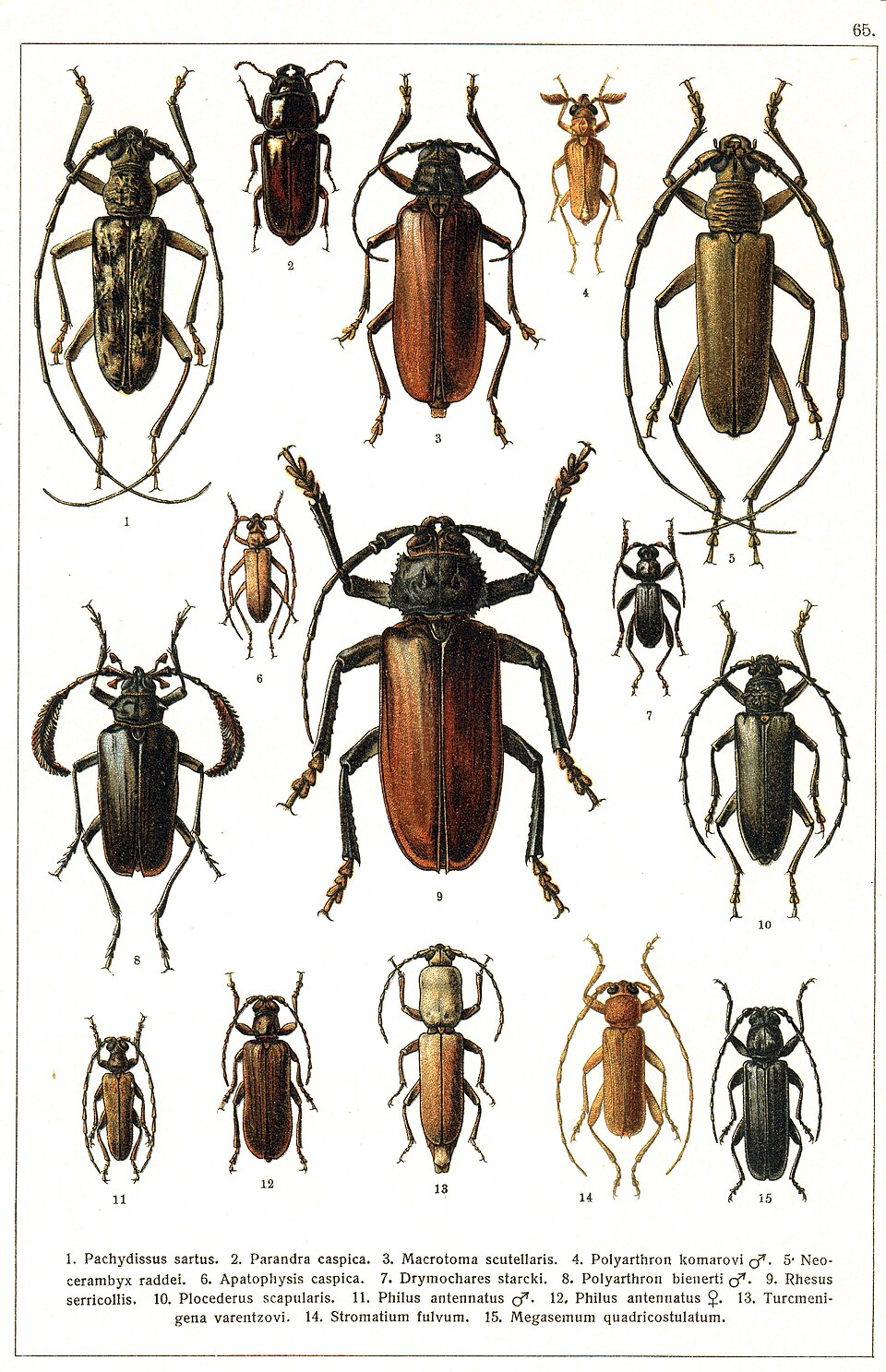
The longhorn beetle is a type of beetle distinguished by its very long antennae, often as long as or longer than its body. This family includes thousands of species found on every continent, with several species present in Tunisia. The larvae typically develop inside wood, living and tunnelling through it for several years before undergoing metamorphosis. Some species are considered forest or agricultural pests because of the damage they cause to trees. Size and colour vary greatly depending on the species, ranging from a few millimetres to more than fifteen centimetres in the largest tropical species.
The body is elongated and cylindrical, with a shell that is often sturdy and colourful. The antennae are highly developed and frequently exceed the length of the body, serving as essential sensory organs. The legs are adapted for walking and sometimes for boring into wood during the larval stage.
Characteristics
Indicative values: they vary by subspecies, sex and region.
Habitat and distribution
The longhorn beetle is found mainly in wooded areas, forests, and tree-covered zones where it finds the wood needed for larval development. Some species also adapt to agricultural areas, particularly orchards and olive groves, as well as urban parks with trees.
CURRENT RANGE
The family of longhorn beetles is found on all continents except Antarctica, with great diversity in tropical regions. In North Africa and Tunisia, several species have been recorded, notably in forested areas and olive groves.
Behaviour
The longhorn beetle is mainly nocturnal or crepuscular depending on the species, though some are active during the day. Adults fly to disperse and find mates or egg-laying sites. Larval behaviour is essentially underground or inside wood, with the larva spending most of its life hidden within the timber.
Reproduction
The female lays her eggs in bark cracks or wood crevices using a specialized ovipositor. After hatching, the larva tunnels through the wood for a period that can last from one to several years depending on the species and climatic conditions. Metamorphosis into a pupa and then an adult occurs inside the wood before the adult insect emerges.
Peculiarities
The exceptionally long antennae, which can exceed the body length several times over in certain species, are the most distinctive feature of this family. Some giant tropical species rank among the largest beetles known.
Threats and conservation
Some longhorn beetle species are themselves considered pests and are subject to control measures, particularly in orchards and forests. Other, rarer species are threatened by the loss of old-growth forests and dead wood, which is essential habitat for their larval development.
Numbers and trends vary across sources and regions. See the IUCN assessment for the latest reference data.
Gallery
1 documented photographs.
References
Profile updated 27 August 2026 · Reviewed by the TunisieVet editorial team.
Comments (0)
No comments yet.
CONSERVATION STATUS
Data deficient (DD)
IUCN source, latest published assessment.
Species health
Documented diseases for this species.
Find a veterinarianThis information is provided for educational purposes only and is not a substitute for a veterinary consultation. If you have any concerns about your animal's health, consult a veterinarian.
Similar animals
Other species documented in Animalpedia.

🚀 SWConsulting — Turning Your Ideas into Digital Solutions Do you have an idea, a project, or a business process that needs to be digitalized? SWConsulting supports businesses from concept to deployment, delivering custom, reliable, and scalable digital solutions tailored to their real needs. 💻 Web & Mobile Development ⚙️ Business Applications & SaaS 🤖 Artificial Intelligence & Automation 📊 Custom CRM & Management Tools 🛒 E-commerce & Marketplaces 🔗 APIs & System Integrations Our goal is simple: turn your business needs into practical digital solutions that help you improve efficiency, automate processes, and grow your business. Have a project in mind? Let’s talk. 🚀 SWConsulting — Digital Solutions, Real Impact.
WhatsApp