
Presentation
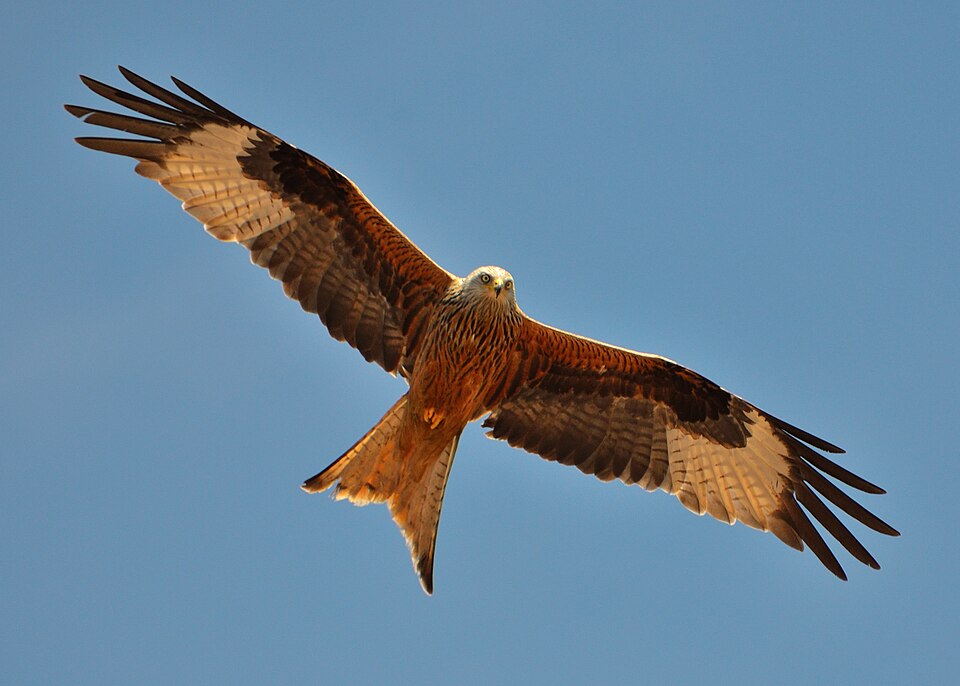
The Milan is a medium-sized diurnal raptor, recognizable by its notched, fork-shaped tail which serves as a rudder in flight. It belongs to the Accipitridae family and is found in Europe, Africa and Asia depending on the species. An opportunistic hunter, it hovers for a long time, exploiting ascending currents to locate its prey or carrion on the ground. The black Milan readily frequents the edges of wetlands and landfills, while the royal Milan prefers open agricultural landscapes. In Tunisia, it is observable particularly during migrations and during the breeding season in certain regions. Its varied diet and adaptability make it a widely distributed raptor but sensitive to pollution and the use of pesticides.
The plumage is reddish-brown with varying reflections depending on the species, the head often lighter and grayish. The forked tail, clearly visible in flight, clearly distinguishes the Milan from other raptors of similar silhouette. The wings are long, narrow and angular, suitable for prolonged gliding flight.
Characteristics
Indicative values: they vary by subspecies, sex and region.
Habitat and distribution
The Milan frequents open environments such as agricultural areas, steppes and the edges of wetlands and rivers. It also appreciates urban and peri-urban environments where food is easily accessible, particularly near landfills.
CURRENT RANGE
The black Milan is widely distributed in Europe, Africa and Asia, while the royal Milan is more restricted to Europe and northwest Africa. In Tunisia, the species is present particularly during migratory passages and in a more localized manner during reproduction.
Behaviour
It is a gregarious bird outside the breeding season, sometimes forming large gatherings near abundant food sources. It is territorial during nesting and actively defends the surroundings of its nest. Its energy-efficient gliding flight allows it to travel great distances while monitoring the ground.
Reproduction
The couple builds a nest of branches in a large tree, often reused for several years in a row. The female usually lays two to three eggs, incubated for about a month. The young take flight after six to seven weeks but remain dependent on the parents for a few more weeks.
Peculiarities
The forked tail is the most distinctive feature to identify the Milan in flight, even at great distances. Some populations carry out significant migrations between Europe and sub-Saharan Africa.
Threats and conservation
The main threats are poisoning by pesticides and poison bait, electrocution on power lines and degradation of traditional agricultural habitats. The royal Milan is particularly vulnerable in Europe where its numbers have declined sharply locally.
Numbers and trends vary across sources and regions. See the IUCN assessment for the latest reference data.
Gallery
1 documented photographs.
References
Profile updated 03 September 2026 · Reviewed by the TunisieVet editorial team.
Comments (0)
No comments yet.
CONSERVATION STATUS
Least concern (LC)
IUCN source, latest published assessment.
Species health
Documented diseases for this species.
See the 4 diseases of this species Find a veterinarianThis information is provided for educational purposes only and is not a substitute for a veterinary consultation. If you have any concerns about your animal's health, consult a veterinarian.
Similar animals
Other species documented in Animalpedia.

TunisieVet in your pocket 📱🐾 Access your veterinary services wherever you are. [ Download the app ]
Learn more