
Presentation
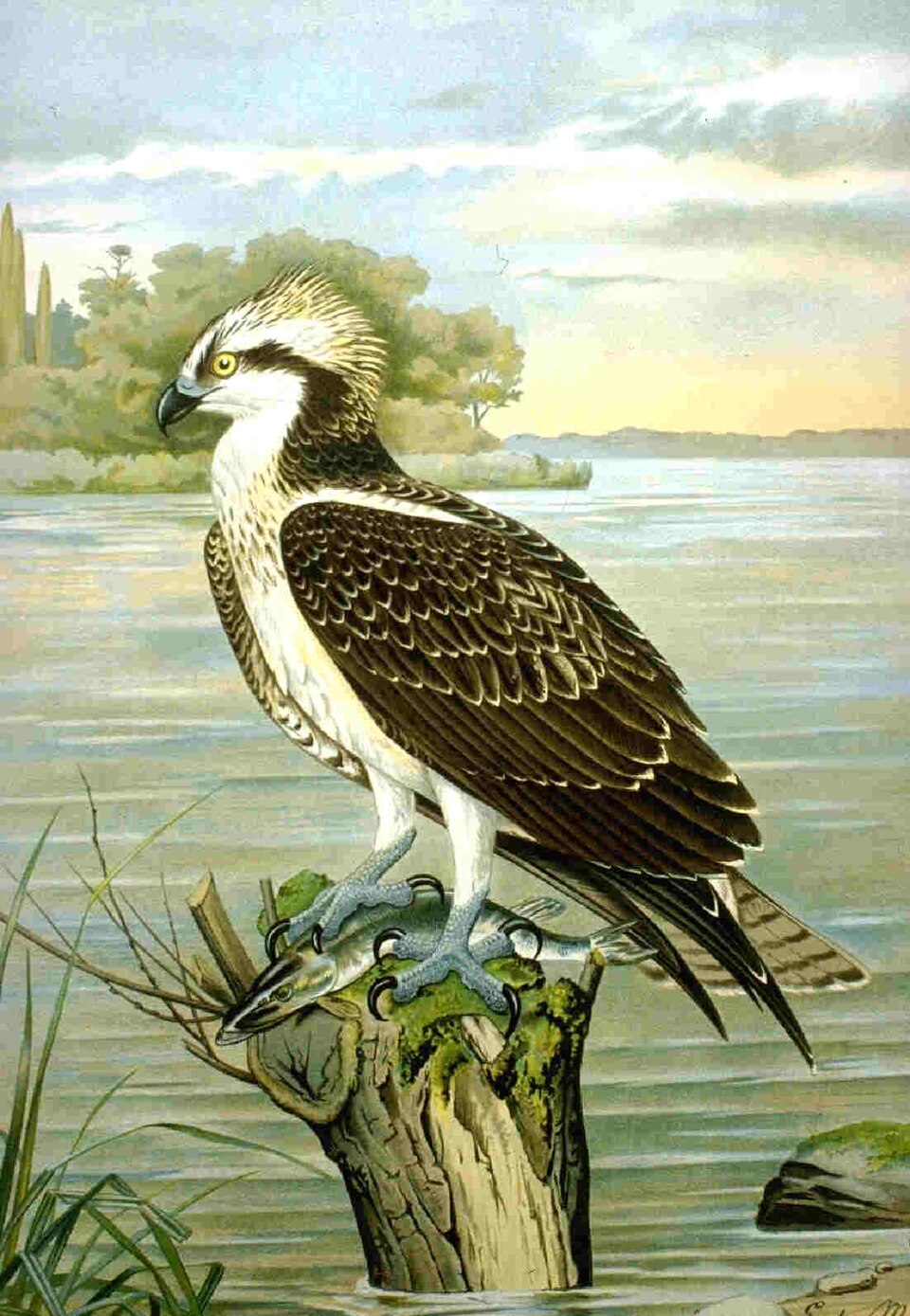
The Osprey fisherman (Pandion haliaetus) is a medium to large sized raptor, specialized in catching fish. It can be recognized by its brown-black plumage above and white below, as well as its dark mask crossing the eye. Present on almost all continents, it frequents coasts, lakes and rivers rich in fish. This raptor dives, legs forward, to seize its prey below the surface of the water. In Tunisia, it is observed particularly along the coasts and wetlands, particularly during periods of migration or wintering.
The Osprey has a dark brown upperparts and white underparts, with a white head marked with a characteristic black eye stripe. Its powerful, reversible claws, as well as rough scales under the fingers, allow it to firmly grip slippery fish. The wings are long and angled, suitable for gliding over water. Females are generally slightly larger than males.
Characteristics
Indicative values: they vary by subspecies, sex and region.
Habitat and distribution
The Osprey frequents aquatic environments rich in fish: sea coasts, estuaries, lakes, rivers and wetlands. It needs perches or high trees near water for observation and nesting. It avoids murky waters or waters too low in visible fish. Some populations also adapt to artificial bodies of water such as fish ponds.
CURRENT RANGE
The fishing Osprey has an almost cosmopolitan distribution, present on all continents except Antarctica. European and North American populations migrate to Africa and South America in winter. In North Africa, it is observed particularly on the Tunisian coast and on islands such as Zembra or Djerba. It is one of the most widely distributed species of raptors in the world.
Behaviour
The Osprey is an essentially solitary raptor outside the breeding season. It is strongly territorial around its nest and fishing grounds. Many populations are migratory, traveling long distances between breeding and wintering areas. It builds large nests of branches, often reused from year to year, on trees, pylons or artificial structures close to water.
Reproduction
The female usually lays 2 to 3 eggs per clutch, incubated mainly by herself for about 5 weeks. The male provides most of the fish supply during incubation and rearing of the young. The chicks fledge after 7 to 8 weeks but remain dependent on the parents for a few more weeks. The couple often remains faithful to the same nesting site over several years.
Peculiarities
The Osprey has reversible claws, a rare adaptation among raptors, allowing it to grasp fish with two fingers forward and two backwards. Its nostrils can close when diving to prevent water from entering. It is the only living species of the Pandionidae family.
Threats and conservation
Osprey suffered a sharp decline in the 20th century due to organochlorine pesticides such as DDT, which weakened its egg shells. Destruction of wetlands and disturbance of nesting sites remain current threats. Populations have generally recovered thanks to protective measures and the ban on certain pesticides. In Tunisia, the small breeding population remains vulnerable to the degradation of coastal habitats.
Numbers and trends vary across sources and regions. See the IUCN assessment for the latest reference data.
Gallery
1 documented photographs.
References
Profile updated 03 September 2026 · Reviewed by the TunisieVet editorial team.
Comments (0)
No comments yet.
CONSERVATION STATUS
Least concern (LC)
IUCN source, latest published assessment.
Species health
Documented diseases for this species.
See the 4 diseases of this species Find a veterinarianThis information is provided for educational purposes only and is not a substitute for a veterinary consultation. If you have any concerns about your animal's health, consult a veterinarian.
To discover around: Osprey
Videos, facts, stories and records linked to this species.
Similar animals
Other species documented in Animalpedia.

TunisieVet in your pocket 📱🐾 Access your veterinary services wherever you are. [ Download the app ]
Learn more