
Presentation
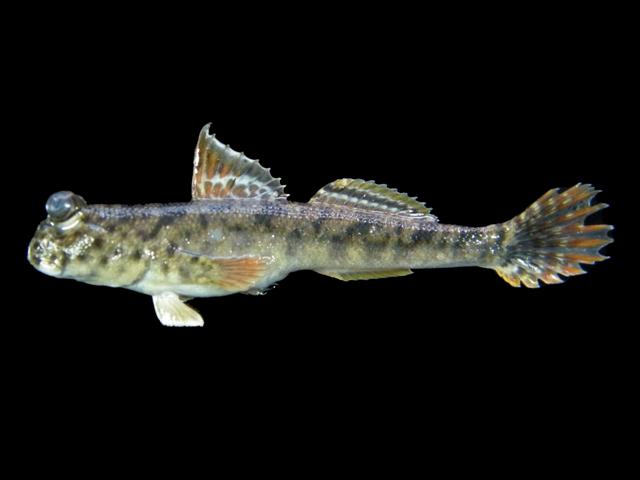
The mudskipper, also called frogfish or jumping fish, is an amphibious fish of the Gobiidae family, Oxudercinae subfamily. It lives in mangroves and coastal mudflats in tropical and subtropical regions of the Old World. Thanks to special respiratory and locomotor adaptations, it spends most of its time out of water, on mud or mangrove roots. Its bulging eyes, positioned on top of its head, give it panoramic vision and a characteristic frog-like appearance. This territorial and curious fish fascinates with its ability to crawl, jump and climb outside its aquatic environment. It is not found in Tunisia, with its range limited to tropical zones of the Indo-Pacific and West Africa.
The mudskipper has an elongated body and smooth skin covered in mucus that prevents desiccation in air. Its pectoral fins are muscular and articulated, serving as genuine supports for crawling or jumping. Its mobile and prominent eyes, housed in raised orbits, can retract into pouches filled with water to stay moist.
Characteristics
Indicative values: they vary by subspecies, sex and region.
Habitat and distribution
The mudskipper inhabits mangroves, mudflats, and estuaries governed by tidal rhythms. It tolerates significant variations in salinity and temperature, typical of tropical intertidal zones. It is found both on mudflats exposed at low tide and in shallow brackish waters.
CURRENT RANGE
The species is widely distributed along the tropical and subtropical coasts of West Africa, South and Southeast Asia, and northern Australia. It is absent from the Mediterranean basin and therefore from Tunisia. Its presence is closely linked to the existence of mangroves or intertidal mudflats.
Behaviour
This fish is territorial, with males actively defending a burrow against intruders through displays and ritualized fights. It communicates through movements of its deployed dorsal fin, especially during courtship displays or territorial confrontations. The mudskipper can breathe ambient air through its skin and moistened buccal cavity, allowing it to remain out of water for several hours. It digs U-shaped burrows in mud, which serve as refuges at high tide and breeding nests.
Reproduction
Reproduction occurs in a burrow dug by the male, where the female deposits her eggs following courtship displays. The male guards and aerates the eggs by regularly bringing air into a pouch located at the top of the burrow. The larvae hatch and then move into the aquatic environment for a planktonic phase before returning to settle on mudflats.
Peculiarities
The mudskipper is one of the few fish capable of surviving for extended periods out of water and moving actively on land. Its periscopic eyes and hopping gait have earned it a reputation as an unusual animal, often featured in nature documentaries. It can climb the aerial roots of mangroves using its prehensile pectoral fins.
Threats and conservation
The degradation and disappearance of mangroves, particularly through coastal urbanization and aquaculture, represent the principal threat to the species. Pollution of coastal waters and mudflats also affects its local populations. Overall, however, the species remains common across much of its range.
Numbers and trends vary across sources and regions. See the IUCN assessment for the latest reference data.
Gallery
1 documented photographs.
References
Profile updated 07 September 2026 · Reviewed by the TunisieVet editorial team.
Comments (0)
No comments yet.
CONSERVATION STATUS
Least concern (LC)
IUCN source, latest published assessment.
Species health
Documented diseases for this species.
This information is provided for educational purposes only and is not a substitute for a veterinary consultation. If you have any concerns about your animal's health, consult a veterinarian.
Similar animals
Other species documented in Animalpedia.

TunisieVet in your pocket 📱🐾 Access your veterinary services wherever you are. [ Download the app ]
Learn more