Presentation
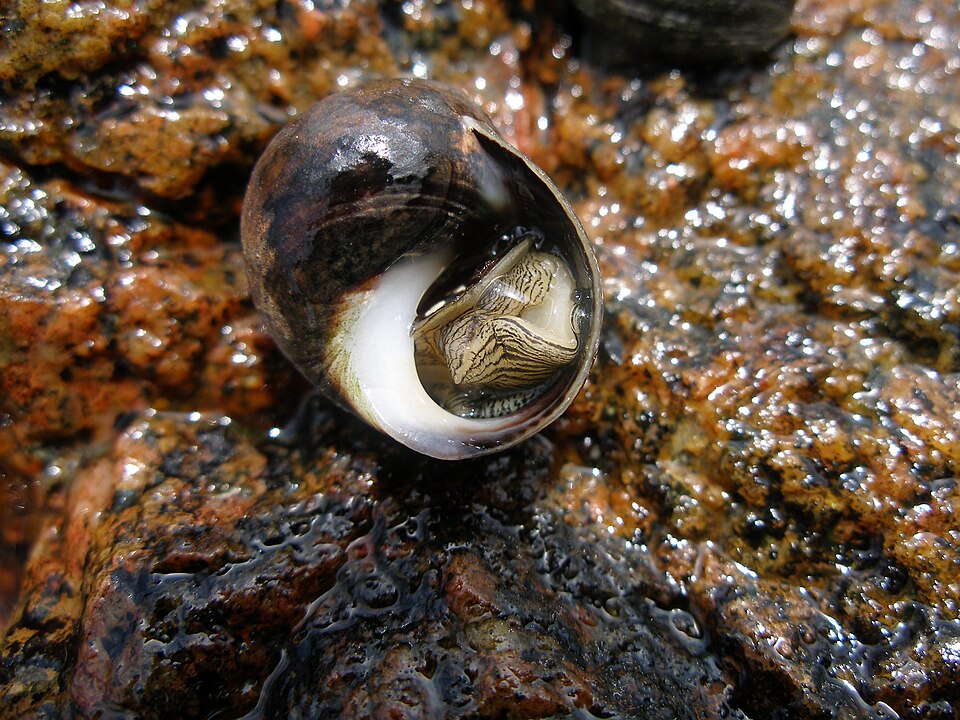
The common periwinkle (Littorina littorea) is a small marine gastropod with a conical shell, widely found on rocky coasts of the North-East Atlantic. It moves slowly over rocks and seaweed, where it constantly grazes on microscopic algal film. This animal withstands long periods out of water during low tide thanks to an operculum that seals its shell. Very common on European shorelines, it is also traditionally eaten, particularly in France and Belgium.
The periwinkle shell is thick, conical and spiralled, ranging from brownish-grey to blackish in colour, and typically measuring 2 to 3 cm in height. The soft body is protected by a horny operculum that closes off the shell opening when danger or drying occurs. The radula, a rasping organ, allows it to graze on microscopic algae fixed to hard substrates.
Characteristics
Indicative values: they vary by subspecies, sex and region.
Habitat and distribution
The periwinkle lives on rocky coasts in the intertidal zone, where it is exposed to tides and waves. It favors rocks, rocky foreshores, and areas covered with brown algae. It is also sometimes found in estuaries with variable salinity.
CURRENT RANGE
The species is native to North Atlantic coasts, from northern Europe to northwest Africa. It was also introduced to the east coast of North America in the 19th century. The periwinkle does not naturally occur in the Mediterranean or Tunisia.
Behaviour
This animal is slow and not very mobile, moving by creeping with a broad muscular foot. It can survive several hours out of water by closing its shell with its operculum, an essential adaptation to intertidal life. The periwinkle tends to aggregate in dense colonies on rocks exposed to wave action.
Reproduction
Reproduction occurs through external fertilization following mating, as this species has separate sexes. The female releases floating egg capsules that drift with ocean currents. Planktonic larvae develop in open water before settling on rocky substrate and metamorphosing into young periwinkles.
Peculiarities
The periwinkle can survive several days out of water thanks to its operculum, which limits dehydration. It represents an important traditional food resource in several Northwestern European countries. Its lifespan can reach several years, which is remarkable for such a small mollusk.
Threats and conservation
The species is not globally threatened and its populations are considered stable. Local overfishing and coastal pollution can affect certain populations at the regional scale. Climate change and ocean acidification represent emerging threats to shell-bearing mollusks.
Numbers and trends vary across sources and regions. See the IUCN assessment for the latest reference data.
Gallery
1 documented photographs.
References
Profile updated 30 August 2026 · Reviewed by the TunisieVet editorial team.
Comments (0)
No comments yet.
CONSERVATION STATUS
Least concern (LC)
IUCN source, latest published assessment.
Species health
Documented diseases for this species.
Find a veterinarianThis information is provided for educational purposes only and is not a substitute for a veterinary consultation. If you have any concerns about your animal's health, consult a veterinarian.
To discover around: Periwinkle
Videos, facts, stories and records linked to this species.
Similar animals
Other species documented in Animalpedia.

📱 عندك صفحة على فايسبوك؟ باهي… أما وين موقعك؟ الصفحة وحدها ما تكفيش. موقعك يخلي الناس تلقاك، يعرفوك أكثر ويثقو في خدمتك. 🌐 موقع باسم مشروعك 📲 يخدم أربعة وعشرين ساعة 🤝 يعطي ثقة واحترافية .📈 يعاونك تكبّر خدمتك خلّيه موجود وين الناس تلوّج عليه 🚀نعملولك موقع يشرّف مشروعك
WhatsApp