
Presentation
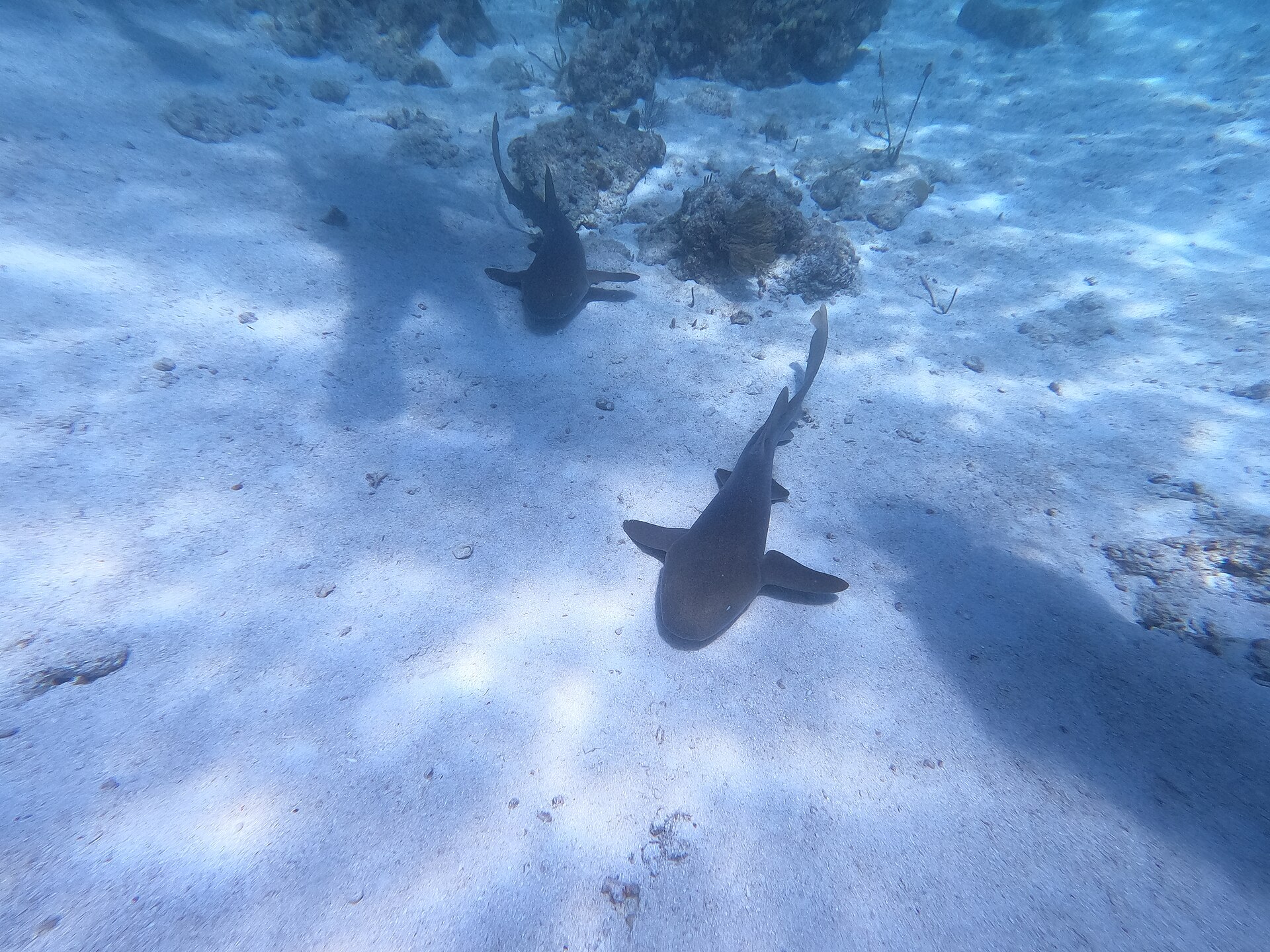
The Nurse shark (Ginglymostoma cirratum) is a medium to large shark, belonging to the family Ginglymostomatidae, known for its calm and sedentary behavior. It lives mainly in the shallow tropical and subtropical waters of the western and eastern Atlantic. Often observed resting on sandy bottoms or in underwater caves during the day, it becomes more active at night to feed. Its massive appearance and low reactivity make it a popular species with divers. Although generally harmless, it can bite if handled carelessly. This species plays an important role in the balance of coastal reef and sand ecosystems.
Nurse shark has a robust, slightly flattened body and rough, yellowish-brown to grayish-brown skin. It is distinguished by two sensory barbels located near the mouth, used to detect prey in the sand. Its two dorsal fins are similar in size and positioned far behind the body. Its mouth, small and located in a ventral position, houses numerous small teeth adapted to crushing.
Characteristics
Indicative values: they vary by subspecies, sex and region.
Habitat and distribution
This species frequents coral reefs, sandy bottoms, mangroves and shallow coastal areas. It particularly likes underwater caves and rocky overhangs where it rests during the day. It is generally found at depths less than 30 meters, although it can occasionally go deeper. Juveniles prefer even shallower areas, such as seagrass beds and lagoons.
CURRENT RANGE
Nurse shark occurs in the western Atlantic from the southern United States to Brazil, as well as in the eastern Atlantic along the African coast. It also frequents the eastern Pacific near the coasts of Central America. Its range is limited to shallow tropical and subtropical waters. It is not present in the Mediterranean nor in Tunisian waters.
Behaviour
The Nurse shark is a nocturnal species, not very active during the day, often observed motionless at the bottom of the water or under rocky and reef overhangs. It hunts mainly at night by searching the sand and crevices in search of prey. Unlike many sharks, it can remain stationary on the bottom because it actively pumps water through its gills. It is generally not very aggressive towards humans unless provoked or manipulated.
Reproduction
Reproduction is ovoviviparous, with gestation lasting approximately six months. Females give birth to litters of 20 to 30 young, fully formed and independent from birth. Sexual maturity is reached around 10 to 15 years old depending on the population. Breeding usually takes place every two years.
Peculiarities
The Nurse shark is able to remain motionless on the seabed for extended periods of time using a mouth-pumping breathing mechanism, without the need for continuous swimming. Its sensory barbels allow it to detect prey buried in sand even in murky water. It can also group together in clusters of several individuals during daytime rest, an unusual social behavior among sharks.
Threats and conservation
The main threat to the Nurse shark is overfishing, particularly for its meat, liver and fins. The degradation of coastal habitats, such as mangroves and coral reefs, also reduces breeding and nursery areas. Poorly supervised diving tourism can also disrupt its natural behavior. The slowness of its reproduction limits its ability to recover from these pressures.
Numbers and trends vary across sources and regions. See the IUCN assessment for the latest reference data.
Gallery
1 documented photographs.
References
Profile updated 28 August 2026 · Reviewed by the TunisieVet editorial team.
Comments (0)
No comments yet.
CONSERVATION STATUS
Vulnerable (VU)
IUCN source, latest published assessment.
Species health
Documented diseases for this species.
This information is provided for educational purposes only and is not a substitute for a veterinary consultation. If you have any concerns about your animal's health, consult a veterinarian.
To discover around: Nurse shark
Videos, facts, stories and records linked to this species.
Similar animals
Other species documented in Animalpedia.

TunisieVet in your pocket 📱🐾 Access your veterinary services wherever you are. [ Download the app ]
Learn more