
Presentation
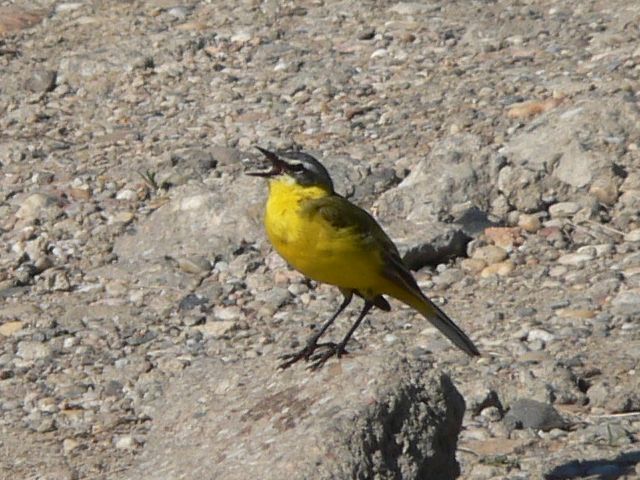
The wagtail is a small, insect-eating passerine recognized by its slender build and long tail that bobs continuously up and down. The genus Motacilla includes several species, among them the gray wagtail and the yellow wagtail, widely found throughout Europe, North Africa, and Asia. This lively and alert bird frequents waterside areas and open spaces, including urban settings. In Tunisia, it is observed year-round or during migration depending on the species, often near water points and cultivated areas. Its contrasting plumage—gray, black, white, or yellow according to species—makes identification in the field straightforward. It serves as a valued indicator for amateur ornithologists studying bird migrations.
The wagtail stands out for its slender body, long thin legs, and a tail disproportionately large compared to body size, which it shakes constantly. Plumage varies by species, featuring gray, black, white, or yellow tones arranged in striking patterns. The bill is fine and pointed, well suited for catching insects. Flight is undulating, typical of the genus, and often accompanied by short, sharp calls.
Characteristics
Indicative values: they vary by subspecies, sex and region.
Habitat and distribution
Wagtails favor open habitats near water, such as riverbanks, lakes, and wetlands. They adapt very well to urban and agricultural areas, frequenting roofs, car parks, and cultivated fields. They are commonly found in grasslands and around farms where human activity encourages insect populations.
CURRENT RANGE
The genus Motacilla is widely distributed across Europe, Africa, and Asia, with some migratory populations reaching sub-Saharan Africa in winter. In Tunisia, the Grey Wagtail and Yellow Wagtail are commonly observed, particularly near wadis, dams, and agricultural zones. Some populations are resident while others pass through during seasonal migrations.
Behaviour
The wagtail is a diurnal bird, active and typically solitary or paired during breeding season. It walks rather than hops, unlike many other passerines, while constantly bobbing its tail. Some species form communal roosts in winter, sometimes in urban settings on buildings or trees. It is territorial during the nesting season and may display aggressively toward intruders.
Reproduction
The female builds a cup-shaped nest, often hidden in a cavity, wall, or dense vegetation near water. The clutch typically contains four to six eggs, which are incubated for about ten days. Both parents feed the chicks, which leave the nest approximately two weeks after hatching. Multiple broods may occur during a single breeding season.
Peculiarities
The distinctive tail bobbing, which gives the bird its common name, remains a behavior whose exact function is debated among ornithologists. The Grey Wagtail has developed a remarkable tolerance to human presence, sometimes nesting directly on buildings.
Threats and conservation
Wagtails are not considered threatened globally, with populations generally stable. Wetland degradation and pesticide use that reduce insect populations may locally affect some populations. However, their broad ecological adaptability limits extinction risk.
Numbers and trends vary across sources and regions. See the IUCN assessment for the latest reference data.
Gallery
1 documented photographs.
References
Profile updated 05 September 2026 · Reviewed by the TunisieVet editorial team.
Comments (0)
No comments yet.
CONSERVATION STATUS
Least concern (LC)
IUCN source, latest published assessment.
Species health
Documented diseases for this species.
See the 4 diseases of this species Find a veterinarianThis information is provided for educational purposes only and is not a substitute for a veterinary consultation. If you have any concerns about your animal's health, consult a veterinarian.
Similar animals
Other species documented in Animalpedia.

TunisieVet in your pocket 📱🐾 Access your veterinary services wherever you are. [ Download the app ]
Learn more