
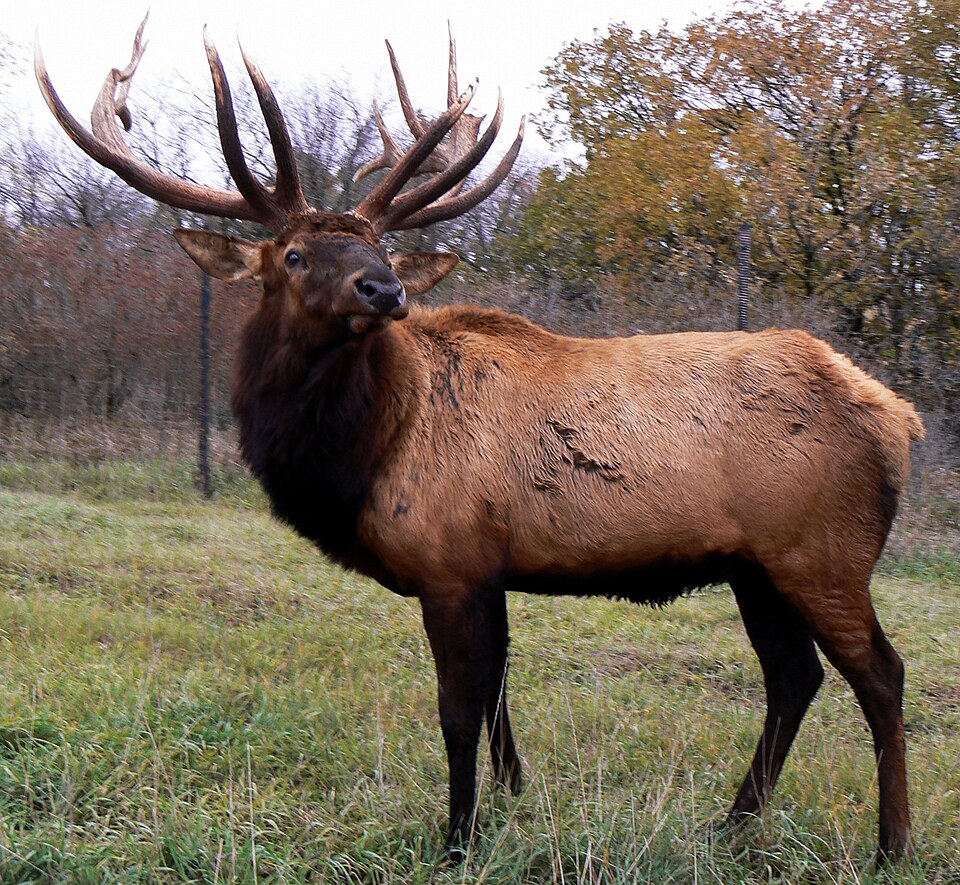
Presentation
The elk is a large cervid native to North America and eastern Asia, and one of the largest deer species in the world after the moose. Males carry massive, branching antlers that they shed and regrow each year. The species lives in herds, often segregated by sex outside the breeding season. Elk have been introduced to several other regions of the world for farming and hunting purposes. They are recognized for the powerful bugling call made by males during the rutting season. This cervid occupies varied habitats ranging from forests to mountain grasslands.
Coat color varies from reddish-brown in summer to a duller grayish-brown in winter, with a characteristic light-colored rump patch. Adult males carry antlers that can reach 1.2 meters in length, which are absent in females. The species displays marked sexual dimorphism, with males being noticeably larger and heavier than females.
Characteristics
Indicative values: they vary by subspecies, sex and region.
Habitat and distribution
Elk inhabit a wide range of environments, from temperate forests to meadows and mountain zones. They often undertake seasonal altitudinal migrations, moving down to valleys in winter to avoid deep snow. Forest edges and clearings provide both food and shelter.
CURRENT RANGE
The species is native to North America, particularly the western United States and Canada, as well as parts of eastern Asia such as Siberia and northern China. Populations have also been introduced to New Zealand and Argentina. It is absent in its natural state from the African continent and Tunisia.
Behaviour
The elk is a gregarious animal living in herds whose size varies with the season. During the autumn rut, males compete through antler clashes and loud vocalizations to establish and defend a harem of females. Outside this period, males and females often form separate groups. The species is active at dawn and dusk, resting during the warm daylight hours.
Reproduction
Elk rut occurs in autumn, a period when dominant males gather harems of females. Gestation lasts approximately 240 to 260 days and ends with the birth of a single calf in spring. The spotted calf remains hidden in vegetation for the first few weeks before joining the herd.
Peculiarities
The bugle call of the male elk—a powerful and modulated vocalization—is a distinctive acoustic trait of the species during rut. Its antlers rank among the largest of all living cervids.
Threats and conservation
The species experienced significant historical decline due to hunting and habitat loss during the nineteenth and early twentieth centuries. North American populations have largely recovered thanks to management and protection measures. Habitat fragmentation and competition with domestic livestock remain local pressures.
Numbers and trends vary across sources and regions. See the IUCN assessment for the latest reference data.
Gallery
1 documented photographs.
References
Profile updated 06 September 2026 · Reviewed by the TunisieVet editorial team.
Comments (0)
No comments yet.
CONSERVATION STATUS
Least concern (LC)
IUCN source, latest published assessment.
Species health
Documented diseases for this species.
This information is provided for educational purposes only and is not a substitute for a veterinary consultation. If you have any concerns about your animal's health, consult a veterinarian.
To discover around: Elk
Videos, facts, stories and records linked to this species.
Similar animals
Other species documented in Animalpedia.

TunisieVet in your pocket 📱🐾 Access your veterinary services wherever you are. [ Download the app ]
Learn more