Presentation
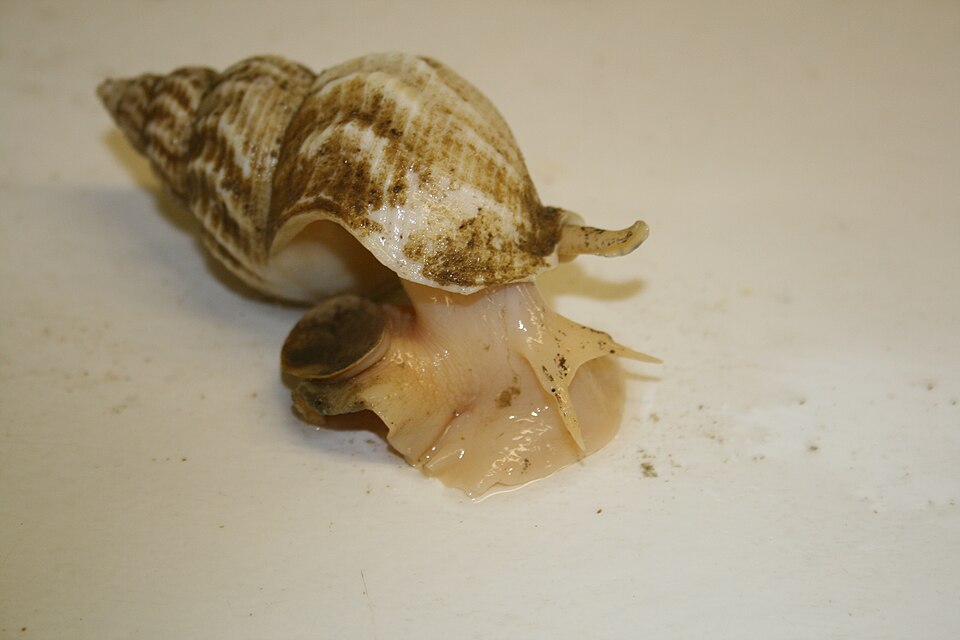
The whelk is a marine gastropod mollusk characterized by a conical, spiraled shell of brownish-gray color that can reach up to 10 cm in length. It lives on sandy or muddy bottoms in cold and temperate seas, moving slowly with the aid of a large muscular foot. A scavenger and occasional predator, it plays an important role in cleaning sea floors. Highly valued in gastronomy, particularly in Northern Europe, it is subject to significant commercial fishing. Its flesh is cooked and consumed plain or in various culinary preparations.
Its shell displays an elongated conical shape with spiral whorls marked by characteristic undulations. The animal possesses a radula that allows it to pierce the shells of other mollusks to feed on them. It secretes a thick mucus that facilitates movement across soft substrates.
Characteristics
Indicative values: they vary by subspecies, sex and region.
Habitat and distribution
The whelk inhabits sandy, muddy, or gravelly seabeds from the intertidal zone to approximately 200 meters depth. It prefers the cold and temperate waters of the North Atlantic and the English Channel.
CURRENT RANGE
The species is found in the Northeast Atlantic, from the Baltic Sea to the Bay of Biscay, as well as in the English Channel and North Sea. It is absent from the Mediterranean and therefore from Tunisian coasts.
Behaviour
It is a benthic, slow-moving, and solitary animal, active mainly at night. It partially buries its body in sediment during the day to protect itself from predators. It uses its sense of smell to locate food over long distances.
Reproduction
Reproduction occurs through internal fertilization following prolonged mating. The female lays egg capsules grouped together in spongy masses fixed to hard surfaces such as rocks or shells. Development is direct, without a planktonic larval stage, and juveniles hatch fully formed.
Peculiarities
The whelk is able to detect carrion odors from several tens of meters away through its highly sensitive respiratory siphon. Its empty shell often serves as shelter for hermit crabs after the animal dies.
Threats and conservation
Overfishing is the main threat to whelk populations in certain zones of intensive fishing. Pollution of the seabed and warming of coastal waters can also affect its distribution and reproduction.
Numbers and trends vary across sources and regions. See the IUCN assessment for the latest reference data.
Gallery
1 documented photographs.
References
Profile updated 30 August 2026 · Reviewed by the TunisieVet editorial team.
Comments (0)
No comments yet.
CONSERVATION STATUS
Least concern (LC)
IUCN source, latest published assessment.
Species health
Documented diseases for this species.
Find a veterinarianThis information is provided for educational purposes only and is not a substitute for a veterinary consultation. If you have any concerns about your animal's health, consult a veterinarian.
To discover around: Whelk
Videos, facts, stories and records linked to this species.
Similar animals
Other species documented in Animalpedia.

Be among the first to use our app. Sign up and get early Google Play access.
Discover