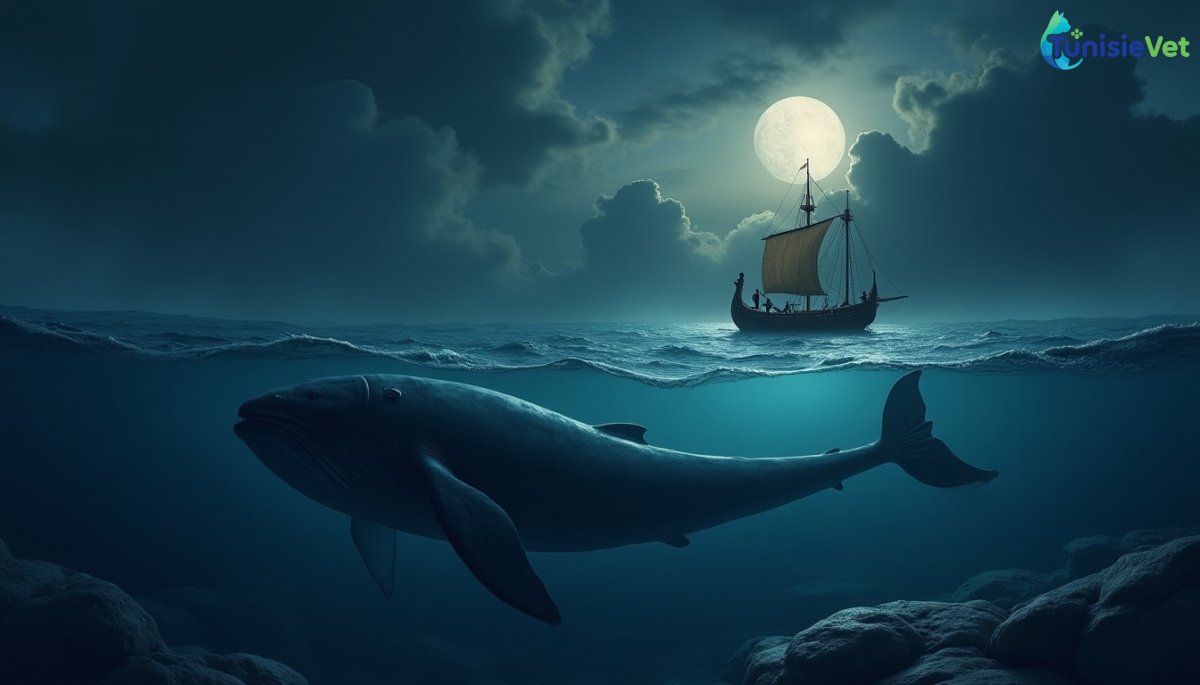
In the dark depths of the sea, a great fish receives a divine command that will forever change the fate of a fleeing prophet. Here is the story of Yunus and the sea creature mentioned in the Quran.
3 min read · Published 1 month ago · 38 views
The prophet Yunus (Jonah), sent to his people to call them to worship Allah alone, grew weary of their stubborn refusal to heed his message. He left his city without waiting for the divine order to depart, carrying with him deep anger and exhaustion. This episode from his life is recounted in several surahs of the Quran, notably Surah Yunus, Surah As-Saffat, and Surah Al-Anbiya.
Flight by Sea
Yunus boarded a ship that, in the midst of its voyage, was shaken by such a violent storm that the crew feared shipwreck. According to the tradition reported by Quranic scholars, the sailors decided to draw lots to determine who would be cast into the sea to lighten the ship, believing this would calm the waves. The lot fell upon Yunus, and it fell upon him repeatedly. He then threw himself into the water, accepting what was befalling him.
Publicité
Publicité
At that very moment, Allah commanded a great fish to swallow him—not to devour him, but to preserve him within its belly. The Quran relates this in Surah As-Saffat:
﴿ فَالْتَقَمَهُ الْحُوتُ وَهُوَ مُلِيمٌ ﴾
"The fish swallowed him while he was blameworthy."
(Surah As-Saffat, verse 142)
In the Darkness of the Depths
Yunus found himself plunged into total darkness, described by some commentators as a triple darkness: that of the fish's belly, that of the sea, and that of the night. Aware of his fault in having left his people without awaiting divine permission, he implored Allah with complete sincerity. The Quran reports his invocation in Surah Al-Anbiya:
"He called out in the darknesses: 'There is no deity except You! Exalted are You! I have been among the wrongdoers.'"
(Surah Al-Anbiya, verse 87)
This invocation, known among Muslims as the "supplication of Yunus," has remained a model of sincere repentance. Allah answered his prayer and saved him from this distress, as confirmed by the following verse of the same surah.
Cast upon the Shore
The fish then cast Yunus upon bare land, exhausted and weakened. According to what Quranic scholars report, Allah caused a plant to grow above him, often identified as a gourd, to give him shade and comfort during his recovery. Surah As-Saffat evokes this moment:
Yunus was cast out "sickly" upon the shore;
a climbing plant grew to shelter him;
he was then sent back to his people, who this time believed in his message.
This narrative reminds us that no creature, however mighty the sea creature may be, acts without the permission of Allah. The great fish was neither a tormentor nor mere chance: it was the instrument of both trial and mercy, obeying strictly what was commanded to it.
This story also teaches us the respect owed to animals—those creatures who, like the fish of Yunus, submit entirely to divine will. To care for them, to respect their lives and their environment, is to recognize the wisdom of their Creator, present even in the darkest depths of the sea.