StorySteppeFarmland & grasslandsBeliefs and teachings
Horses in the Quran: why are they mentioned?
In the Quran, the horse appears as an exceptional creature, associated with power, beauty, and gratitude toward Allah. Here is what the texts actually say about this noble animal.
3 min read · Published 1 week ago · 17 views
The horse holds a special place in the Quran, where it is mentioned several times as a sign of divine power and a precious companion to humankind. It is not presented as a mere beast of burden or war, but as a creature whose beauty and vigor deserve to be pondered.
A creature given to man
In Surah An-Nahl (The Bees), Allah describes the creation of horses, mules, and donkeys among the blessings granted to humans—both to carry them and for the beauty they represent. This verse emphasizes that the horse is not merely useful: it is also beautiful, and this beauty is presented as a grace in itself, worthy of gratitude.
Publicité
Publicité
This dual dimension—usefulness and aesthetic appeal—runs through the entire place of the horse in Islamic tradition. The animal is seen as a gift that goes beyond practical function alone, a reminder of the Creator's generosity toward His creatures.
The oath of horses launched at gallop
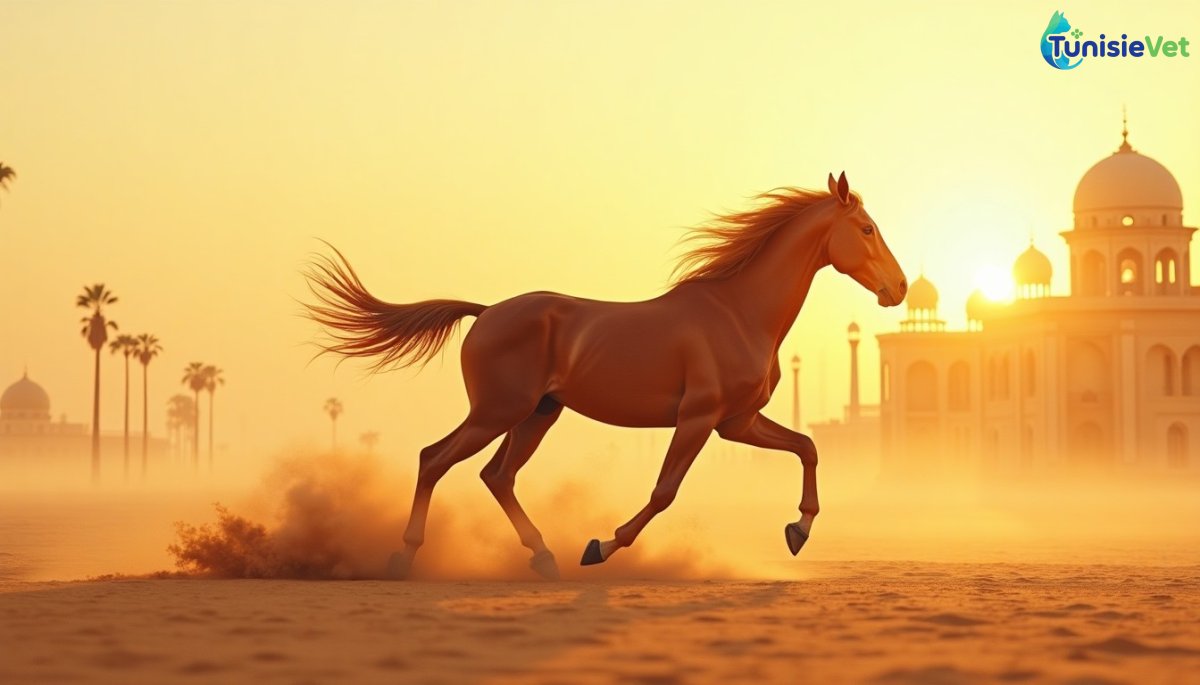
Surah Al-Adiyat (The Courses) opens with a striking oath sworn by Allah concerning horses launched at gallop, whose breath is panting, whose hooves strike sparks from stones, and who surge forward at dawn to raise a cloud of dust. Scholars of interpretation generally agree in seeing here an evocation of battle horses, whose eagerness and vigor serve to illustrate, by contrast, human ingratitude toward their Lord—a theme developed further in the surah.
The very choice of this oath is not without significance: by swearing by the horses, the Quran shines light on the strength, endurance, and nobility of this animal, qualities that captured the imagination of the Arabs long before the advent of Islam and continue to be admired today.
An attachment reported in the hadith
Beyond the Quran, several authentic hadith report the special care that the Prophet ﷺ showed toward horses. It is reported in Sahih al-Bukhari that the Prophet ﷺ loved horses and encouraged their good treatment, regarding them as carriers of blessing when used rightly, especially in striving and legitimate defense. Other traditions mention horse races organized in the time of the Prophet ﷺ, attesting to the high regard held for this animal in the daily life of the early Muslims.
These accounts show that the horse was not merely a tool, but a companion one cared for, fed properly, and treated with respect, in keeping with the general spirit of kindness toward animals found in many Islamic teachings.
Thus, whether it is the verse from An-Nahl recalling its beauty given to mankind, or the solemn oath of Al-Adiyat celebrating its vigor, the horse remains in the Quran and the prophetic tradition a creature whose greatness invites recognition. Caring for horses, as for every animal placed under human responsibility, embodies this spirit of gratitude and gentleness that these texts teach us: to honor creation is also to know how to care for it with attention and respect.