StoryDesertSteppeFarmland & grasslandsMercy towards animals
How to Travel with Animals According to Prophetic Teaching
Before each caravan journey, the Prophet ﷺ ensured that every animal was treated with gentleness, from loading to rest. These teachings continue to define, even today, the principles of respectful travel with animals.
3 min read · Published 1 week ago · 18 views
In seventh-century Arabia, travel almost always meant traveling with animals: camels, horses, and donkeys accompanied caravans across the desert. The Prophet Muhammad ﷺ, himself a great traveler, left precise teachings on how to treat these companions on the journey, making animal welfare an integral part of travel.
Do Not Overburden the Mount
It is reported in Sahih Muslim that the Prophet ﷺ forbade people from sitting on mounts simply to converse or chat without necessity, reminding that "many mounts are better than their riders." This hadith emphasizes that the animal is not merely an object of transport to be kept stationary at will, but a living being whose physical limits must be respected. Similarly, several accounts indicate that the Prophet ﷺ recommended not overloading beasts of burden beyond their capacity, and ensuring that the weight was distributed fairly.
Publicité
Publicité
Rest During the Journey
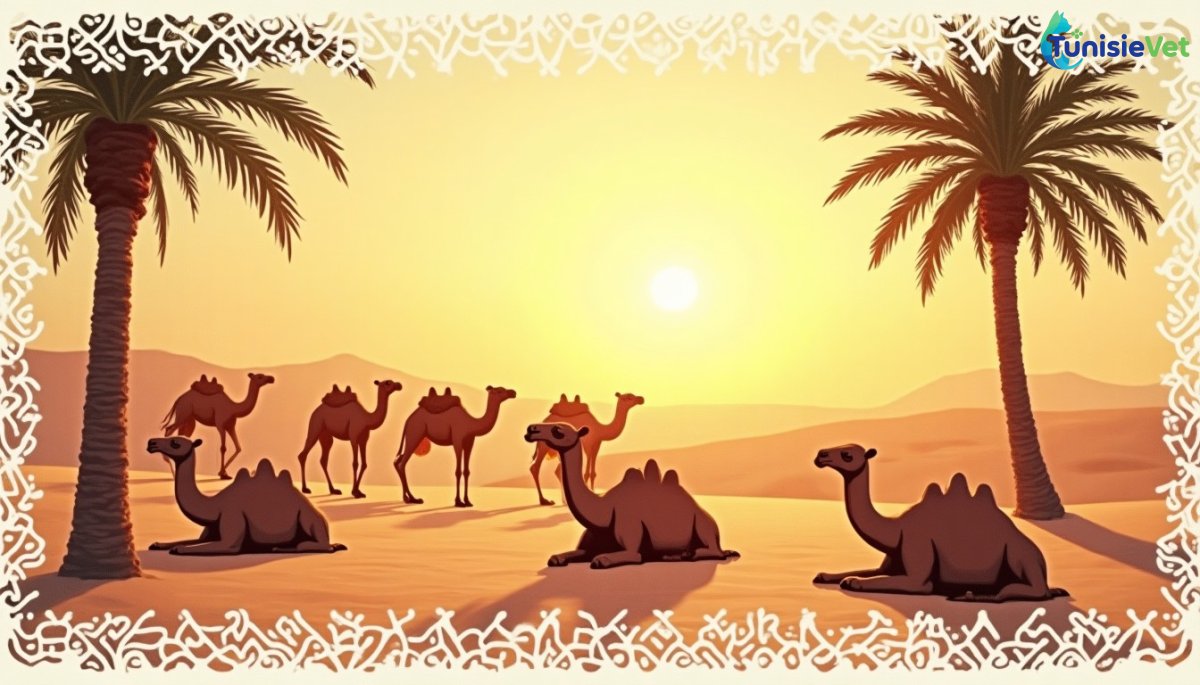
A hadith reported by Imam Muslim relates that the Prophet ﷺ, seeing people traveling through the night without stopping on their exhausted camels, ordered them to dismount and let their mounts rest during the final part of the night, when animals are most depleted. He thus insisted on the importance of regular breaks, feeding, and watering the animals before even considering the riders' own comfort.
It is also reported, according to several authentic traditions, that when the Companions made camp, the Prophet ﷺ taught them never to make mounts descend abruptly on rocky or uneven ground without care, and to choose resting places where the animal could graze or rest in the shade.
Feed Before Feeding Yourself
A principle frequently cited in prophetic tradition holds that the traveler should feed and water his mount before thinking of his own meal. This priority given to the animal, even when the man is tired from the road, illustrates a conception of travel where responsibility toward the living being entrusted to our care takes precedence over our own immediate comfort.
The Qur'an itself speaks of the benefits God has granted to men through animals of burden, reminding that they are a blessing to preserve and not to exploit without limit. In Surah An-Nahl, mention is made of horses, mules and donkeys created "for you to ride, and for adornment," emphasizing their precious role in daily life and thus the gratitude owed to them.
An Ethics of Travel Still Relevant Today
These teachings, though stated in a context of caravans and mounts, carry timeless weight. They invite us to regard any animal accompanying human travel—whether a camel of old or a pet today—as a being worthy of attention, whose basic needs must never be put second merely for convenience.
Adapt the pace of travel to the animal's capabilities
Plan stops for rest, water, and food
Never impose an excessive load
Ensure its comfort before your own
These principles remind us that mercy toward animals does not end at the threshold of home: it accompanies each stage of the journey, each rest stop, each gesture toward the creature that carries us or journeys with us. Traveling with an animal means accepting ongoing responsibility for its welfare, in keeping with what prophetic tradition teaches us.