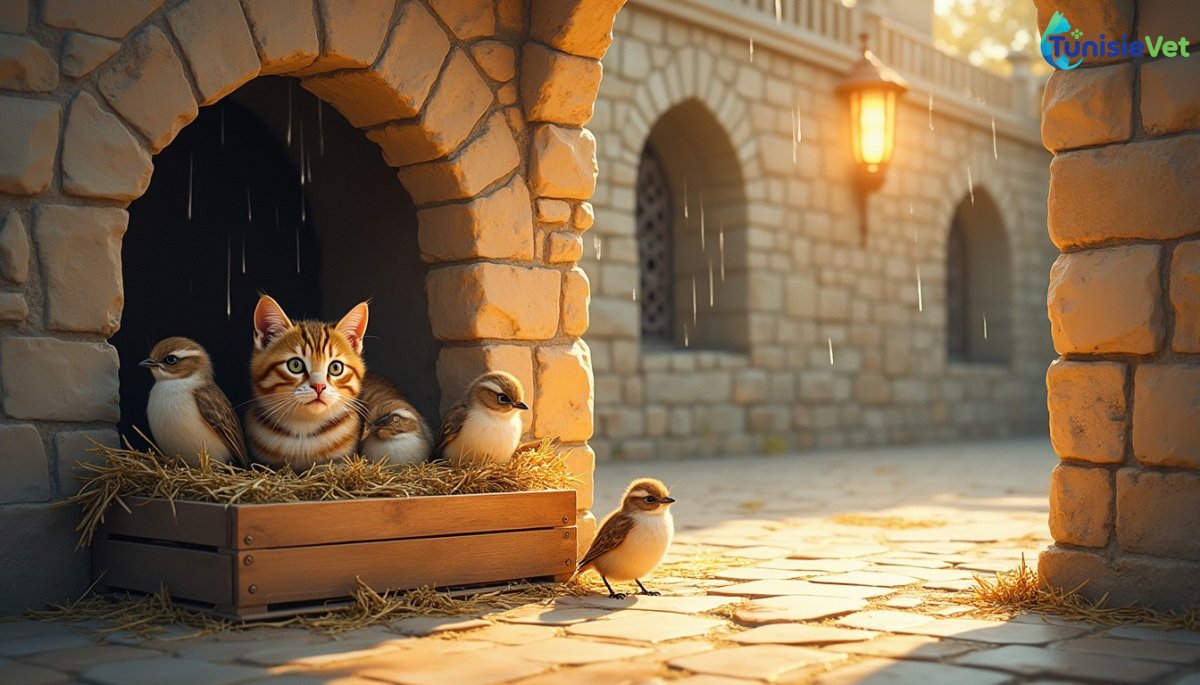
On a freezing night, a small animal looks for a corner sheltered from the wind. What do the Quran and the tradition of the Prophet ﷺ say about kindness toward vulnerable creatures? A plain account of the warmth of a refuge.
Picture a December night: the wind whistles between the walls, icy rain runs over the paving stones, and a thin cat searches for a dry corner where it can rest its numb paws. Each of us has come across this scene at some point. The texts of Islam do not report a specific episode about winter shelter, and we will not invent one. However, they set out clear principles of mercy toward animals.
The Quran: creatures entrusted to our care
In Surah An-Nahl, God reminds us of the benefits that livestock bring to humans, among them warmth:
﴿ وَالْأَنْعَامَ خَلَقَهَا ۗ لَكُمْ فِيهَا دِفْءٌ وَمَنَافِعُ وَمِنْهَا تَأْكُلُونَ ﴾
"And the livestock — He created them for you. In them is warmth and other benefits, and from them you eat."
(Surah An-Nahl, verse 5)
Whoever receives warmth from an animal knows what cold means; they then understand that offering shelter in return is a way of showing gratitude.
The teachings of the Prophet ﷺ
The Prophet ﷺ taught that compassion toward any living being is never lost. It is reported in Sahih al-Bukhari and Sahih Muslim that a man, overcome by thirst, went down into a well and drank. Coming back up, he saw a panting dog eating damp earth because of its thirst. The man filled his khuff with water, held it in his mouth to climb back up, and then gave the dog a drink. God thanked him for this and forgave him. The Companions then asked: "Messenger of God, is there a reward for us in (caring for) animals?" He replied: "There is a reward for every living being with a moist liver."
Another account, related by Abu Dawud, takes place during a journey. The Companions had taken the two chicks of a bird called a humara, and the mother came fluttering above them, clearly distressed. The Prophet ﷺ said: "Who has distressed this bird by taking her young? Return her young to her." This account shows the attention given to the bond between a mother and her brood, and therefore to her nest, her refuge.
Abu Dawud also reports that the Prophet ﷺ, passing by a camel whose back touched its belly from weakness, said: "Fear God regarding these dumb animals." These animals cannot say that they are cold, hungry or afraid. The believer is called to be attentive to them on their behalf.
A simple act, shared warmth
From these texts we take a lesson that is lived out in everyday acts: to see the distress of a creature and not look away. In winter, this can mean a dry corner sheltered from the wind, a box lined with a blanket, a little unfrozen water, or a shared meal. If an animal seems sick or injured, one can also seek advice from a veterinarian.
May this cold season be for us an occasion for mercy. Offering shelter to an animal means acknowledging that every living being was created by God and that kindness toward it matters. A small refuge for a voiceless creature is a modest gesture, but, according to the teaching of the Prophet ﷺ, it is never without value.