StoryFarmland & grasslandsUrban environmentStories from the hadiths
"In every living creature, there is a reward": what does this hadith mean?
A thirsty man descended into a well to drink, then climbed back out to offer water to a panting dog dying of thirst. According to the Prophet ﷺ, this simple gesture earned him God's forgiveness.
3 min read · Published 2 weeks ago · 22 views
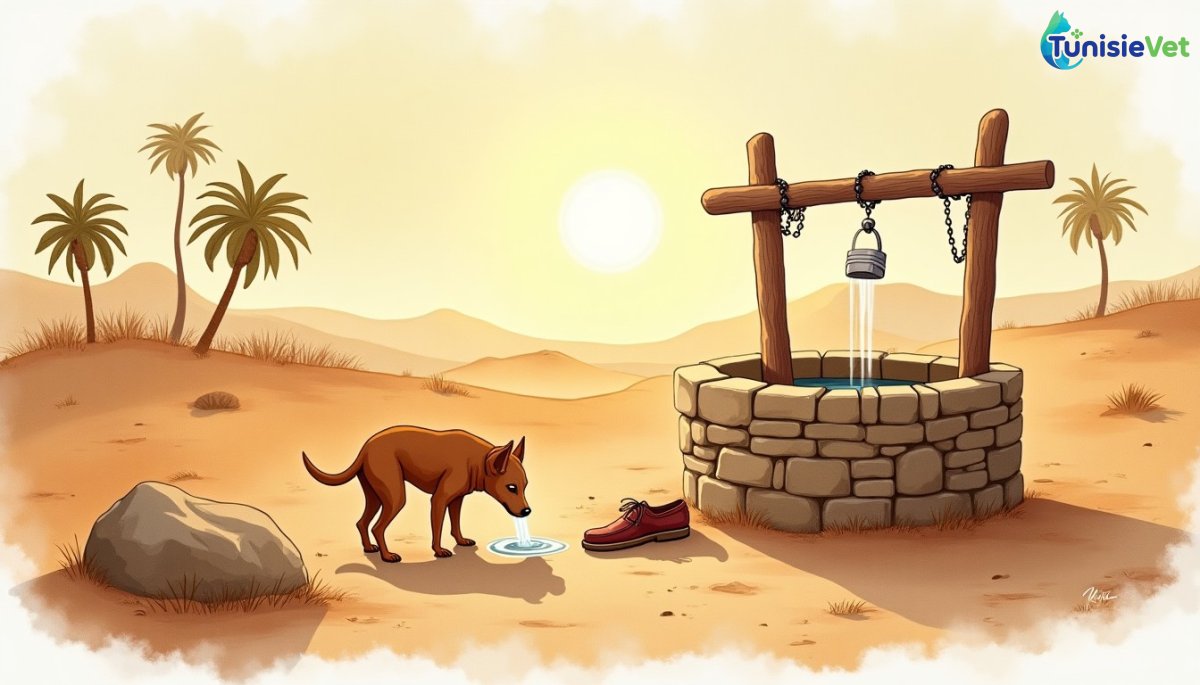
One day, a man was walking along a road when he became extremely thirsty. Spotting a well, he went down into it, drank his fill, and climbed back out. That was when he saw a dog panting, its tongue hanging out, eating wet mud because its thirst was so great. The man thought to himself: "This dog is as thirsty as I was."
A simple gesture, an immense reward
Without hesitation, the man went back down into the well, filled his shoe with water, held it between his teeth so he could climb back up, and gave the dog water until its thirst was quenched. This apparently trifling gesture was witnessed by God and greatly rewarded. The Prophet ﷺ told this story to his companions to teach them an essential truth about mercy.
Publicité
Publicité
This account is reported in Sahih al-Bukhari and in Sahih Muslim. The Prophet ﷺ concluded the story by saying that God thanked this man for his deed and forgave his sins. When the companions asked, "O Messenger of God, is there a reward for us in treating animals well?", he replied with these words that have remained famous: "In every living creature with a moist liver, there is a reward."
What does "a moist liver" mean?
This expression used by the Prophet ﷺ refers, according to the scholars' explanations, to every living being: it encompasses animals in all their diversity, without distinction of species, size, or usefulness to man. The hadith does not speak only of domestic or companion animals, but of every creature endowed with life. This means that kindness toward animals is not a peripheral or optional act in the Islamic tradition: it is directly linked to God's mercy and can be a means of forgiveness.
It is worth noting that in this account, the animal rescued is not even one known for its closeness to humans. It is a stray dog, parched with thirst, with no owner and no apparent market value. This shows that the worth of an act of kindness does not depend on the species or usefulness of the animal rescued, but on the sincere intention and compassion that animate it.
A universal lesson
This hadith also reminds us that mercy is not confined to relationships between human beings. It extends to all of creation, including the most humble creatures. A simple gesture—giving water to drink, feeding, easing an animal's suffering—can have, in the balance of deeds, considerable weight in God's sight.
This story invites each person to regard attentively the animals they encounter on their way, whether domestic, stray, or wild. A bowl of water set out for a thirsty cat, a gentle gesture toward an injured animal, or simply taking care not to cause a living creature to suffer: all these simple acts which, in the light of this hadith, can become occasions of mercy and closeness to the divine. Caring for animals is therefore not a minor detail, but a living part of faith and humanity.