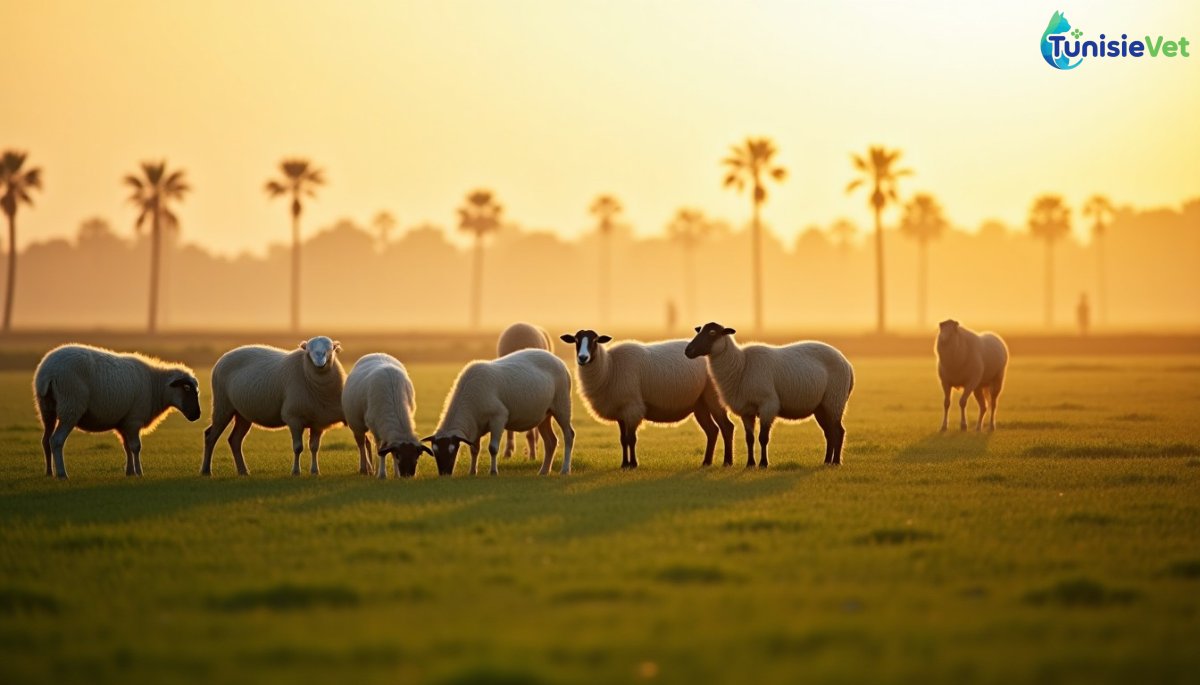
A flock of sheep that went astray into a cultivated field becomes, in the Qur'an, the starting point for a judgment rendered by the prophet Dawud and then refined by his son Sulayman, peace be upon them.
The narrative is found in Surah Al-Anbiya. A dispute is brought before the prophet Dawud (David), peace be upon him: a flock of sheep belonging to some people entered a cultivated field at night and damaged it. The owners of the field seek compensation, and Dawud is tasked with judging between the two parties.
The Judgment of Dawud and Sulayman
Dawud renders a judgment. His son Sulayman (Solomon), peace be upon him, who was present, proposes another way to resolve the dispute, deemed more equitable for both parties. The Qur'an mentions this precise moment:
﴿ وَدَاوُۥدَ وَسُلَيْمَٰنَ إِذْ يَحْكُمَانِ فِى ٱلْحَرْثِ إِذْ نَفَشَتْ فِيهِ غَنَمُ ٱلْقَوْمِ وَكُنَّا لِحُكْمِهِمْ شَٰهِدِينَ ﴾
"And [remember] Dawud and Sulayman, when they judged concerning the field into which the sheep of the people had strayed by night; and We were witnessing of their judgment."
(Surah Al-Anbiya, verse 78)
The following verse clarifies that it was Sulayman to whom the most just understanding of the matter was granted, while to each of the two prophets were given wisdom and knowledge. Some scholars report that the solution proposed involved temporarily entrusting the flock to the owners of the damaged field, for the time needed for the land to regenerate, and then returning the sheep to their owners once the field was restored — a way of repairing the harm without permanently depriving anyone of their property. The Qur'an does not, however, detail all the precise terms of the arrangement, and it is proper to remain cautious about elements that rest on interpretation rather than the text itself.
A Lesson in Wisdom and Justice
This passage illuminates several teachings that frequently appear in Qur'anic narratives related to Sulayman:
- Justice must account for the actual harm suffered by each party.
- Wisdom does not oppose justice: it enables finding a solution that repairs the harm without excess.
- Knowledge and the capacity to judge are presented as gifts granted by Allah, not merely qualities acquired by human effort alone.
The flock of sheep holds here a discrete yet essential place: it is they who, by wandering at night into the field, bring about the situation that allows the wisdom of the two prophets to be revealed. Animals, in this narrative as in many other Qur'anic passages, are never mere backdrop: their behavior, their needs, and the consequences of their actions are part of an order that the Qur'an invites us to observe with care.
This story also reminds us of a concrete responsibility: that of watching over the animals in one's care. A flock left without supervision can cause harm, just as it may itself be exposed to danger if it wanders without protection. Caring for animals, ensuring they are well tended, fed, and safe, while respecting the work and property of others, is in keeping with the spirit of justice and balance that the account of Dawud and Sulayman invites us to reflect upon.