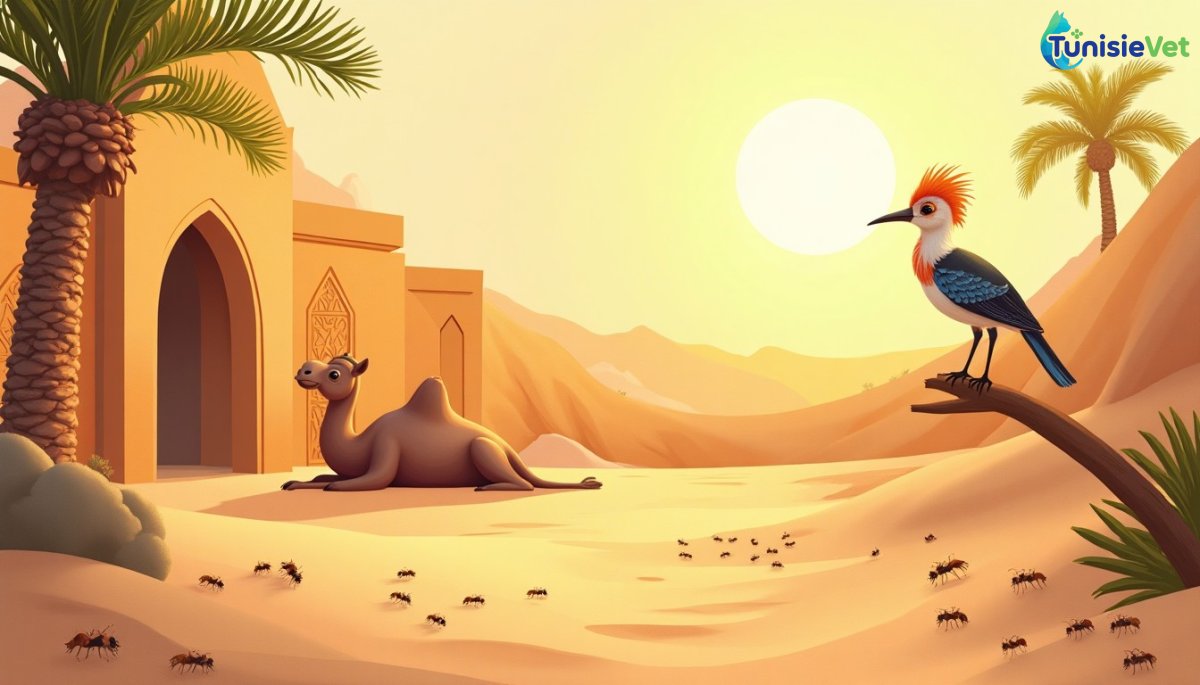
From the mosquito to the elephant, from the raven to the ant, the Qur'an abounds with references to the animal world. These creatures are not mere backdrop—they are designated as signs meant to prompt humans to reflect on the power and wisdom of their Creator.
From the mosquito to the elephant, from the raven to the ant, the Qur'an abounds with references to the animal world. These creatures are not mere backdrop—they are designated as signs (ayat) meant to prompt humans to reflect on the power and wisdom of their Creator.
Creatures Cited as "Ayat"
The Arabic word "aya" means both "sign" and "verse." The Qur'an uses this term to refer to phenomena in creation that bear witness to the existence and greatness of Allah. Time and again, it is animals that fulfill this role. In Surah Al-Baqarah, Allah states He does not hesitate to set forth as an example a creature as small as a mosquito:
﴿ إِنَّ اللَّهَ لَا يَسْتَحْيِي أَن يَضْرِبَ مَثَلًا مَّا بَعُوضَةً فَمَا فَوْقَهَا ﴾
"Allah is not ashamed to cite as an example a mosquito or something above it."
(Surah Al-Baqarah, verse 26)
This verse teaches that the size of a creature matters nothing in divine wisdom: whether a tiny insect or an imposing animal, each carries a lesson for those who wish to reflect.
Entire Narratives Built Around Animals
The Qur'an does not limit itself to occasional comparisons—it sometimes devotes entire passages to specific animals, woven into the stories of the prophets. In Surah An-Naml ("The Ant"), an ant warns its colony of the approach of Prophet Sulayman's ﷺ army so they will not be crushed unknowingly. This same narrative also mentions the hoopoe, a messenger bird that informs Sulayman ﷺ of the existence of the kingdom of the Queen of Sheba.
In Surah Al-Fil ("The Elephant"), a historical event involving an army mounted on elephants is recalled, illustrating how the mightiest material power remains subject to the will of Allah. It is also reported, according to several prophetic accounts, the story of a dog whose thirst was quenched by a man, an episode narrated in an authentic hadith from Sahih al-Bukhari, showing that an act of mercy toward an animal can be a source of great good.
A Constant Invitation to Reflection
Why this recurring choice of animals as signs? Exegetes explain that animals, through their instinctive behavior, their sometimes surprising organization, or their simple existence, remind humans that they are not the only being endowed with a form of intelligence and order in the universe. Observing an ant colony, the organized flight of birds, or the patience of a camel in the desert prompts one to consider the origin of this order. According to some commentators, this divine pedagogy also aims to recall humility: if Allah cares to detail the life of an ant or a mosquito, no creature is negligible in His sight.
The place granted to animals in the Qur'an is therefore never incidental. It is part of a vision in which all creation, great or small, participates in bearing witness to divine wisdom, and in which attentive observation of nature becomes an act of faith.
In reflecting on these signs, the believer is invited to regard all creatures around them with respect and attention. Taking care of animals, avoiding harm to them, and recognizing their place in the order of the world thus align with a compassion that honors the very spirit of these Qur'anic teachings.