StorySteppeFarmland & grasslandsBeliefs and teachings
The Horse: Courage, Journey and Islamic Tradition
A proud companion of riders and caravans, the horse holds a place of honor in Islamic tradition. Through Quranic verses, hadiths, and accounts of the Night Journey, let us discover what these texts teach us about this noble animal and the kindness owed to it.
3 min read · Published 1 week ago · 19 views
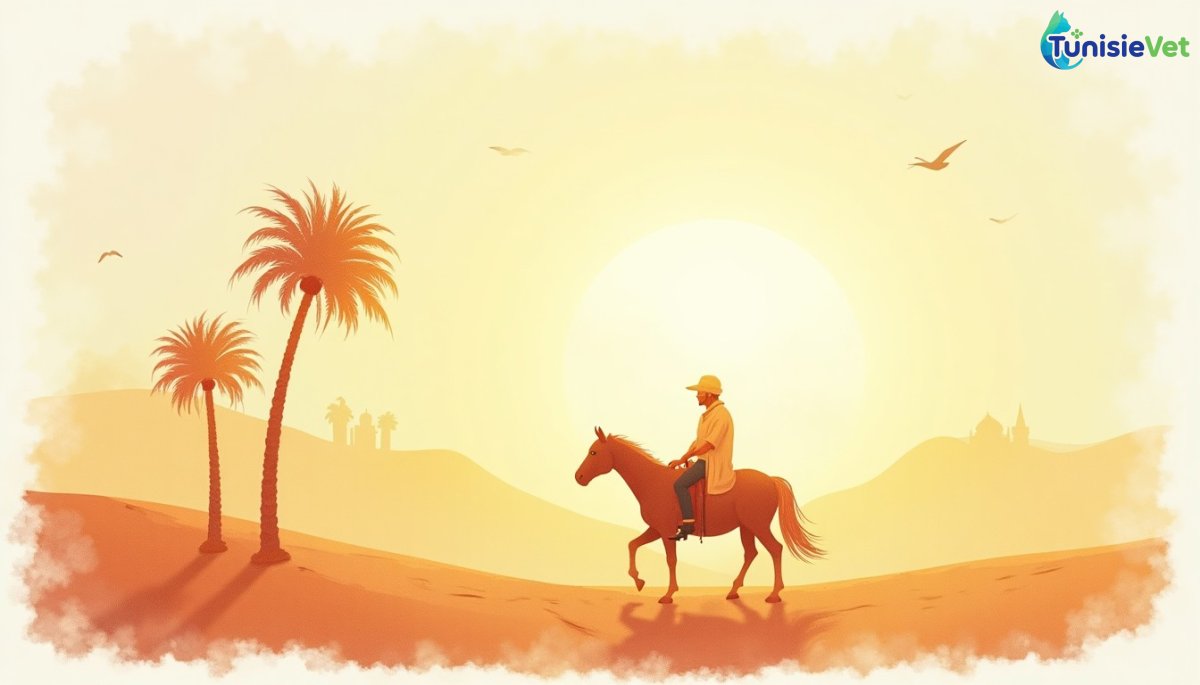
Galloping through desert dust, the horse has always embodied valor and loyalty among the Arabs. Long before Islam itself, it was a companion in war, a mount for travel, and a symbol of nobility. Islamic tradition takes up and honors this special place, making the horse an animal cited with respect in the Quran and praised in several hadiths.
The Horse in the Quran
Surah Al-'Adiyat (The Courser) opens with an oath by the horses launched at full gallop, snorting loudly, striking sparks beneath their hooves and rushing forth at dawn for the charge. This striking evocation recalls the power and ardor of this animal, placed in service of effort and struggle.
Publicité
Publicité
Horses are also mentioned in Surah Al-Anfal, where there is reference to the preparation of forces, notably horses, to repel the enemy. These verses illustrate how the horse was perceived as a blessing and a precious tool given to mankind, provided it be used justly.
The Horse in the Hadiths
Several hadiths reported in authentic collections speak of the merit attached to the care given to horses. It is reported, according to a hadith cited in Sahih al-Bukhari, that the Prophet ﷺ said that goodness remains attached to the forelock of horses until the Day of Resurrection, thus praising this animal as a bearer of blessing for one who maintains it with care and treats it with kindness.
Other traditions relate that the Prophet ﷺ was particularly fond of horses and owned several himself. It is also reported that he encouraged his companions to train in horsemanship, seeing it as useful exercise both for the body and for preparing to defend the community. These accounts emphasize the attention the Prophet ﷺ gave to the well-being of his mounts, whom he treated with gentleness and respect.
A Mount Linked to Particular Moments
In the collective Muslim memory, the horse remains associated with the great battles of the prophetic era, such as Badr and Uhud, where cavalry played a decisive role. It is reported that the Prophet ﷺ owned several horses to which he gave names, a mark of affection and regard toward these indispensable traveling companions.
This closeness between man and horse, built on trust and understanding, nourished a genuine equestrian tradition in the Muslim world, where respect for the animal was regarded as a noble quality in the rider.
A Teaching of Compassion
What this tradition teaches us goes beyond mere admiration for the beauty and strength of the horse. It reminds us that every animal placed under human responsibility deserves care, attention, and gentleness. Feeding one's horse, seeing to its comfort, never exhausting it needlessly: these are deeds which, according to Islamic teaching, are acts of compassion that will be rewarded.
Even today, whether a draft horse, a companion pony, or any other animal entrusted to our care, this heritage invites us to cultivate the same attentiveness: offering every creature the respect and affection it deserves, in remembrance of this long history of friendship between man and horse.