StoryFarmland & grasslandsUrban environmentBeliefs and teachings
Why Do Cats Hold a Special Place in Islamic Tradition?
Beloved by the Prophet ﷺ himself, the cat holds a distinctive place in Islamic tradition. Between the story of the Companion Abu Hurairah and teachings on purity, discover why this quiet animal inspires such tenderness.
3 min read · Published 1 week ago · 16 views
In a modest home in Medina lived a Companion of the Prophet ﷺ known by the nickname Abu Hurairah, literally "father of the kitten." This affectionate nickname came from a well-known habit: he always kept a kitten with him, which he fed and protected. This simple anecdote, recorded in the collections of hadith, says much about how this animal was viewed in Islamic tradition.
An Animal Considered Pure
Unlike other domestic animals, the cat enjoys a special status in Islamic jurisprudence linked to the concept of purity. It is reported in an authentic hadith recorded notably by Imam Malik in his work Al-Muwatta as well as by At-Tirmidhi, that the Prophet ﷺ declared concerning the cat that it is not impure, for it is among those who move around us. This statement led Muslim scholars to hold that a cat's saliva and its presence do not render water or clothing impure, which explains the traditional tolerance of its presence in homes, including near places of prayer.
Publicité
Publicité
This status granted to the cat is not merely a legal rule: it reflects recognition of its discreet, clean, and independent nature—qualities that Muslims have, over the centuries, learned to respect.
The Companion Abu Hurairah
According to what is reported in several biographical sources, Abu Hurairah showed particular care for kittens, to the point that his nickname stayed with him throughout his life and has reached us across the centuries. It is recounted that he loved these small felines so much that he sometimes kept them in the folds of his garment in order to feed and watch over them. This Companion was moreover one of the most prolific narrators of hadith, transmitting a great many teachings of the Prophet ﷺ, which gives his nickname a special resonance: love of animals and the transmission of religious knowledge are not incompatible; indeed they reinforce each other.
A Reminder of Our Responsibility Toward Living Beings
Islamic tradition also preserves an instructive account, reported in Sahih al-Bukhari and Sahih Muslim, in which the Prophet ﷺ speaks of the fate of a woman who was punished for confining a cat without feeding it or allowing it to seek its own food, until it died of hunger. This account, transmitted among the teachings on responsibility toward creatures, illustrates the seriousness accorded to neglect of an animal in our care. It is reported conversely, also in the authentic collections, that a man was forgiven for giving water to a thirsty dog—another example of kindness toward animals emphasized in these teachings.
These accounts, though focused on different animals, converge toward one principle: he who cares for a living being, however humble in appearance, performs an act considered good, while he who neglects an animal entrusted to his care bears that responsibility.
A Special Place Still Visible Today
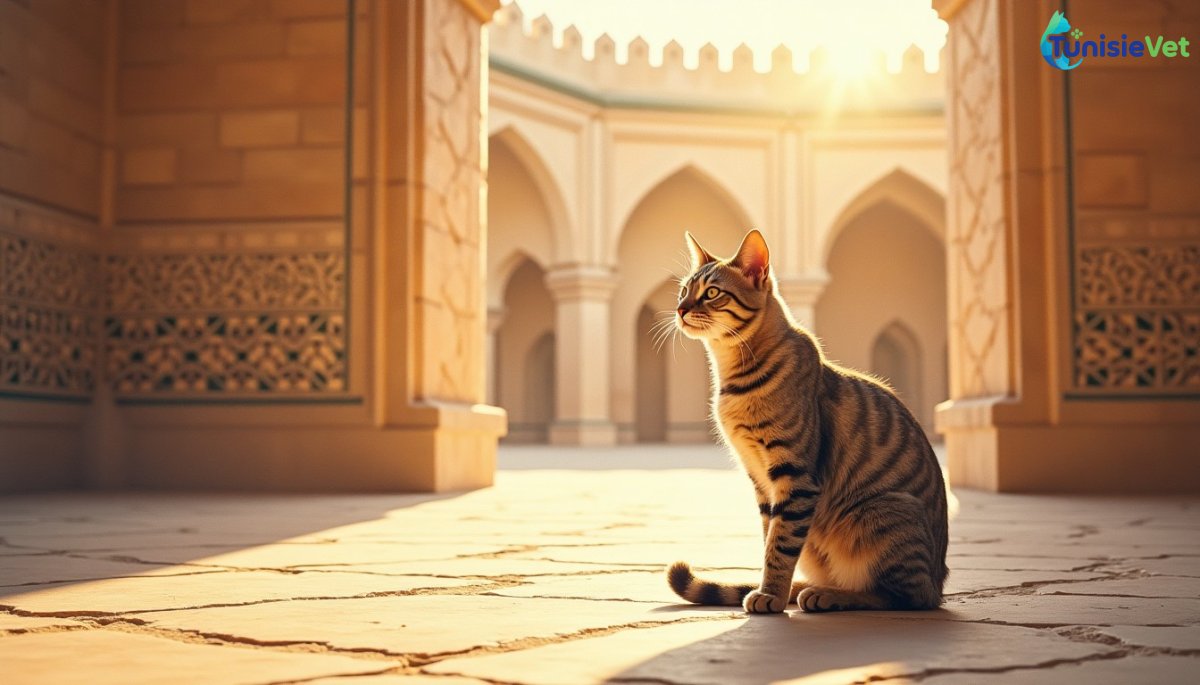
It is largely due to these teachings that the cat continues, in many Muslim societies, to hold a special place: welcomed in the courtyards of mosques, fed by shopkeepers, tolerated in homes. This place is not mere folklore; it draws its source from specific and ancient texts.
Beyond the historical anecdote, this tradition invites each person to concrete kindness toward the animals around us: offering them water, food, and protection is never a trivial gesture. Caring for a cat, a dog, or any other living being remains, today as in the past, a simple act that testifies to the respect we owe to all life.