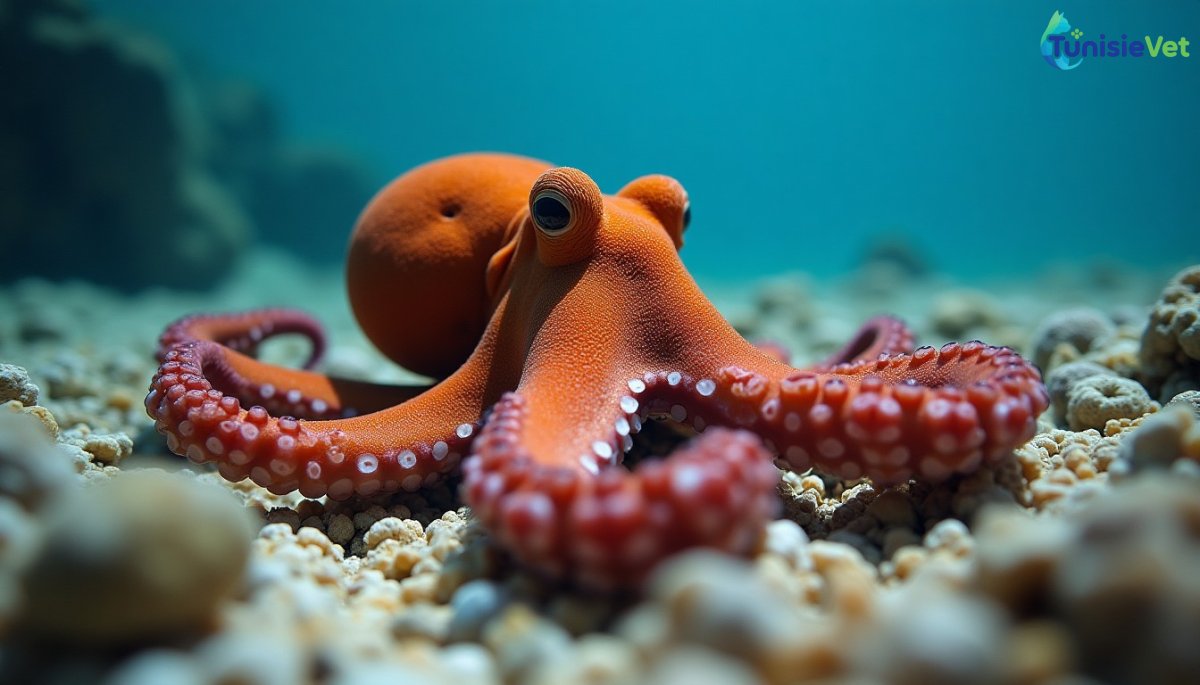
The octopus has three hearts because its blood transports oxygen poorly: two “gill” hearts push the blood towards the gills to recharge it, and a main heart then sends it to the organs. This division of labor compensates for the limitations of his blue blood.
Publicité
Publicité
A blue blood who imposes this organization
Octopus blood does not contain hemoglobin but hemocyanin, a copper-based protein which gives it its blue color. Hemocyanin binds oxygen less well than vertebrate hemoglobin, especially when the water warms. To power such an active body — and a highly developed brain — a single pump is not enough: the two branchial hearts maintain pressure through the gills, where the blood recharges with oxygen, before the systemic heart distributes it to the rest of the body.
Revealing detail: the main heart stops when the octopus swims by propulsion. This is one of the reasons he prefers to walk on the bottom — swimming literally exhausts him.
An adaptation to cold, oxygen-poor waters
Hemocyanin remains effective in cold, poorly oxygenated waters, where hemoglobin would lose the advantage. It is this compromise that allowed cephalopods to colonize a wide variety of environments, from coastal reefs to deeper seabeds.