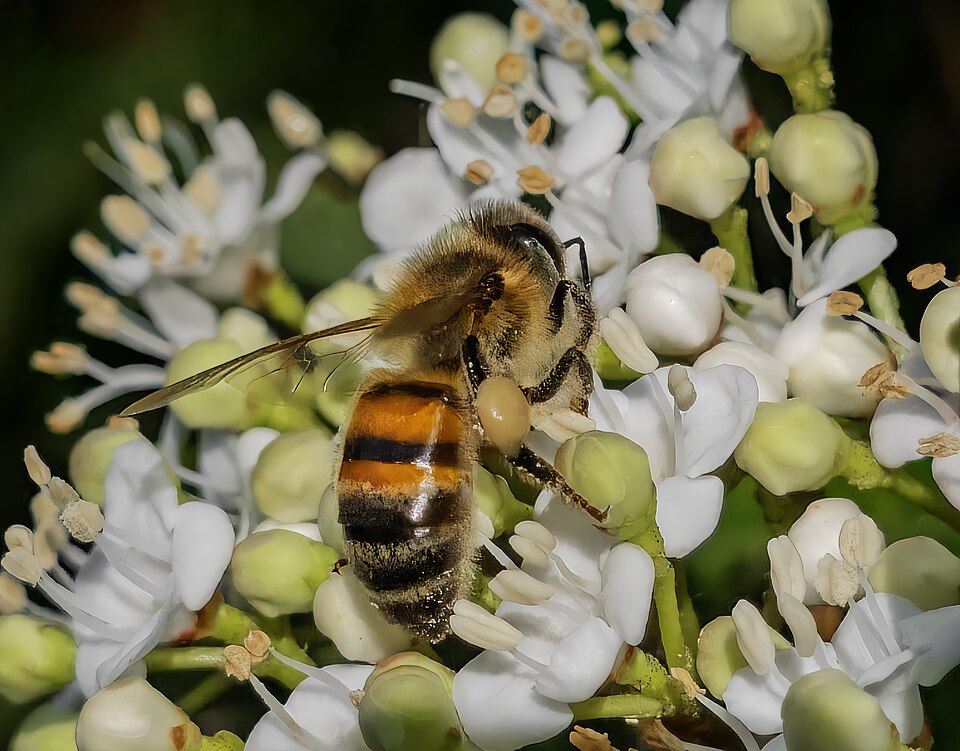
A forager bee visits several hundred flowers per day – estimates range from a few hundred to more than a thousand depending on the resource and the weather – spread over around ten outings. On each trip, she most often focuses on a single species of flower.
A foraging day
Each outing lasts from twenty minutes to an hour: the bee visits a few dozen flowers, filling its crop with nectar and its baskets with pollen, then returns to the hive to unload. This “floral fidelity” – foraging on only one species at a time – makes it a remarkably efficient pollinator: the pollen arrives on the right flower, not on a neighboring species.
To produce a single kilo of honey, the foragers of a colony accumulate millions of visits to flowers and cover, end to end, a distance that can be counted in hundreds of thousands of kilometers.
A service provided well beyond honey
The FAO estimates that a large part of the world's food crops depend at least partially on pollinators. Each flower visit is therefore both a meal for the colony and a link in agricultural production — in Tunisia as elsewhere.