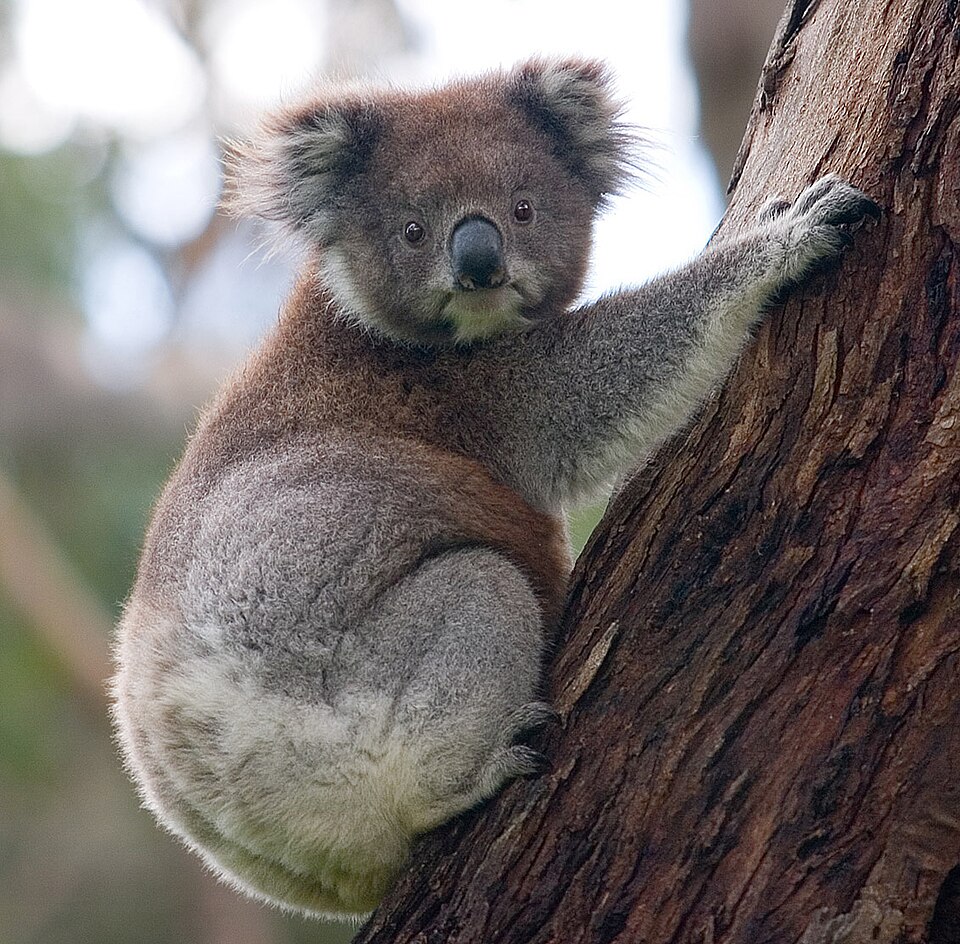
The koala sleeps 18 to 22 hours a day, making it one of the sleepiest mammals in the world. This torpor is not laziness: it responds to a strict energy constraint imposed by its diet exclusively composed of eucalyptus leaves.
A poor and toxic diet to detoxify
Eucalyptus leaves are low in calories, rich in indigestible fiber and loaded with toxic compounds (terpenes, tannins, cyanoglycosides) that most animals avoid. The koala's liver must constantly neutralize these substances, an energy-intensive metabolic process. However, the caloric intake provided by these leaves remains low: there is therefore almost no energy margin available for other activities.
To compensate for this imbalance between detoxification expenditure and available resources, the koala reduces its physical activity to a minimum. Sleep and still rest lower one's basal metabolism and limit energy needs, allowing the body to devote the few calories obtained to digestion and neutralization of toxins rather than to movement. Its digestive system also plays a key role: a particularly long cecum, which can exceed 1.80 meters, hosts a bacterial flora that slowly ferments the fibers, a process that takes place more efficiently when the animal remains still.
The other end of the spectrum: the giraffe
The koala illustrates the extreme opposite of the giraffe, a mammal known to sleep for barely a few tens of minutes to a few hours per day combined (fact detailed in a dedicated sheet). Between these two species, the duration of sleep does not depend on the size of the animal but on the energy strategy linked to its diet and its exposure to predators: the koala, arboreal and not very threatened once installed at height, can afford prolonged immobility that the giraffe, in an open and exposed environment, cannot afford.