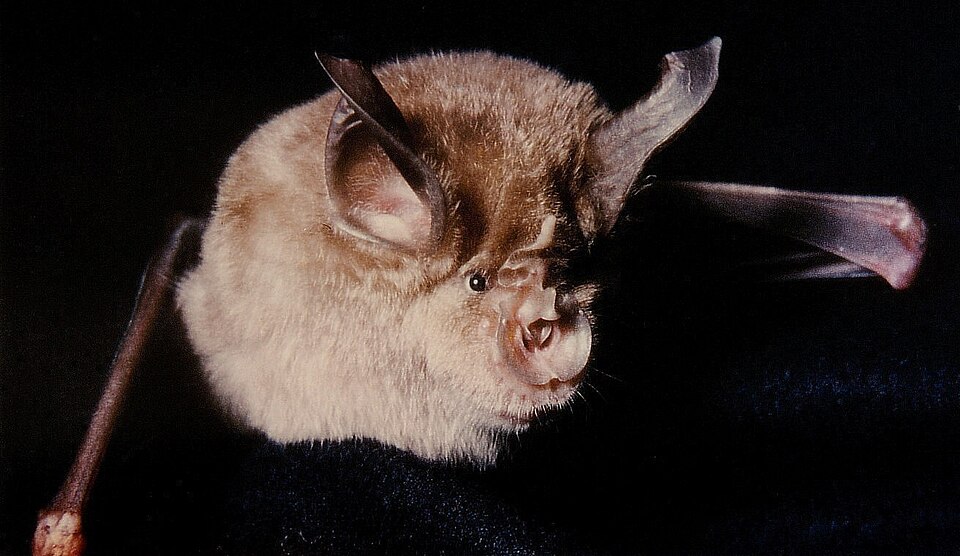
There is not one but two "smallest mammals in the world", depending on the criterion used: the bumblebee bat (Craseonycteris thonglongyai), from South-East Asia, holds the mass record with around 2 grams, while the Etruscan shrew (Suncus etruscus) holds the length record, with a body of around 4 cm excluding tail, for a weight close to 1.8 grams.
Why a minimum size exists in mammals
These two species come up against the same physical constraint: the smaller a body becomes, the more its surface/volume ratio increases. However, it is the surface which dissipates heat, while it is the volume which produces it. A body weighing a few grams therefore loses its heat much faster than it can produce it, which makes thermoregulation extremely costly below a certain mass threshold.
To compensate, the Etruscan shrew has one of the highest metabolisms in the animal kingdom: its heart can beat at more than 1,000 beats per minute and it must ingest the equivalent of one and a half to two times its own weight in food every day, otherwise it will freeze to death. in a few hours. The bumblebee bat limits energy expenditure by frequently entering torpor, a controlled drop in body temperature which reduces its food needs between two short phases of nocturnal activity.
And the greater horseshoe bat, in all this?
The greater horseshoe bat (Rhinolophus ferrumequinum), present in Tunisia and Europe, does not compete with these two records: it weighs around 15 to 34 grams for a wingspan that can exceed 35 cm. Its larger size allows it more stable thermoregulation, with an essentially seasonal recourse to torpor, during winter hibernation in caves, rather than an almost continuous need for food as in the two smallest mammals in the world.