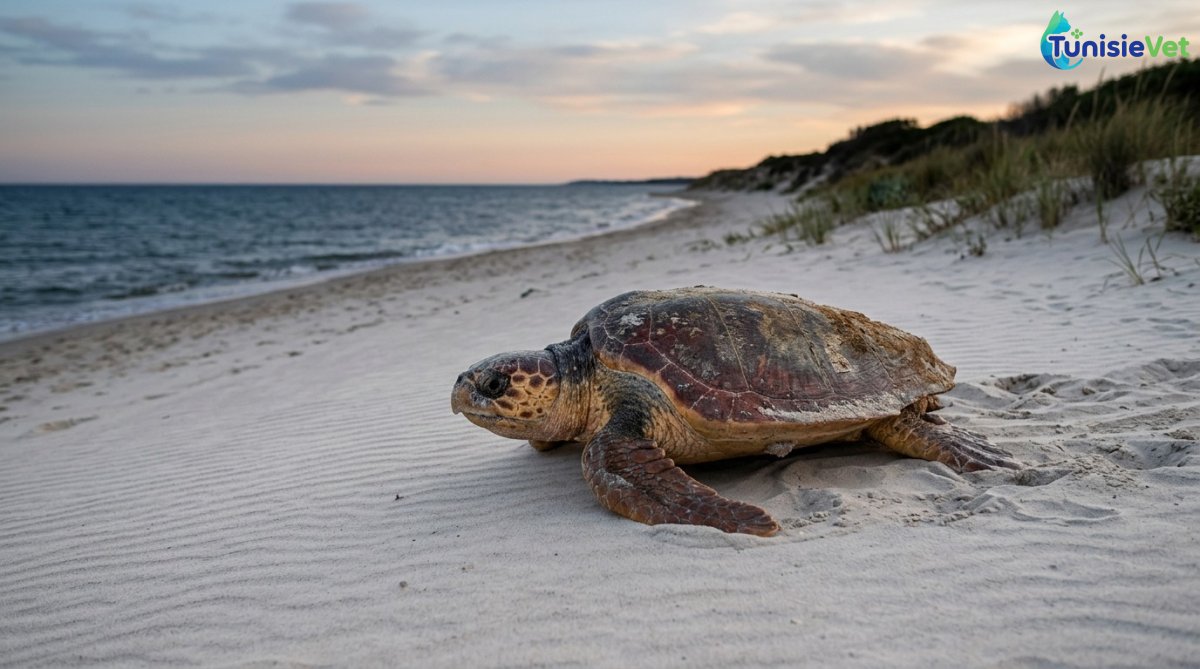
A female sea turtle born on a beach can return decades later to lay her eggs on that same shore, somewhere in an immense ocean. How does she find a stretch of sand so small?
Publicité
Publicité
The answer is not settled yet. Tagging studies from the 1950s and 1960s showed adult females returning regularly to the same beach, with nesting cycles of roughly 2 to 4 years. Yet no tag placed on a hatchling has ever been recovered from an adult, so direct proof is still missing.
The most studied hypothesis is Earth's magnetic field. In Florida, 19 years of nest records showed that loggerhead nests are more numerous where the magnetic signatures of neighbouring beaches converge. This is a correlation, not proof: researchers suggest that turtles might imprint on the magnetic signature of their birth beach.
Loyalty is not absolute, either. Satellite tracking of an island population of hawksbill turtles shows that some females nest elsewhere, close to their home beach.