
Giving Medication to Your Pet: Complete Guide

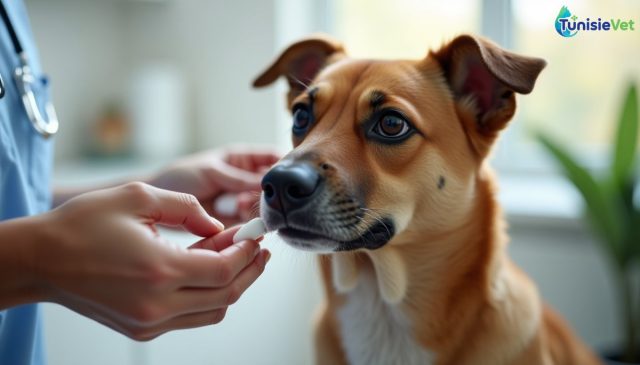
Giving medication to a cat that's squirming or a suspicious dog can quickly turn into a power struggle. Yet a few simple techniques are all it takes to transform this dreaded moment into a quick, stress-free action. This practical guide details the right reflexes, common mistakes, and essential veterinary advice for getting started smoothly, no matter which animal you're treating.
1. Why administering medication correctly makes all the difference
A poorly given treatment loses much of its effectiveness. If your pet spits out the tablet, bites the syringe, or knocks over half the syrup, the dose received is no longer what was prescribed. Over time, this can slow recovery, promote antibiotic resistance if antibiotics are involved, or lead to repeating stressful actions unnecessarily.
Administering medication correctly also preserves the trust between your pet and you. A rough or panicked gesture repeated several times can make your animal wary for the long term, even during simple petting.
2. Medication forms and their specific requirements
Each pharmaceutical form requires a different technique. Understanding these specifics helps avoid many mistakes.
| Medication Form | Route of Administration | Important Consideration |
|---|---|---|
| Tablet or capsule | Oral | Do not crush without advice; some coatings protect the stomach from acid |
| Liquid solution or syrup | Oral, via syringe | Shake well before use, follow the graduated markings carefully |
| Cream or eye ointment | Topical or ocular | Clean hands, avoid direct contact with the eye when applying creams |
| Injectable | Subcutaneous or other | This technique is reserved for veterinarians or requires precise demonstration |
| Spot-on or pipette | Topical, between shoulder blades | Apply to dry skin, keep other animals away for a few hours |
3. Steps to give a tablet stress-free
The oral route remains the most common and often the trickiest. Here's a gradual method to follow.
- Prepare the environment: quiet room, calm pet, avoid sudden movements.
- Hide the tablet in a small ball of tasty food if the treatment allows it.
- If your pet refuses, gently immobilize the head, open the mouth, and place the tablet at the back of the throat.
- Close the mouth and keep the muzzle slightly raised until the pet swallows.
- Reward immediately with a treat or a pet to create a positive association with the action.
For particularly anxious pets, a pill applicator can make the gesture easier while reducing the risk of being bitten.
4. Giving liquid medication, cream, or eye ointment
Syrup or liquid solution
Use the syringe provided, gently insert the tip at the side of the mouth, between the teeth and cheek, then inject slowly to allow time for swallowing.
Topical cream
Apply in a thin layer to the clean, dry area, then watch to make sure your pet doesn't lick the treated area right away.
Eye drops or eye ointment
Keep the head steady, gently pull down the lower eyelid, and apply the product without touching the eye with the applicator tip to prevent any contamination.
5. Common mistakes to avoid
- Changing the dose without professional advice, even if your pet seems to be improving.
- Stopping treatment as soon as symptoms improve, instead of completing the full prescribed duration.
- Mixing medication into a large amount of food, which may cause your pet to reject the entire meal.
- Using medication prescribed for another animal or a human, even if symptoms appear similar.
- Forgetting to wash your hands before and after, especially with topical products.
6. When to seek professional help
If your pet consistently spits out medication, becomes aggressive, or shows unusual signs after administration (vomiting, excessive drooling, lethargy), it's best to get professional advice. Certain technical procedures, such as injections, require supervised training.
To be guided step by step, especially with a first treatment or chronic condition, it's recommended to consult a veterinarian near you who can demonstrate the technique during an appointment and adjust the method based on your pet's temperament.
Summary
- Strictly follow the dose, frequency, and duration prescribed by your veterinarian.
- Adapt the technique to the medication form: tablet, syrup, cream, or eye ointment.
- Create a positive association with a treat or pet after each dose.
- Never improvise a dosage or use a product not prescribed for your specific animal.
- Ask for a demonstration if you're unsure about any technical aspect.
Frequently asked questions
Can I crush a tablet to give it more easily?
It depends on the medication: some coatings protect substances sensitive to stomach acid and should not be crushed. It's best to confirm with your veterinarian before handling the tablet in any way.
What should I do if my pet spits out the medication?
Try again calmly, without forcing further, and consider changing your approach—such as using a food ball or a pill applicator. If spitting out happens frequently, adjusting your technique with a professional is advised.
How often should I give my pet medication?
The frequency depends entirely on the prescription and type of treatment, never on personal judgment. Following the recommended schedule helps maintain an effective concentration of the medication in your pet's system.
Administering medication becomes easier with patience, gentleness, and a technique tailored to each animal. If you're uncertain about a treatment or your pet's behavior, don't hesitate to consult a veterinarian for personalized veterinary advice.
Leave a comment
Be the first to comment on this article.
