
How to Choose a Veterinarian: Key Steps to Get Started


Choosing a veterinarian starts with a simple question: can this professional take care of your animal and meet your practical needs? To find out, look into their activity, organisation, fees and emergency arrangements. This practical guide helps you compare options, prepare a first consultation and avoid common mistakes. It is written for pet owners as well as beginner livestock farmers.
The TunisieVet app to care for your pet
Vets, adoption and products



Defining Your Needs Before Choosing a Veterinarian
Before contacting a clinic, describe your situation. The species, the animal's age, any existing health problems and your ability to travel will guide your search. For a farm, also specify the species kept, the size of the herd and what you expect from on-site visits.
Ask yourself whether you are looking for preventive follow-up, treatment of an existing problem, or a contact who can organise care for a group of animals. These needs can overlap. Stating them at the first call helps you check whether the professional can support you or refer you elsewhere.
Matching the Search to the Animal
Do not assume that a clinic treats every species. Clearly name the animal concerned and ask whether the veterinarian regularly cares for it. For an animal with particular needs, also check whether the necessary examinations or treatments can be carried out on site.
A farmer may ask how travel is organised, how multiple animals are handled during a visit and how remote communication works. It is also useful to know who to report observations to between visits.
Taking Practical Constraints into Account
Proximity is helpful, but it is not enough on its own. Check opening hours, appointment availability and transport conditions. If you cannot travel easily, ask whether a home or farm visit is possible and under what conditions.
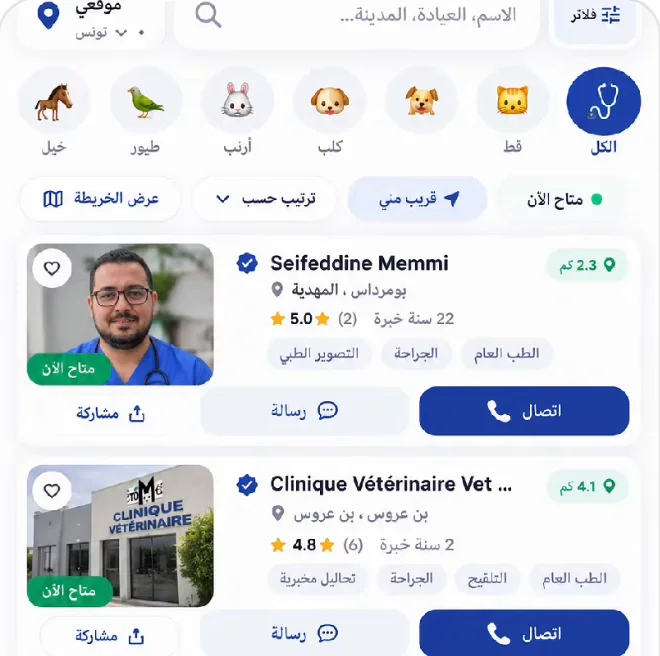
To start your search, browse the veterinarian directory, then contact professionals whose services seem to match your needs. Confirm the important details for your situation directly with them.
Comparing Clinics on Concrete Criteria
A recommendation from someone you know can be a good starting point, but it does not guarantee that a clinic will suit your animal. Prepare the same questions for each professional so you can compare their answers rather than relying on a general impression.
| Criterion | Question to Ask | Point to Check |
|---|---|---|
| Care provided | Do you treat this species, and for which procedures? | Fit with the animal's needs |
| Organisation | How do I book an appointment and transfer records? | Suitable hours and means of contact |
| Examinations | Which tests can be done on site? | Referral plan if a test must be done elsewhere |
| Cost | What is the consultation fee, and how can I get an estimate? | Clarity about announced costs and possible extra charges |
| Emergencies | Who should I contact outside opening hours? | Contact details and instructions to keep |
Ask what the quoted fee includes and whether examinations, medicines or travel may lead to additional charges. For planned treatment, request an estimate. The amount may change if an examination reveals unexpected needs: in that case, ask to be informed before any additional procedures, whenever the situation allows.
Communication matters just as much as practical aspects. A good professional should be able to explain the options offered, their limits and the next steps in terms you understand. You can ask for an explanation to be rephrased or take notes.
Preparing the First Consultation
A successful first visit begins before you leave home. Gather the documents you have and write down your questions: this helps the veterinarian understand the context without you forgetting an important detail.
- Gather useful information: health record if you have one, reports, test results and a list of current treatments.
- Describe your observations: note what has changed, since when, and in what circumstances you noticed it.
- Plan the journey: ask how to transport the animal safely and whether any precautions are needed before the appointment.
- List your questions: diet, prevention, behaviour or follow-up of a known problem, depending on your situation.
- Plan your budget: find out the consultation fee and payment terms before the visit.
For a farm, prepare the available information about the animals concerned, the changes you have observed and the treatments already given. Mention access constraints and handling conditions before an on-site visit. The veterinarian can tell you what to prepare and any measures to take.
Asking the Right Questions During the Visit
Ask what the veterinarian observes, what they propose and why. If several options are possible, ask them to explain the advantages, limits and estimated cost of each. Also ask which signs to monitor and in which circumstances you should get back in touch.
Before leaving, make sure you have understood the instructions: name of the treatment, how to administer it, the duration indicated and what to do if problems arise. Do not change a treatment on your own initiative; contact the clinic if an instruction seems unclear.
Avoiding Mistakes and Anticipating Emergencies
Not Waiting for a Critical Situation
Looking for a professional before a problem arises gives you time to compare options and prepare your animal's file. It also helps you know how to reach veterinary help if your usual clinic is closed.
Note the clinic's phone number and the details of the facility it indicates for emergencies. Check how to call and how long the journey takes. For a farm, also ask how to quickly report a problem affecting several animals.
If the animal has difficulty breathing, significant bleeding or cannot stand up, contact a veterinarian or the indicated emergency service immediately. Describe the signs and follow the instructions you are given. Do not give any medicine without veterinary advice.
Not Choosing Based Only on Price or Reviews
Price matters, but a single fee does not tell you which services are included. Compare equivalent services and ask for details about possible costs. Conversely, a higher price does not by itself guarantee a better fit with your needs.
Reviews can help you formulate questions, but they do not replace a conversation with the clinic or your own experience. Be wary, too, of choosing only on proximity if the species or type of care you need does not fall within the professional's activity.
Reassessing the Relationship When Necessary
After the visit, ask yourself whether the explanations were understandable and whether you know the next steps. A relationship of trust is also built by being able to ask questions and report a difficulty.
If doubts remain, ask for clarification. You may also seek a second opinion and request the parts of the file needed for continuity of care. Inform the new professional of current treatments and of examinations already carried out.
In Summary
- Define the species, follow-up needs and your constraints before contacting a clinic.
- Compare services, opening hours, fees and emergency arrangements using precise questions.
- Bring the available documents and a clear description of your observations to the first visit.
- Have instructions rephrased if necessary and keep the contact details to use in an emergency.
- Seek a second opinion if your questions remain unanswered or if the follow-up does not suit you.
Frequently Asked Questions
How can I tell whether a veterinarian treats my animal?
Contact the clinic, stating the species and the reason for your request. Check whether the professional can provide the follow-up you need or refer you to a suitable colleague.
How much does a first veterinary consultation cost?
The cost depends in particular on the clinic and the care required. Ask for the consultation fee and an estimate of any additional charges before the appointment.
Can I change veterinarian if the first one does not suit me?
Yes, you can consult another professional and share the information needed for follow-up. To choose a suitable veterinarian, explain your expectations and prepare the documents about care already received.
Leave a comment
Be the first to comment on this article.
